Algeria
 Egypt
 Libya
 Morocco
 Sudan
 Tunisia
 Benin
 Burkina Faso
 Cabo Verde
 Côte d'Ivoire
 Guinea
 Guinea-Bissau
 Liberia
 Mali
 Mauritania
 Niger
 Nigeria
 Senegal
 Sierra Leone
 The Gambia
 Togo
 Cameroon
 Central African Republic
 Chad
 DR Congo
 Equatorial Guinea
 Gabon
 Republic of the Congo
 São Tomé and Príncipe
 Burundi
 Comoros
 Djibouti
 Eritrea
 Ethiopia
 Kenya
 Madagascar
 Malawi
 Mauritius
 Mozambique
 Rwanda
 Seychelles
 Somalia
 South Sudan
 Tanzania
 Uganda
 Angola
 Botswana
 Eswatini
 Lesotho
 Namibia
 South Africa
 Zambia
 Zimbabwe
In Moscow, Accra puts its citizens first
When a West African country finds itself discussing security, diplomacy and the employment of its nationals with Russia, the stakes go far beyond a simple ministerial meeting. For Ghana, the question is now very concrete: how to protect its citizens, curb opaque recruitment and defend its interests without being drawn into the rivalries of the war in Ukraine. The issue is also part of a broader regional reality, in which networks involved in scams, recruitment and human trafficking operate across several West African countries.
West African context: a region under security pressure
Ghana is operating in an environment in which ECOWAS, the Economic Community of West African States, is still finding its footing amid the fragmentation of the regional bloc and tensions with the Alliance of Sahel States. Since Burkina Faso, Mali and Niger announced their withdrawal, the organisation has appointed a chief negotiator to maintain dialogue with the three countries, while strengthening its peace and security mechanisms. In Lagos and Abuja, the priorities for 2026 remain the same: crisis prevention, counter-terrorism cooperation and political coordination.
Against this backdrop, Ghana retains a distinctive role. The country hosted a retreat in March by ECOWAS’s advisory body on mediation, while the African Union has stepped up consultations with Moscow on trade, energy, food security, health and industrialisation. In other words, Accra is operating within a more assertive African diplomacy, in which the continent’s capitals want to be interlocutors, not arenas for influence.
The facts: a Moscow visit laden with sensitive issues
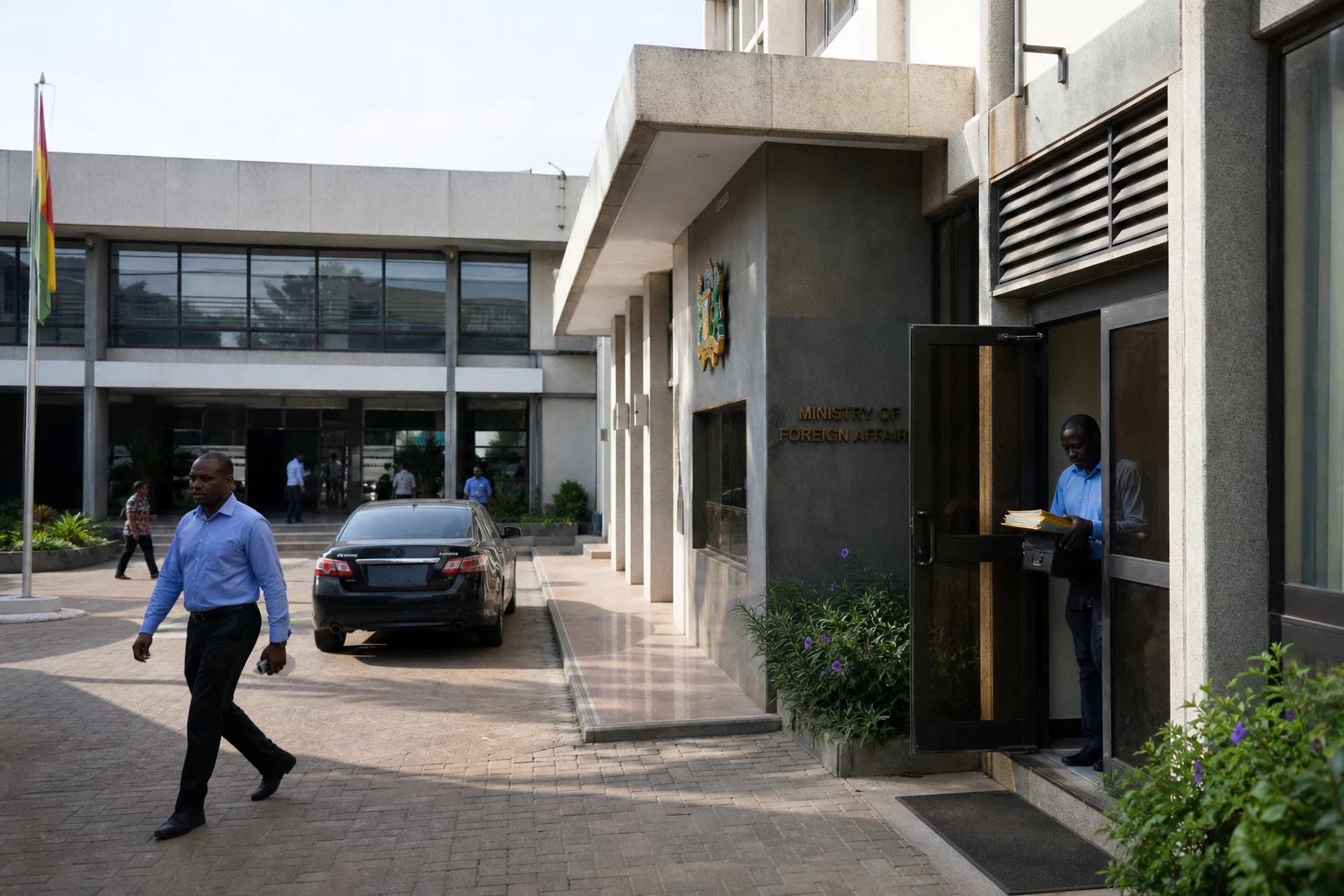
Since 17 August, Ghanaian Foreign Minister Samuel Okudzeto Ablakwa has been on a visit to Russia. In Moscow, he held a joint press conference with his counterpart, Sergei Lavrov. The two officials expressed their desire to strengthen diplomatic and economic cooperation between their countries, while discussing security issues in West Africa and the Sahel. The question of Ghanaians sent or lured into the Russian army also featured prominently in their talks.
The heart of the issue is human. In February, Ghana’s top diplomat had already said that 272 Ghanaians had been drawn into the war since 2022, with 55 killed and two taken prisoner, according to information provided to Accra following discussions with Ukrainian authorities. In July, Ghana’s Foreign Ministry said it had launched investigations into fraudulent recruitment networks. The latest Moscow talks are therefore part of a longer sequence, marked by a tougher stance in Accra and a clear demand: stop illegal recruitment.
On the Russian side, Sergei Lavrov praised Ghana’s regional role and said he supported Accra’s mediation efforts between ECOWAS and the Sahel states. Moscow also suggested that a memorandum of cooperation with ECOWAS could be signed soon, including a security component. At the same time, Russia continues to present its partnership with Africa as an axis of sovereignty, security and economic cooperation, in line with consultations held with the African Union in Addis Ababa in July.
What this means for Ghana
For Accra, the issue is not merely diplomatic. It concerns consular protection, the fight against recruitment networks and the credibility of the state. The presence of a Ghana Embassy in Moscow, as well as existing consular protection mechanisms, shows that the issue directly involves the government’s ability to keep close track of its nationals. At the same time, high-level dialogue with Russia may help secure information and even cooperation on individual cases, provided commitments are precise and verifiable.
The Ghanaian government is nevertheless walking a narrow line. On the one hand, it wants to preserve a historic relationship with Moscow, which is useful in education, energy and multilateral affairs. On the other, it must show the public that deaths and disappearances reported in the war are neither being downplayed nor treated as routine. In a country where going abroad remains an economic strategy for many families, promises of quick contracts and high earnings can become traps. The phenomenon therefore affects more than an elite or urban residents: it also strikes young people seeking opportunities, in the capital and in the regions.
A continental significance extending beyond Ghana
The Ghanaian case sheds light on a broader African trend: nationals from several countries on the continent have been reported in the war waged by Russia in Ukraine, often through networks promising employment, training or travel. The African Union now has a high-level dialogue with Moscow, while West African states are seeking to preserve room for manoeuvre amid regional realignments and security threats. Ghana’s case is therefore a test: of an African state’s ability to defend its citizens while keeping several diplomatic channels open at once.
What happens next will depend on whether announcements are translated into concrete action. If a memorandum with ECOWAS is concluded, its content will need to be assessed, particularly on security and the exchange of information. If Moscow and Accra agree to work together, the effects on the ground will also need to be verified: dismantling the networks, identifying victims, consular cooperation and possible repatriations. As ECOWAS seeks to consolidate its peace architecture and the African Union promotes a more balanced relationship with external powers, Ghana is moving into an issue that has become central to all of West Africa: protecting its citizens without giving up its diplomatic voice.