Algeria
 Egypt
 Libya
 Morocco
 Tunisia
 Benin
 Burkina Faso
 Cabo Verde
 Côte d'Ivoire
 Ghana
 Guinea
 Guinea-Bissau
 Liberia
 Mali
 Mauritania
 Niger
 Nigeria
 Senegal
 Sierra Leone
 The Gambia
 Togo
 Cameroon
 Central African Republic
 Chad
 DR Congo
 Equatorial Guinea
 Gabon
 Republic of the Congo
 São Tomé and Príncipe
 Burundi
 Comoros
 Djibouti
 Eritrea
 Ethiopia
 Kenya
 Madagascar
 Malawi
 Mauritius
 Mozambique
 Rwanda
 Seychelles
 Somalia
 South Sudan
 Tanzania
 Uganda
 Angola
 Botswana
 Eswatini
 Lesotho
 Namibia
 South Africa
 Zambia
 Zimbabwe
A war becoming increasingly technological
In Sudan, the war is no longer just a clash between two chains of command. It is also being fought in the air, over long distances, with machines that make every advance faster and every mistake more costly. In this conflict, the question is no longer just who holds a city. It is also who controls the skies over Khartoum, Omdurman, Port Sudan and the routes through Kordofan.
Since April 2023, fighting between the Sudanese Armed Forces and the Rapid Support Forces has ravaged the country. The UN estimates that millions of Sudanese have been displaced and that a huge proportion of the population needs humanitarian assistance. In June 2026, the African Union again called for an inclusive political process to end the escalation, while IGAD kept the Sudan file at the centre of its regional discussions.
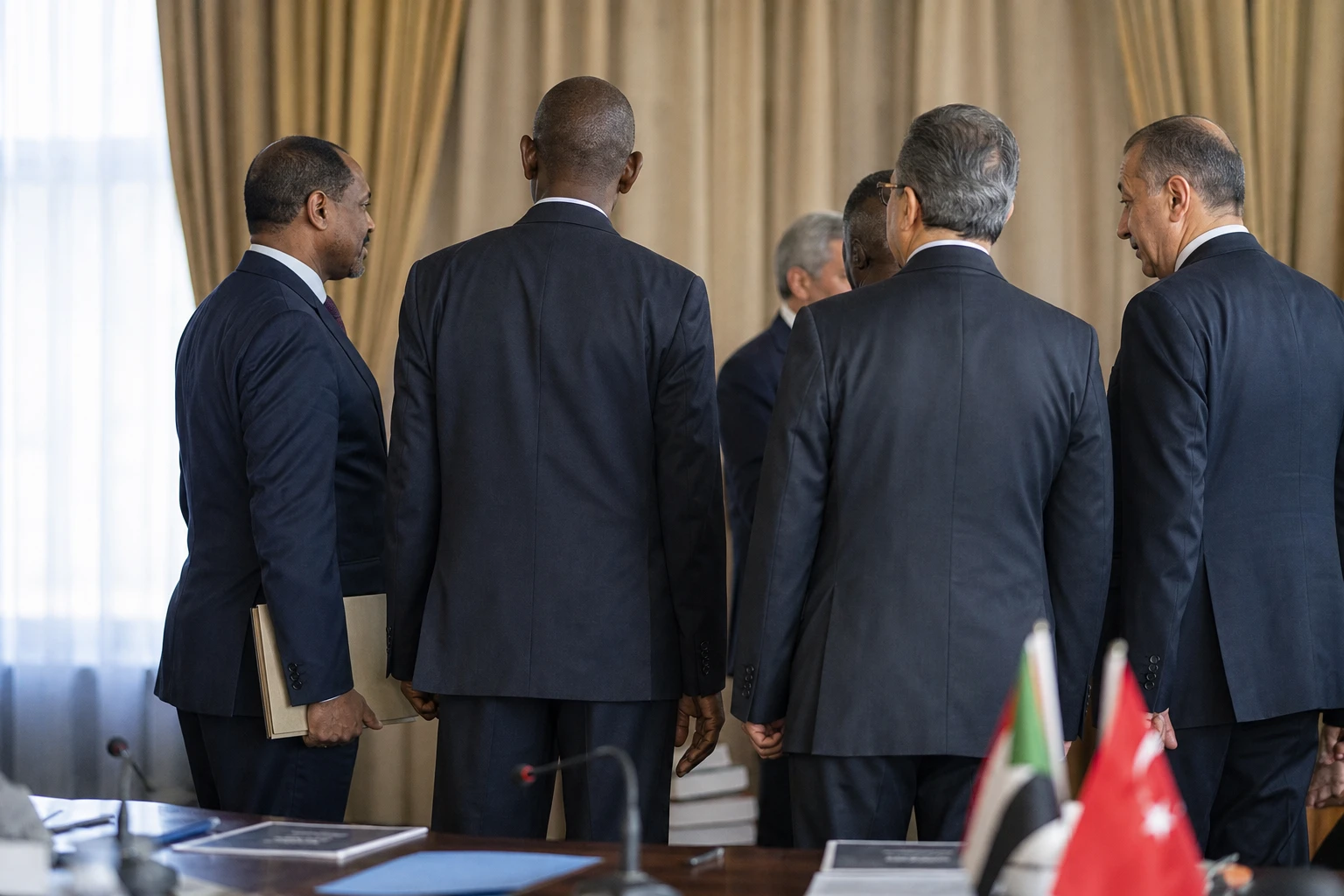
In this context, General Yasser al-Atta’s visit to Ankara is more than a routine diplomatic trip. It confirms an already consolidated military partnership between Khartoum and Türkiye, as the Sudanese army seeks to turn its territorial gains into a lasting advantage. It also shows that Sudan remains one of the African theatres where drones are reshaping the balance of power.
Ankara, a support that has become pivotal
General Yasser al-Atta, now chief of staff of the Sudanese army following the restructuring of the military hierarchy announced in April 2026, was received in Ankara in midweek, according to several Turkish and Sudanese news reports and dispatches. He met Turkish military officials and the defence minister, in the presence of Haluk Bayraktar, chief executive of Baykar, the manufacturer of Bayraktar drones.
This visit is part of a broader relationship. In May 2026, President Recep Tayyip Erdoğan reaffirmed to Sudanese Prime Minister Kamil Idris Türkiye’s support for Sudan’s sovereignty and territorial integrity, while promising to continue humanitarian aid and diplomatic efforts. In March 2026, and again in July, Ankara said it would continue to support peace efforts and the country’s reconstruction.
Military cooperation took on a new dimension from 2024. Media investigations documented a contract worth about $120 million between Baykar and the Sudanese army’s procurement body, with deliveries including TB2 drones, munitions and, according to published details, technical assistance. Several media outlets and independent analyses have reported and corroborated this information.
These systems offer the Sudanese army immediate advantages. Drones can reach distant positions, strike convoys, disrupt logistics depots and monitor enemy movements. In a fragmented war, where front lines shift in fits and starts, this advantage can carry considerable weight. The growing use of the Bayraktar Akinci, larger and more enduring than the TB2, has also altered the balance of air power, according to several analyses published over the past year.
How the drone battle is changing the conflict
The impact is visible on the ground. Sudanese forces claimed to have intercepted enemy drones over Bara, in North Kordofan, on 17 August. They also said they had neutralised other aircraft in recent strikes around Khartoum. These claims come from a party to the conflict and should be read as such. But they confirm a reality now acknowledged by many observers: the war in Sudan has become a drone-on-drone war.
This shift is changing civilians’ daily lives. Strikes are becoming more unpredictable. Electricity infrastructure, fuel depots, outlying neighbourhoods and humanitarian routes are increasingly exposed. In Port Sudan, the Sudanese executive’s wartime capital, several drone attacks have already disrupted strategic facilities and aid corridors. In practice, this affects families, markets, hospitals and supply networks in the capital and provincial cities alike.
For the army, Turkish support also serves a political purpose. It strengthens its image as a regular force capable of modernising and regaining the initiative. For Türkiye, it confirms a growing presence in the Horn of Africa, combining security diplomacy, arms exports and the pursuit of influence over Red Sea routes. Sudan is thus becoming a meeting point for regional rivalries, arms networks, and port and mining interests.
The consequences for Sudanese people are more tangible than official statements. Where the army gains ground, the return of displaced people remains precarious and public services are still badly damaged. Where fighting continues, rural areas and communities in the west and centre remain caught between bombardment, disrupted transport and chronic insecurity. Technology does not end the war; it only changes its pace and reach.
A signal for the entire Red Sea region
The Sudan file now extends beyond national borders. It directly affects Red Sea security, the balance between Egypt, Saudi Arabia, Türkiye and the United Arab Emirates, as well as regional initiatives concerning Sudan. The fact that a senior Sudanese officer travelled to Ankara while the army was claiming new military gains shows that the diplomatic battle is running alongside the military one.
For North Africa and the Horn of Africa, the stakes are clear: the longer the war lasts, the more external actors consolidate their footholds, and the harder future negotiations become. The next factor to watch is therefore not only the front line, but also whether African and regional mediators can impose a credible and inclusive Sudanese framework. In Sudan, modernising the battlefield solves nothing. Above all, it confirms that no lasting solution can be built without a political way out.