Algeria
 Egypt
 Libya
 Morocco
 Sudan
 Tunisia
 Benin
 Burkina Faso
 Cabo Verde
 Ghana
 Guinea
 Guinea-Bissau
 Liberia
 Mali
 Mauritania
 Niger
 Nigeria
 Senegal
 Sierra Leone
 The Gambia
 Togo
 Cameroon
 Central African Republic
 Chad
 DR Congo
 Equatorial Guinea
 Gabon
 Republic of the Congo
 São Tomé and Príncipe
 Burundi
 Comoros
 Djibouti
 Eritrea
 Ethiopia
 Kenya
 Madagascar
 Malawi
 Mauritius
 Mozambique
 Rwanda
 Seychelles
 Somalia
 South Sudan
 Tanzania
 Uganda
 Angola
 Botswana
 Eswatini
 Lesotho
 Namibia
 South Africa
 Zambia
 Zimbabwe
An underground economy that extends beyond the mine shafts
In Côte d’Ivoire’s gold-producing areas, the real issue is not just the digging of shafts. It is the chain of control stretching from the village to export routes. When gold moves outside any regulatory framework, it generates revenue, local protection and complicity, and sometimes feeds criminal networks far larger than the mining site itself.
Côte d’Ivoire no longer treats this issue as a simple public order problem. From Yamoussoukro, where the executive branch is based, the state now regards illegal gold mining as a security, economic and territorial governance issue. This approach reflects a West African region where borders are porous, informal trade routes are long established, and pressure on border areas has intensified amid insecurity in the Sahel and the rising value of gold.
Repeated operations, but an industry that adapts
On 23 July 2026, a statement by the National Security Council confirmed the scale of Côte d’Ivoire’s response. Since 2021, more than 8 500 illegal sites have been cleared, 4 474 people referred to the courts, nearly 960 million CFA francs seized and around 136 kg of gold recovered. Yet the same statement acknowledged the persistence, or even expansion of the phenomenon. In other words, closing sites is not enough to dismantle the system.
This assessment did not come out of nowhere. In July 2025, Côte d’Ivoire also launched a partnership with the World Bank and the World Gold Council to formalise artisanal gold mining and improve traceability of gold produced in the country. The stated aim is clear: to reduce losses linked to illicit trade, improve site safety and bring some of this activity into the regulated economy. The government knows it cannot simply multiply site clearances.
At the same time, research and advocacy organisations describe volumes of metal that largely escape national statistics. SWISSAID estimates that between 321 and 474 tonnes of artisanal gold are produced undeclared in Africa each year, and that at least 435 tonnes left the continent clandestinely in 2022. It also points to a significant flow of undeclared gold from Côte d’Ivoire abroad, particularly through neighbouring countries. These estimates show that the issue is not limited to a few isolated shafts. It is a transit economy.
Who captures the value of gold?
At mining sites, miners are often only the most visible link in the chain. They extract the gold, but they do not make the decisions. A study conducted in the Nawa region between 2022 and 2025 describes operations organised around a manager who controls the machinery, supplies and collection of ore. Workers are paid by the task, while the value flows upwards to equipment owners, financiers and intermediaries who organise the site.
This pattern highlights a key point: crackdowns targeting workers alone hit the labour force, not necessarily the profit-making structure. If machinery is seized but owners, buyers and logistics operators remain beyond reach, activity resumes elsewhere. It shifts, fragments and then re-establishes itself. This explains its resilience in several Ivorian regions, from the north to the centre-west.
Local power also comes into the equation. Ivorian authorities themselves acknowledge that setting up an illegal site involves arrangements with customary land-rights holders, administrative contacts or security actors. In villages, the pressure is tangible: gold mining brings quick income, but degrades soil, undermines agriculture and disrupts access to water. For households, the immediate gain can obscure a lasting cost.
In this grey economy, the state is not just fighting clandestine miners. It must also monitor the limits of its own control. Enforcement agents, local authorities and officials on the ground become decisive actors. If some turn a blind eye or negotiate, the line between oversight and rent-seeking becomes blurred. This is when illegal gold mining ceases to be a simple offence and becomes a way of organising economic activity.
An economic and security frontier, not just a mining one
Côte d’Ivoire lies at the crossroads of several regional routes. To the east, north and west, routes towards Burkina Faso, Mali and the wider sub-region facilitate the movement of goods, people and, at times, illicit cargoes. Expert studies of the border area show that gold can be mixed, repackaged and then re-exported with its origin obscured. Once it enters a regional network, it becomes harder to trace.
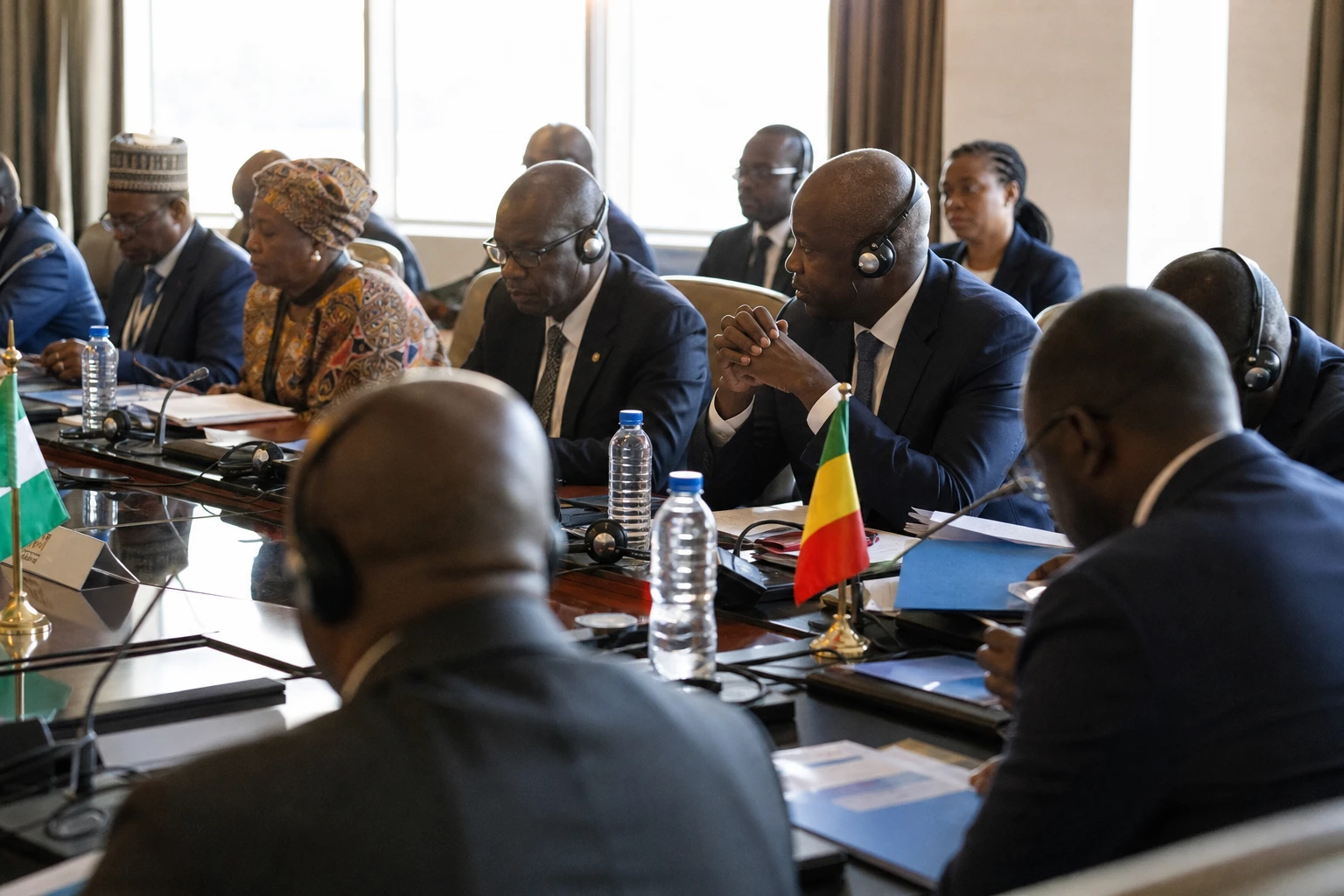
This is also why the issue extends beyond Côte d’Ivoire and concerns ECOWAS, the West African economic community. When a raw material leaves a country without oversight, it weakens public revenues, fuels informal economies and supports networks with no interest in transparency. Traceability then becomes a regional, not just national, concern.
Security concerns also weigh heavily. Analyses have already reported links between illicit economies, arms movements and mobile armed groups in several border areas in the west and north of the country. This does not mean that every illegal site is linked to terrorism. It does mean, however, that the same corridors often serve several forms of trafficking. In this context, gold mining can finance local power brokers, protection networks and transport intermediaries far beyond the village.
For Abidjan, the challenge in the coming months is therefore twofold. It will need both to maintain pressure on illegal sites and to broaden the response to buyers, transporters, financiers and export routes. Without that, successive closures will merely shift the problem elsewhere. In a region where gold has once again become a strategic resource, the battle is no longer being fought only on the ground. It is being fought on the roads, in the records and in the ability of states to channel value into legal networks.