Algeria
 Egypt
 Libya
 Morocco
 Sudan
 Tunisia
 Benin
 Burkina Faso
 Cabo Verde
 Côte d'Ivoire
 Ghana
 Guinea
 Guinea-Bissau
 Liberia
 Mali
 Mauritania
 Niger
 Nigeria
 Senegal
 Sierra Leone
 The Gambia
 Togo
 Cameroon
 Central African Republic
 Chad
 DR Congo
 Equatorial Guinea
 Gabon
 Republic of the Congo
 São Tomé and Príncipe
 Burundi
 Comoros
 Djibouti
 Eritrea
 Ethiopia
 Kenya
 Madagascar
 Malawi
 Mauritius
 Mozambique
 Rwanda
 Seychelles
 Somalia
 South Sudan
 Tanzania
 Uganda
 Botswana
 Eswatini
 Lesotho
 Namibia
 South Africa
 Zambia
 Zimbabwe
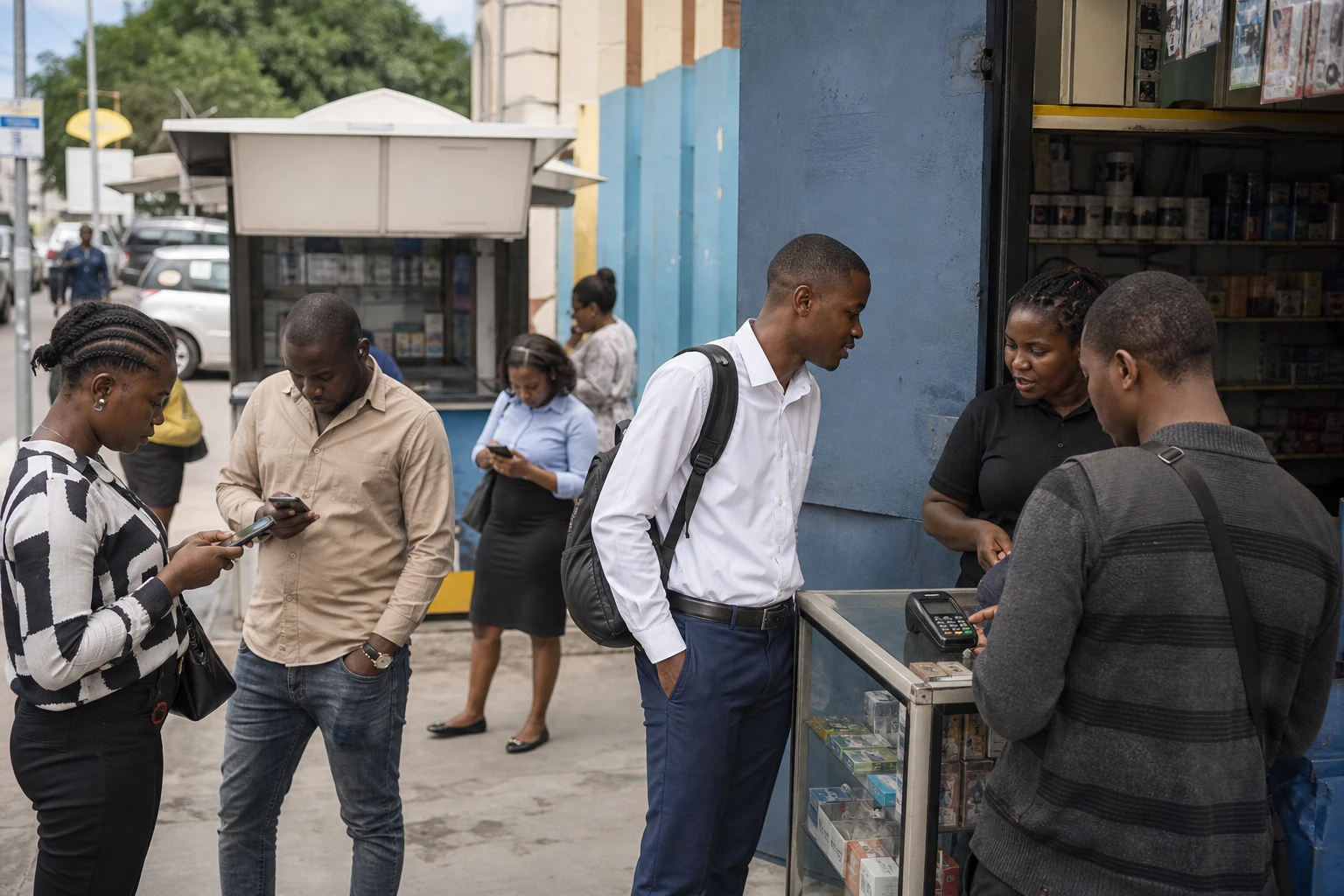
Luanda faces a familiar dilemma: protecting the digital sphere without expanding the reach of the law
In Angola, the digital battle is no longer just about network quality. It is also about the extent of state powers, at a time when phones, payments and business communications increasingly depend on connected infrastructure. The recent sequence of events around cyber security shows a country seeking to protect itself against attacks, but where every new rule immediately raises questions about civil liberties.
The capital, Luanda, is home to a large share of digital activity, decision-making and vulnerabilities. The debate therefore extends beyond parliament. It affects telecoms operators, banks, government agencies and millions of Angolans who use their phones as a gateway to essential services. In a country that belongs to the Southern African Development Community (SADC), cyber security is becoming an issue of economic sovereignty as much as public safety.
Law passed after a year already packed with contentious legislation
On Wednesday 12 August, Angola’s National Assembly passed the cyber security law by 104 votes in favour from the MPLA and 56 votes against from UNITA, the main opposition party. The vote followed several months of debate on the same bill. In January, MPs had already approved the proposal at its initial stage, before detailed discussion was suspended in early July for substantive and technical revisions.
The government argues that the law will provide a better framework for dealing with cyber threats and cyberattacks, as public and private services rapidly go digital. As early as October 2025, the Council of Ministers had presented a package comprising the cyber security law, a law against false information online and the creation of dedicated institutional tools. This legal framework reflects a broader strategy of control over the digital sphere.
At the same time, UNITA and several civil society voices fear that some obligations imposed on operators are worded too broadly. The most sensitive provision concerns the transmission to the authorities of “any communication” deemed criminal or harmful to state security. In a law of this kind, the line between cybercrime, disinformation and political dissent can quickly become blurred.
The Unitel precedent has strengthened the security argument
The law was passed just days after a cyberattack disrupted Unitel, the country’s main phone operator. On 28 July, the company reported an attack detected at around 2.20am local time, with nationwide outages affecting voice services, mobile data and the internet. Reuters reported that more than 21 million customers were affected, in a country where Unitel is a central communications link.
Angolan media confirmed that the outage affected electronic payments, cash machines and some everyday economic activities. In other words, the incident did not just affect individual users. It highlighted the country’s dependence on a single mass-market infrastructure. In this context, the government’s argument is straightforward: without a stronger legal arsenal, the next attack could cost even more.
But the security-focused reading does not exhaust the debate. Unitel is also a symbol of the economy in transition. The operator entered the local market at the time of the attack, in a development closely watched by investors. The question is therefore twofold: how can critical infrastructure be protected, and how can a law written for security be prevented from opening the door to broader surveillance of everyday communications?
At the heart of the debate: access to personal data
The law is of particular concern because of the role it gives phone operators in the reporting chain. In practice, a telecoms company could be required to report content considered unlawful and then pass related data to the authorities. The lawyer cited in the public debate warns against an overly vague definition of what constitutes a threat to the state. A poorly defined instruction could quickly encompass a call to protest, a union slogan or an online campaign.
The issue cannot be viewed separately from the rest of the legal framework. A few days before the vote, a law against false information online came into force, carrying sentences of up to ten years in prison depending on the severity of the offence. Taken together, these laws point to a more tightly regulated digital environment, as the country is already preparing for the 2027 general election, confirmed in Angola’s electoral documentation.
This timeline matters. In Angola, the fifth legislature runs until 2027, and the next electoral cycle will shape how the executive uses — or chooses not to use — its new control tools. In Luanda, the government presents cyber security as a form of protection. Many in the opposition also see it as an instrument of political deterrence. Both interpretations coexist, and the final wording of the implementing decree will say far more than the vote itself.
A signal for Southern Africa and beyond
Angola’s case reaches beyond its borders because it brings together three trends seen in several African countries: the growing number of attacks on critical operators, the rise of a more exposed digital economy, and governments’ temptation to strengthen their powers of data collection and control. At regional level, SADC, as well as the African Union, is closely watching the balance between protecting networks and respecting rights.
For businesses, the lesson is immediate: cyber security is no longer limited to servers. It concerns continuity of services, customer confidence and the stability of payments. For citizens, the question is different: will a law designed to counter digital attacks remain a safety net, or become an overly broad filtering tool? In Luanda, as in other African capitals, an important part of digital sovereignty is now at stake.