Algeria
 Egypt
 Libya
 Sudan
 Tunisia
 Benin
 Burkina Faso
 Cabo Verde
 Côte d'Ivoire
 Ghana
 Guinea
 Guinea-Bissau
 Liberia
 Mali
 Mauritania
 Niger
 Nigeria
 Senegal
 Sierra Leone
 The Gambia
 Togo
 Cameroon
 Central African Republic
 Chad
 DR Congo
 Equatorial Guinea
 Gabon
 Republic of the Congo
 São Tomé and Príncipe
 Burundi
 Comoros
 Djibouti
 Eritrea
 Ethiopia
 Kenya
 Madagascar
 Malawi
 Mauritius
 Mozambique
 Rwanda
 Seychelles
 Somalia
 South Sudan
 Tanzania
 Uganda
 Angola
 Botswana
 Eswatini
 Lesotho
 Namibia
 South Africa
 Zambia
 Zimbabwe
In Morocco, the spot can decide an entire tournament
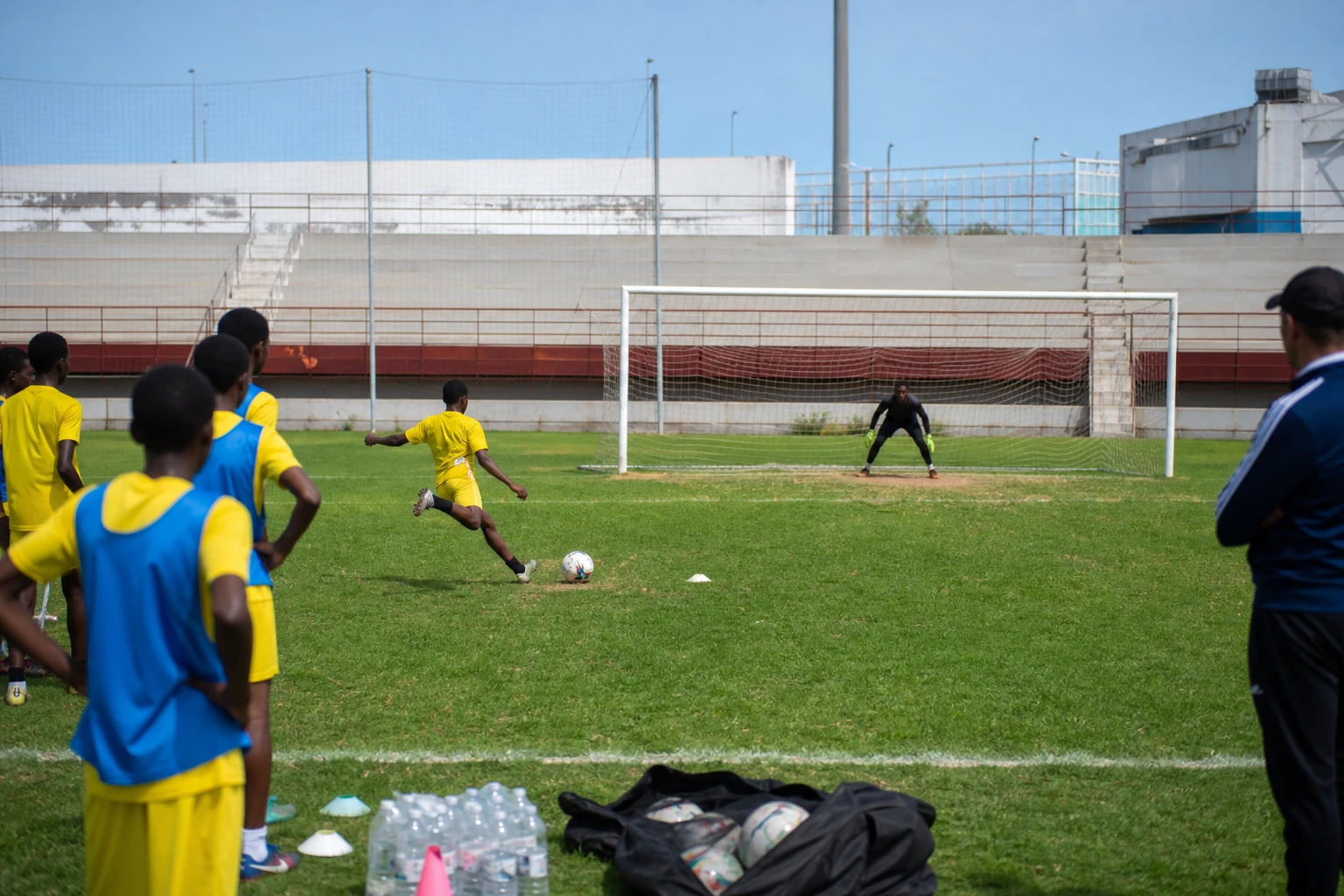
Twelve metres. Sometimes, that is enough to turn an entire campaign on its head. In Morocco, the penalty is no longer just a technical skill. It has become a symbol of composure, tension and, depending on the night, sporting cruelty. In a country where Rabat now hosts major continental events, every penalty carries weight far beyond the pitch.
Moroccan football experiences this tension across both national teams, men’s and women’s. The Atlas Lions have shown they can turn a penalty shootout into a display of cool-headedness. The Atlas Lionesses, too, have learnt to handle these decisive moments. But the other side of the same scenario keeps returning: a post, a crossbar, a shot that is too predictable, and an entire team watching its prospects fade.
A country now a major force in African football
Morocco approaches these episodes not as a peripheral team. Since reaching the semi-finals of the 2022 World Cup in Qatar, it has established itself among the major centres of African football. Rabat, the capital, has become a leading sporting hub, with stadiums hosting both CAF competitions and major matches involving Moroccan national teams. This rise has fuelled high expectations, but also particular pressure in decisive moments.
At regional level, the issue goes beyond Morocco alone. CAF competitions bring North Africa, West Africa, Southern Africa and the rest of the continent together in the same spotlight. In this setting, a missed penalty quickly becomes a matter of sporting reputation, media narratives and collective memory. Morocco is all the more exposed because it is establishing itself as a regular host country and a natural contender to stage major finals.
Flashes of success, but also missed opportunities
The contrast is stark. On 6 December 2022, in Doha, Yassine Bounou sent Morocco through to the World Cup round of 16 against Spain. After a 0-0 draw, he saved three Spanish penalties and secured his side a place in a historic quarter-final. That shootout cemented the idea of a national team capable of keeping its composure under extreme pressure.
The Atlas Lionesses have also shown they can hold firm in tight matches. In July 2022, in Rabat, the women’s team eliminated Nigeria on penalties in the semi-finals of the Women’s Africa Cup of Nations. Two years later, at the 2024 Women’s Africa Cup of Nations hosted by Morocco, Yasmin Mrabet scored a penalty against Senegal in the group stage, confirming the central role of set-pieces in Moroccan football.
But defeats have made an equally lasting impression. In the 2019 Africa Cup of Nations round of 16, Hakim Ziyech saw his stoppage-time penalty hit the post against Benin. Morocco then lost the shootout. Five years later, at the 2023 Africa Cup of Nations, played in early 2024, Achraf Hakimi hit the crossbar against South Africa in the 85th minute. Moments later, Bafana Bafana sealed Morocco’s elimination. In both cases, the fine margin mattered more than possession.
What these penalties say about African football at the highest level
A penalty is never simply a one-on-one contest. It brings together mental preparation, the taker’s routine, the goalkeeper’s decision and the atmosphere of an entire stadium. Morocco has shown this in both directions. When the players’ nerves are steadier than the surrounding pressure, they can win tight matches. When tension lasts too long, the movement becomes restricted and the target unforgiving. This is a reality of football at the highest level, not a curse in itself.
The consequences differ for those involved. For officials and coaches, a missed penalty raises questions about methods, the order of takers and emotional management. For players, it can have a lasting effect on confidence and how the public sees them. For supporters, it feeds a collective narrative of achievement and frustration, often amplified on social media. Among the Atlas Lionesses, this phenomenon has taken on an added dimension as expectations rise alongside the growing visibility of women’s football in Morocco.
In Rabat, the pressure is also political and symbolic. Morocco hosts continental competitions, invests in its infrastructure and wants to remain a benchmark for event organisation in Africa. In this context, every elimination or penalty-shootout victory becomes a test of sporting credibility. The country is no longer playing simply to progress to the next round. It is playing to confirm its status.
A Moroccan story, but also a continental one
African football is entering a phase in which the margins are narrowing. The leading national teams are better prepared. Coaching staff are working more on psychology and end-of-match scenarios. Penalty shootouts, long regarded as a lottery, are becoming a discipline in their own right. Morocco’s experience illustrates this shift: a team can be heroic, frustrated and then dominant again, all because of a single shot.
The continent can also draw a broader lesson. CAF competitions are no longer decided by raw talent alone, but by the ability to manage periods of pressure, the tempo of extra time and emotional discipline. Through its recent successes, disappointments and continental titles in several categories, Morocco remains one of the clearest illustrations of this reality. The penalty spot is not fate. It has become a mirror of African football at the highest level.