Algeria
 Egypt
 Libya
 Morocco
 Sudan
 Tunisia
 Benin
 Cabo Verde
 Côte d'Ivoire
 Ghana
 Guinea
 Guinea-Bissau
 Liberia
 Mali
 Mauritania
 Niger
 Nigeria
 Senegal
 Sierra Leone
 The Gambia
 Togo
 Cameroon
 Central African Republic
 Chad
 DR Congo
 Equatorial Guinea
 Gabon
 Republic of the Congo
 São Tomé and Príncipe
 Burundi
 Comoros
 Djibouti
 Eritrea
 Ethiopia
 Kenya
 Madagascar
 Malawi
 Mauritius
 Mozambique
 Rwanda
 Seychelles
 Somalia
 South Sudan
 Tanzania
 Uganda
 Angola
 Botswana
 Eswatini
 Lesotho
 Namibia
 South Africa
 Zambia
 Zimbabwe
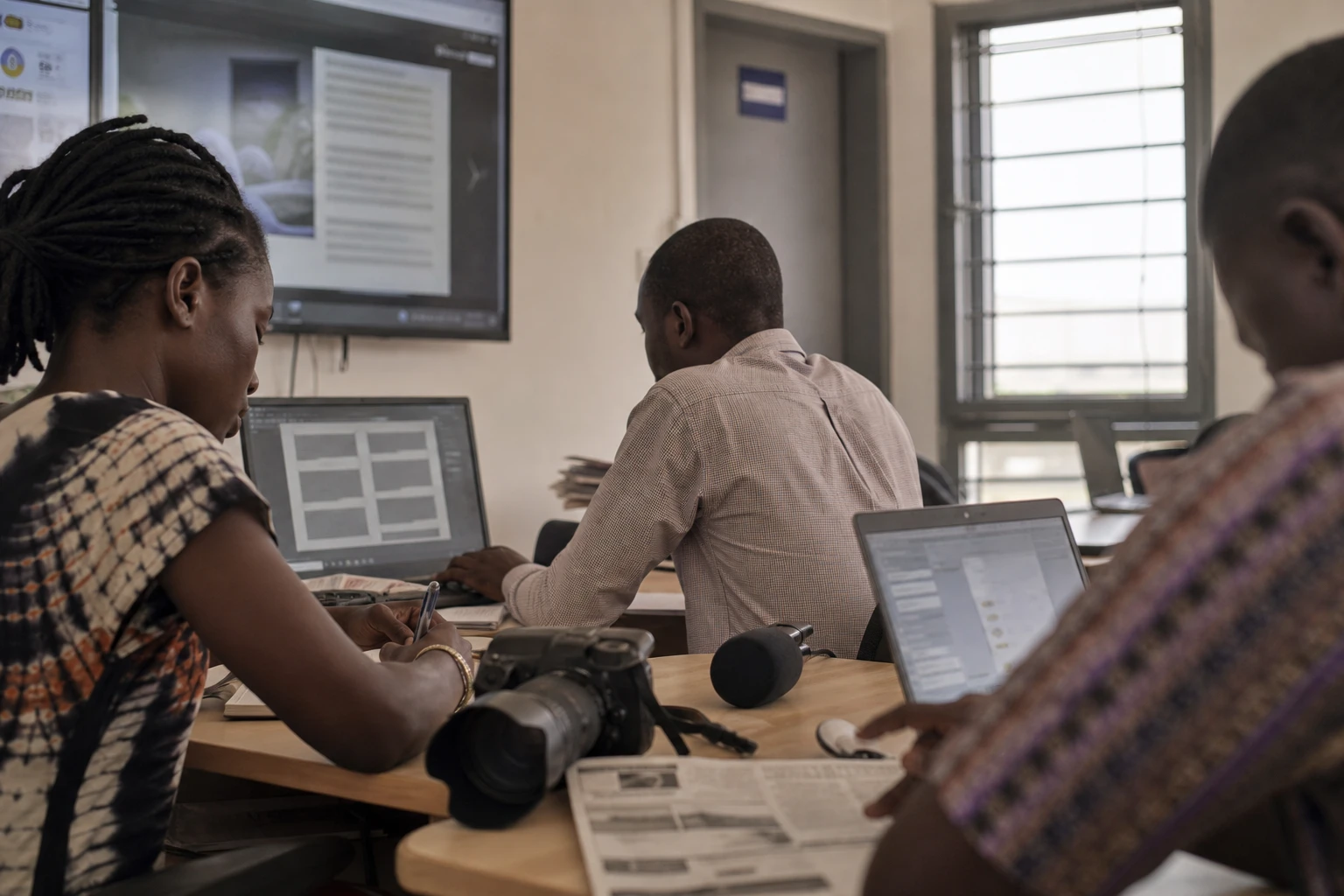
When security also shapes newsrooms
In Burkina Faso, the war against armed groups is transforming not only roads, schools and markets. It is also reshaping how the state speaks, trains people and oversees information. In this landscape, the role of journalists is more exposed, more contested and, at times, more closely tied to the narrative of national mobilisation.
The country has been under severe security pressure for several years, with a transitional government in Ouagadougou and official rhetoric focused on sovereignty, discipline and collective effort. This approach is accompanied by public initiatives combining civic values, patriotic training and oversight of state employees, including civilians. In this context, the idea of an immersion programme organised for journalists is not simply a technical workshop. It touches on the sensitive boundary between understanding conditions on the ground and proximity to the security apparatus.
What happened in Pabré
In Pabré, about 20 kilometres north-west of Ouagadougou, more than 40 journalists from public and private media outlets took part in a session organised by the Ministry of Security. According to the authorities, the activity took place at the Police Academy and aimed to bring participants closer to the daily realities of the defence and security forces engaged against armed groups.
Images broadcast by public media showed participants wearing military uniforms during some sessions. The closing ceremony brought together government officials, including the Minister of Communication and government spokesman, Pingdwendé Gilbert Ouédraogo. He called on journalists to combine patriotism with professionalism, stressing the idea of a profession practised in the service of the country. The director-general of the Police Academy, Lassina Traoré, described the immersion as a way to help participants understand the missions and constraints of forces deployed on the ground.
The official message is clear: according to the authorities, the aim is not to militarise the press, but to immerse it more fully in Burkina Faso’s security realities. This approach is not new. It is part of a series of “patriotism” initiatives already applied to other social groups, including students, staff of the Prime Minister’s Office and civilian ministry employees. The Burkinabè state has even set up a dedicated platform for compulsory patriotic immersion, showing that the exercise goes beyond journalists.
An initiative that raises questions about press freedom
Press freedom advocates reacted immediately. Reporters Without Borders (RSF) warned against assimilating journalists with combatants. In the organisation’s view, the press should neither wear uniforms nor be integrated into the war effort. The issue goes beyond clothing. It touches on the independence of journalistic scrutiny, critical distance and the ability to report events without becoming part of institutional communications.
This concern is rooted in an already tense context. RSF has documented several cases in recent years of Burkinabè journalists being targeted, arrested, requisitioned or forced into silence. The organisation has reported abductions and disappearances of reporters, as well as the sidelining of professionals critical of the authorities. RSF’s 2025 World Press Freedom Index ranks Burkina Faso 105th out of 180 countries, a sign of the deteriorating media environment.
In this climate, training organised by the Ministry of Security cannot be seen as a neutral activity. Even if the authorities present it as educational, it creates a powerful symbol: a press invited to share, at least partly, the codes of the armed institution. For some observers, this may improve mutual understanding. For others, it could normalise political pressure on newsrooms, particularly media outlets already working under constraints in a country in a state of diffuse war.
What this means for Burkinabè people, and beyond
For the authorities, the benefits are clear. They want to strengthen national support for the security campaign, stabilise the public narrative and reduce misunderstandings between the armed forces and the media. For journalists, the question is more delicate. A better understanding of conditions on the ground can help them report operations accurately. But accepting symbolic proximity to the military apparatus may also undermine perceptions of independence, especially if political pressure on newsrooms is already mounting.
The clearest risk concerns the day-to-day practice of journalism. In a country where armed groups still control areas, travel remains dangerous and public discourse is heavily politicised, Burkinabè journalists already have to balance access to the field, personal safety and rigorous verification. At best, training designed by the authorities could provide useful guidance. At worst, it could foster the idea that a good journalist is first and foremost a loyal journalist, rather than a free one.
This tension is not confined to Burkina Faso. It resonates across West Africa, where several states facing insecurity are strengthening patriotic rhetoric and oversight of the media. Burkina Faso, Guinea, Mali and Niger now share a political outlook shaped by asserted sovereignty and unsettled regional institutions, notably the Economic Community of West African States (ECOWAS). In this context, the way Ouagadougou treats its press is being watched well beyond its borders.
The next steps will therefore be closely watched. If the immersion becomes regular, as the authorities have announced, it will set a lasting precedent. The real question will no longer be simply how many journalists take part. It will be what safeguards for independence accompany these sessions, and whether the Burkinabè press can continue to fulfil its watchdog role without being absorbed into the language of national mobilisation.