Egypt
 Libya
 Morocco
 Sudan
 Tunisia
 Benin
 Burkina Faso
 Cabo Verde
 Côte d'Ivoire
 Ghana
 Guinea
 Guinea-Bissau
 Liberia
 Mali
 Mauritania
 Niger
 Nigeria
 Senegal
 Sierra Leone
 The Gambia
 Togo
 Cameroon
 Central African Republic
 Chad
 DR Congo
 Equatorial Guinea
 Gabon
 Republic of the Congo
 São Tomé and Príncipe
 Burundi
 Comoros
 Djibouti
 Eritrea
 Ethiopia
 Kenya
 Madagascar
 Malawi
 Mauritius
 Mozambique
 Rwanda
 Seychelles
 Somalia
 South Sudan
 Tanzania
 Uganda
 Angola
 Botswana
 Eswatini
 Lesotho
 Namibia
 South Africa
 Zambia
 Zimbabwe
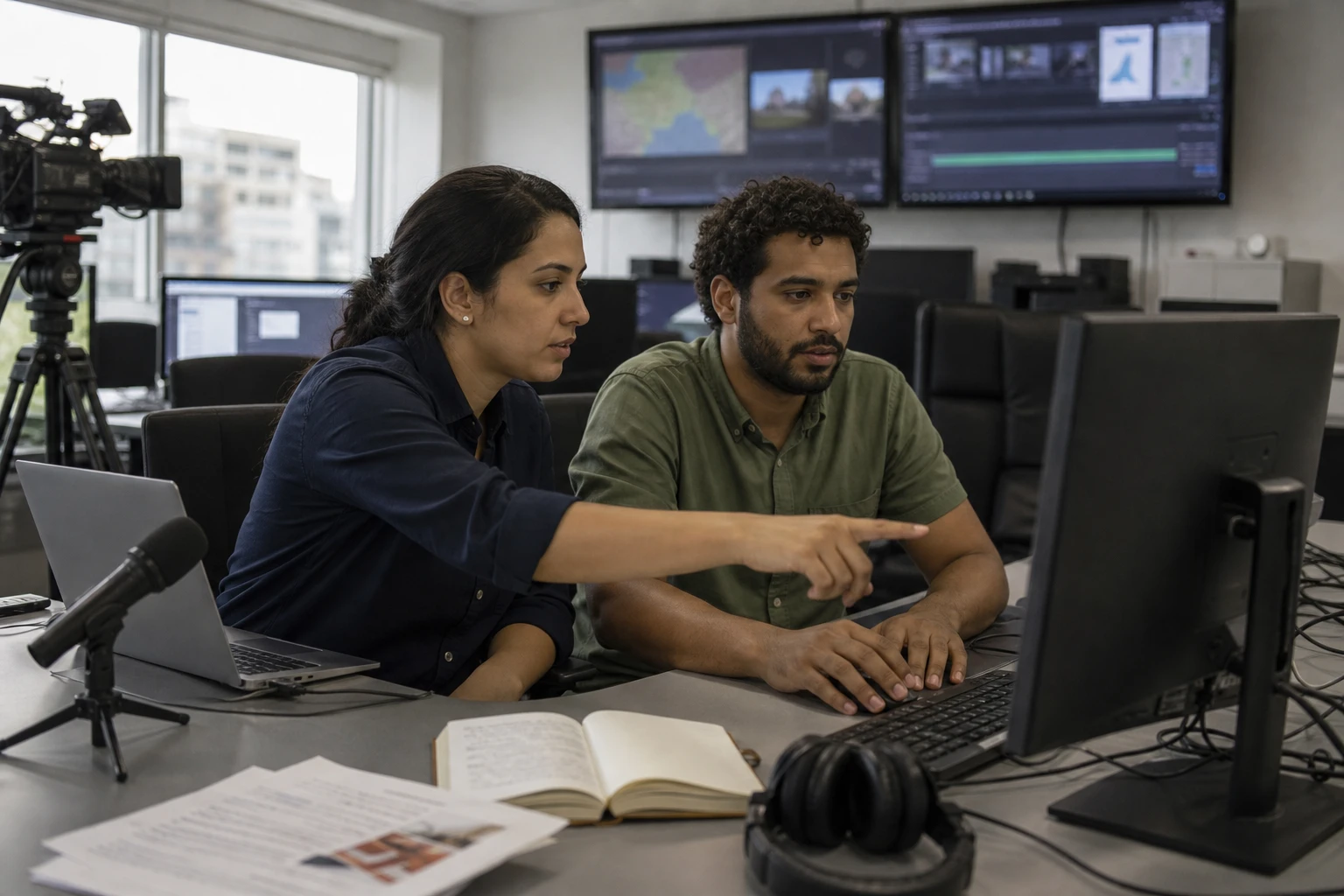
In the Sahel, Algeria has chosen to put cooperation back at the heart of the agenda
After a year of tensions, Algiers has taken the lead again on an issue that has become strategic along its southern borders. Dialogue with Niger, Burkina Faso and Mali has resumed, but at different speeds. Energy paved the way, diplomacy followed, and security then took over. In this sequence, Algeria and its capital Algiers are above all seeking to consolidate a more stable Sahelian border, without compromising on the principles of sovereignty and non-interference.
This return to dialogue is taking place in a region where the balance of power is shifting rapidly. Niger, Burkina Faso and Mali have left ECOWAS, the Economic Community of West African States, to establish the Confederation of Sahel States, a political and security alliance born amid military transitions and tensions with several neighbours. For Algiers, this reshaping of its neighbourhood is no minor matter: it affects control of routes, borders, energy and trade flows.
From the 2025 rupture to the 2026 thaw
The breakdown took hold in spring 2025, after a Malian drone was destroyed near Tin Zaouatine, a border town in southern Algeria. Algiers said the aircraft had violated its airspace, while Bamako disputed this account. On 1 April 2025, tensions escalated, and the three AES states then recalled their ambassadors. In July 2026, Algeria and Mali announced the return of their representatives and the reciprocal reopening of their airspaces.
The issue became political well beyond the airspace incident alone. In September 2025, the dispute was even brought before the United Nations General Assembly, a sign that the quarrel had gone beyond the bilateral framework. But in 2026, Algiers sent a series of conciliatory signals, particularly to Niamey, where relations were normalised sooner than with Bamako.
With Niger, the resumption was swift and methodical. On 12 February 2026, Algiers announced the immediate return of its ambassador to Niamey, after the Nigerien representative had returned to Algiers. In mid-February, Nigerien President Abdourahamane Tiani was received in Algeria, with emphasis placed on borders, counter-terrorism cooperation and bilateral mechanisms. At the end of March, the second session of the Joint Grand Commission was held in Niamey.
This timetable matters because it shows a method. Algiers did not reset everything at once. Normalisation began with issues that produce visible results: energy, infrastructure, air traffic, and then security. This step-by-step progress also reflects the realities of the central Sahel, where states need practical solutions more than grand declarations.
Energy as a bridge, the gas pipeline as a flagship
The most symbolic project is the Trans-Saharan Gas Pipeline, or TSGP. On 4 June 2026, in Aoulef, in Algeria’s Adrar Province, Algeria, Niger and Nigeria launched work on the Algerian section. The third part of the project follows a simple logic: bring Nigerian gas north via Niger and then to Hassi R’Mel, Algeria’s major gas hub. The stated aim is then to export it to international markets, including Europe.
The TSGP is not new. It has been discussed for decades, and an intergovernmental agreement was signed in Abuja in 2009. But its effective launch in 2026 changes its significance. The project links three countries across more than 4,000 kilometres and gives Niger a central transit role. For Niamey, this opens up prospects for revenue, infrastructure and strategic positioning. For Algiers, it is a way to anchor its Sahelian neighbourhood more firmly in an energy framework in which the country already has export infrastructure to the Mediterranean.
Comparison with the Nigeria-Morocco project, known as the African Atlantic Gas Pipeline, is inevitable. The trans-Saharan route is shorter and crosses fewer states. Its supporters therefore see advantages in terms of clarity and cost. But the debate is not limited to the pipeline’s geometry. It is also about the states’ ability to secure corridors, finance the work and meet deadlines. The African Development Bank has already said it is ready to take part in the financing, an important point on a continent where major projects often fail for lack of a solid financial backing.
Alongside this flagship project, less visible cooperation matters just as much. In February 2026, Sonatrach and SONABHY, Burkina Faso’s national hydrocarbons company, examined potential partnerships in Ouagadougou in hydrocarbons, investment, expertise and the supply of refined products. These discussions are less spectacular than a major pipeline, but they affect everyday life: fuel, logistics, training and security of supply.
A useful but still uneven thaw
Burkina Faso has followed a quieter path than Niger. The Algerian visit to Ouagadougou in February 2026 focused on mining, electricity, rural electrification and skills transfer. This is important because it shows that the relationship is not limited to heads of state. It also involves government departments, public companies and areas outside the capitals, where access to energy remains a direct concern.
With Mali, however, normalisation remains more fragile. The return of the ambassador and the reopening of airspace, agreed on 10 July 2026, brought a crisis period to a close, but not all the political disputes. Algiers presented the thaw as a victory for diplomatic methods. Bamako, for its part, stressed the need to reinvigorate cooperation. The two interpretations converge on one point: the shared border, about 1,400 kilometres long, remains the most sensitive issue.
The fragility of the Malian case is also linked to the military situation on the ground. In 2026, fighting in northern Mali continued to weigh on relations with Algiers. This is why analysts, including the International Crisis Group, recommend starting with border security before hoping for a broader political agreement. The Institute for Security Studies, for its part, sees these differentiated rapprochements as a test for the Confederation of Sahel States, since political solidarity does not erase individual national interests.
What this sequence says about North Africa and the Sahel
For Algeria, the resumption of ties with Niamey, Ouagadougou and Bamako confirms a long-standing policy: engage with the Sahel, remain present along its southern borders and avoid regional isolation. In a Saharo-Sahelian region marked by military transitions, terrorism, diplomatic tensions and competition over resources, Algiers is seeking to play the role of mediator, as well as energy and security provider.
At continental level, the stakes go beyond Algeria. The TSGP, joint commissions and airspace reopenings show that African cooperation can make progress even when regional frameworks are being disrupted. The next test will be whether the three AES capitals can turn these gestures into concrete results: the movement of people, border protection, investment and a timetable for the gas pipeline. The credibility of the rapprochement will be decided there.