Algeria
 Egypt
 Libya
 Morocco
 Sudan
 Tunisia
 Benin
 Burkina Faso
 Cabo Verde
 Côte d'Ivoire
 Guinea
 Guinea-Bissau
 Liberia
 Mali
 Mauritania
 Niger
 Nigeria
 Senegal
 Sierra Leone
 The Gambia
 Togo
 Cameroon
 Central African Republic
 Chad
 DR Congo
 Equatorial Guinea
 Gabon
 Republic of the Congo
 São Tomé and Príncipe
 Burundi
 Comoros
 Djibouti
 Eritrea
 Ethiopia
 Kenya
 Madagascar
 Malawi
 Mauritius
 Mozambique
 Rwanda
 Seychelles
 Somalia
 South Sudan
 Tanzania
 Uganda
 Angola
 Botswana
 Eswatini
 Lesotho
 Namibia
 South Africa
 Zambia
 Zimbabwe
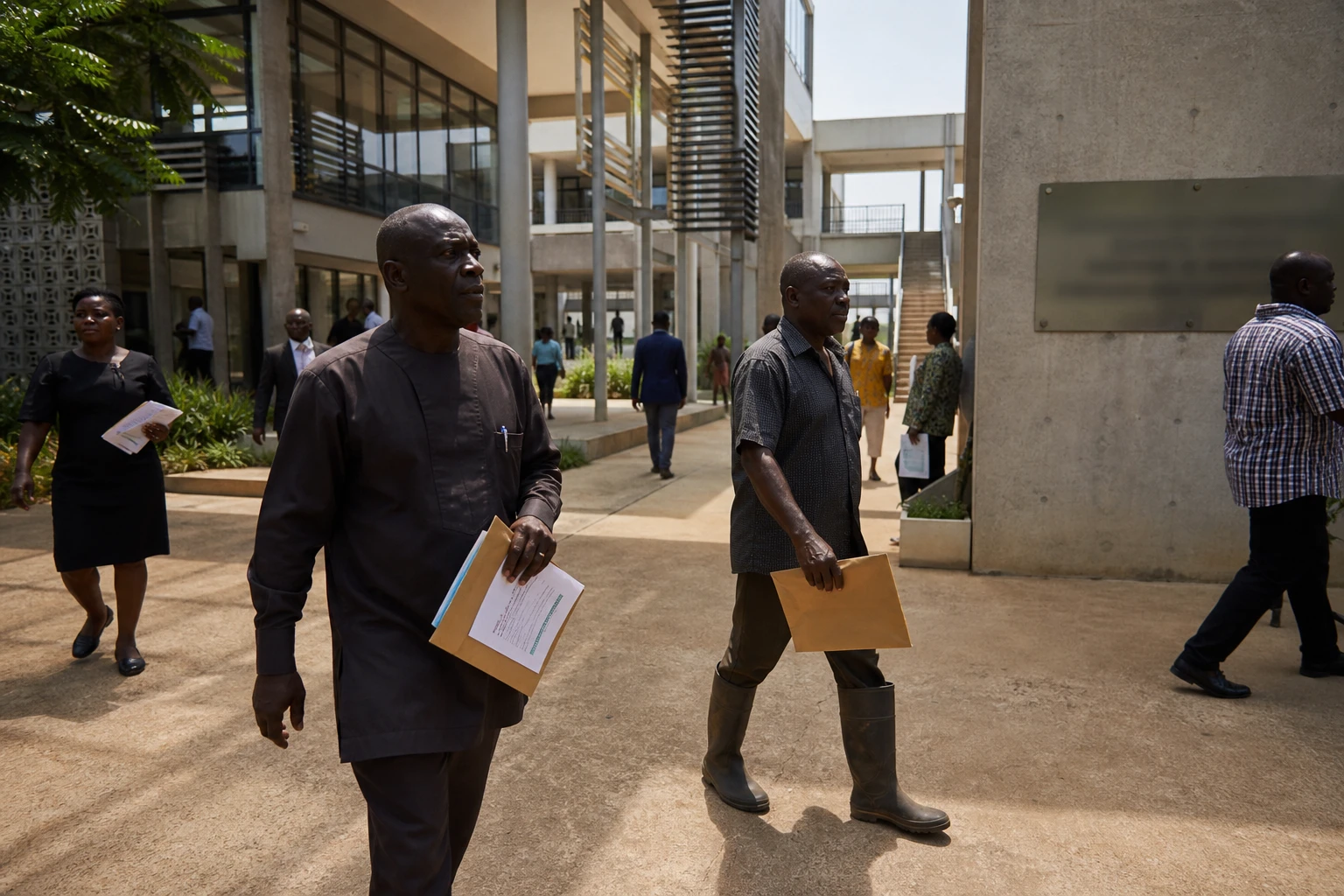
When protecting cocoa also becomes a land rights issue
In Ghana, cocoa farming is not just an export sector. It is also a way of life, a family investment and a legacy passed down through generations. So when the state seeks to safeguard plantations, it touches a sensitive balance: protecting an agricultural asset without taking away Ghanaians’ control over their own land.
This tension comes as the sector is still facing upheaval. In 2026, COCOBOD had to contend with payment delays, debts to farmers and licensed buyers, and intense political pressure to reform a system seen as too cumbersome. Cocoa remains a pillar of the country’s economy, but it now depends on tougher trade-offs between financing, productivity and land security.
The law passed in Accra and what it changes
Ghana’s parliament passed a reform in late July or very early August 2026 that gives cocoa plantations protected status. From now on, any conversion of a cocoa farm to another use must be authorised by the Ghana Cocoa Board, better known as COCOBOD, the sector’s public regulator. The law is primarily intended to stem the decline in national production, amid pressure from illegal mining, the shift to other crops such as rubber and, more broadly, competition for rural land.
The tougher approach is significant. The law provides for penalties of up to 20 years in prison for certain illegal conversions linked to gold mining, as well as fines for each cocoa tree affected. The principle stated by the authorities is clear: cocoa must be treated as a strategic national resource. COCOBOD has also said the reform is part of a wider modernisation, with new rules on financing, producer price-setting and protecting farms from external threats.
But President John Dramani Mahama had not yet signed the law when the first public protests emerged. In other words, the country was entering a decisive phase: the law had been passed, but its final form remained politically open to change. This is often when the most specific criticisms come to the fore.
Why producers are concerned
Farmers’ organisations do not reject the idea of protecting cocoa farms. They object to the way it is being done. Their concern is simple: that a farmer could be penalised for clearing a plantation that has become diseased, unprofitable or too old, even if they are simply trying to keep their farm viable. Moses Djan Asiedu, of the Ghana Cooperative Cocoa Farmers and Marketing Association Limited, summed up this unease, explaining that many farmers first invest their own resources, then wait years before earning their first income.
This point is central. In cocoa-growing areas, the initial costs are high: acquiring land, clearing it, maintaining it, treating diseases and replacing trees. If the law does not clearly distinguish speculative conversion from an agricultural management decision, it risks turning a choice made to ensure economic survival into a criminal offence. This is precisely the ambiguity that farmers’ organisations want resolved before the law is signed.
The debate is all the more heated because cocoa profitability has become less predictable. In February 2026, Ghana’s government cut the farmgate price paid to producers, then promised to reform the price-setting mechanism to make it more responsive to global markets. COCOBOD has also acknowledged financing constraints and made payments on several occasions to clear some of its arrears. In this context, asking producers to preserve a plantation at all costs while bearing the economic risks alone seems difficult to justify to many of them.
Galamsey, cocoa prices and the fragility of Ghana’s crop
The heart of the problem is not only legal. It is also territorial. In several regions of Ghana, cocoa-growing land is under pressure from illegal gold mining, known locally as galamsey, as well as conversion to rubber or residential use. Ghanaian media and news agencies have documented this erosion of agricultural land, while COCOBOD itself has made farm protection one of the reform’s priorities.
The issue directly affects rural communities far more than urban centres. In rural areas, cocoa supports entire families and feeds local markets, informal transport, small businesses and seasonal employment. In Accra, the debate is framed in terms of export revenue and macroeconomic stability; in producing districts, it is first and foremost about incomes, debts and the ability to get by until the next harvest. That is where the reform will be judged.
Ghana’s system adds another layer of complexity. The authorities set a price at the start of the season and sell most of the beans through licensed operators, in order to shield producers from global market fluctuations. But international prices have been highly volatile. They topped $12,000 a tonne in 2024 before falling back to around $4,000 as supply recovered. This volatility fuels both farmers’ expectations and the authorities’ caution.
What this issue says about Ghana and West Africa
At regional level, Ghana is not an isolated case. Together with Côte d’Ivoire, it accounts for a large share of global cocoa production. Decisions taken in Accra therefore resonate across ECOWAS, where the issue is not only agricultural but also commercial, budgetary and industrial. When a major producing country changes its land rules, it sends a signal to buyers, processors and neighbouring countries.
The continental implications are just as clear. Ghana’s reform comes as producing countries seek greater local value addition, improved traceability and a co-ordinated response to new market requirements, particularly in Europe. COCOBOD has also cited compliance with the European Union’s anti-deforestation regulation, as well as African regional standards, as a competitiveness issue. The matter therefore goes beyond protecting trees: it concerns how Africa intends to defend its industries in global markets.
One crucial question remains: will the law be amended to clearly distinguish between protecting cocoa from speculative conversion and a farmer’s freedom to restructure a plot that is no longer viable? The credibility of Ghana’s reform will depend on where the line is drawn between collective protection and the day-to-day management of farms.