
 Algeria
 Egypt
 Libya
 Morocco
 Sudan
 Tunisia
 Benin
 Burkina Faso
 Cabo Verde
 Côte d'Ivoire
 Ghana
 Guinea
 Guinea-Bissau
 Liberia
 Mauritania
 Niger
 Nigeria
 Senegal
 Sierra Leone
 The Gambia
 Togo
 Cameroon
 Central African Republic
 Chad
 DR Congo
 Equatorial Guinea
 Gabon
 Republic of the Congo
 São Tomé and Príncipe
 Burundi
 Comoros
 Djibouti
 Eritrea
 Ethiopia
 Kenya
 Madagascar
 Malawi
 Mauritius
 Mozambique
 Rwanda
 Seychelles
 Somalia
 South Sudan
 Tanzania
 Uganda
 Angola
 Botswana
 Eswatini
 Lesotho
 Namibia
 South Africa
 Zambia
 Zimbabwe
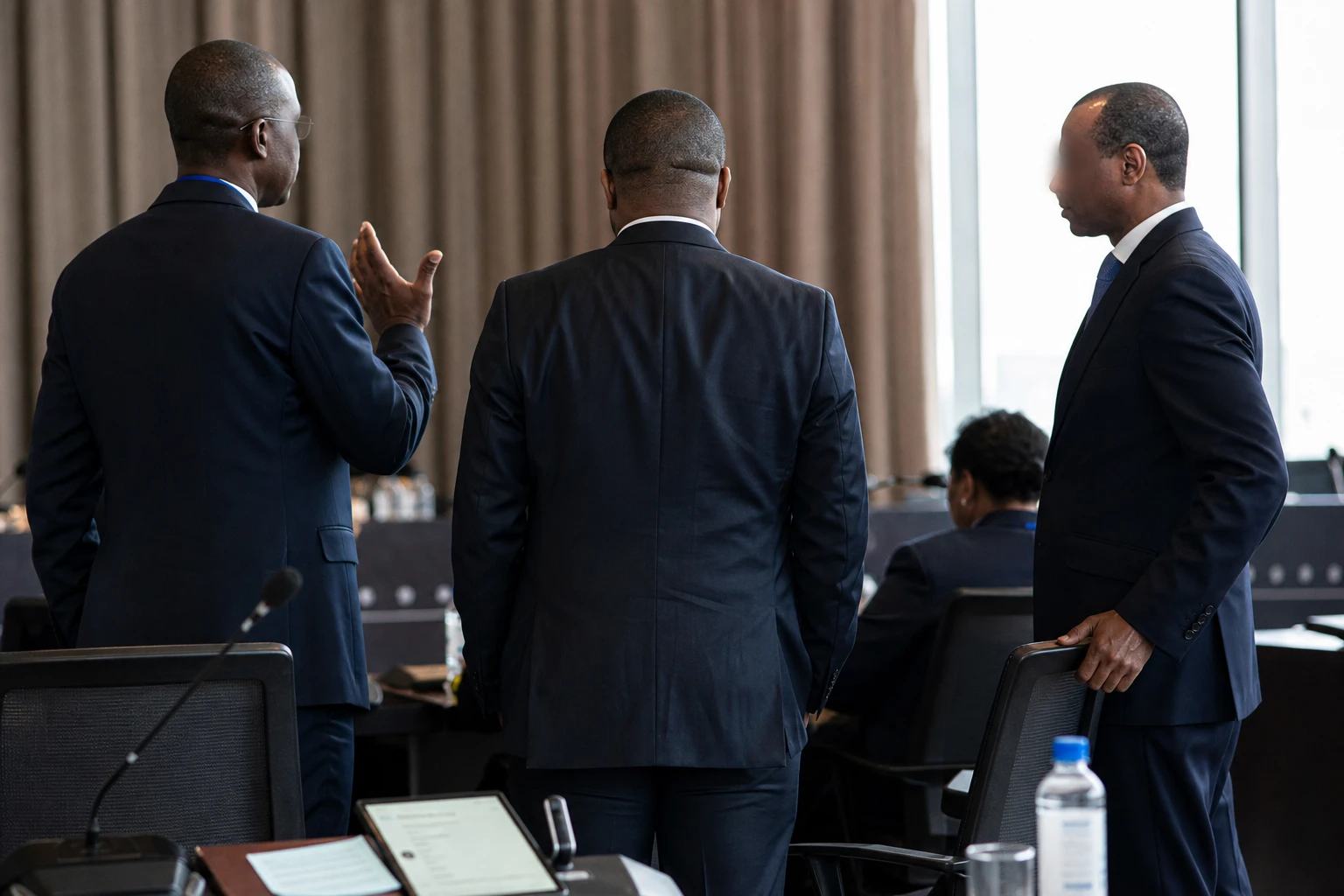
In Kigali, Bamako makes the case for African-designed security
In the Sahel, the question is no longer just who is firing, but who is making the decisions. For Mali, the answer now rests on a simple idea: African security must first rely on African resources, African choices and African chains of command. It was in this spirit that Mali’s foreign minister, Abdoulaye Diop, spoke in Kigali, Rwanda, at the second session of the International Conference on Security in Africa, known as ISCA.
The Rwandan gathering is no coincidence. ISCA presents itself as a platform for dialogue and security solutions designed on the continent. Kigali hosted the first edition in 2025, and Rwanda has promoted the forum as a space for high-level discussions on emerging threats, from armed conflicts to autonomous military technologies. Against this backdrop, the Malian foreign minister’s address forms part of a broader political sequence: a Sahel seeking to redefine its alliances, methods and room for manoeuvre.
Bamako’s message: no longer be at the mercy of technology or dependency
According to information published about the address, Abdoulaye Diop argued for security sovereignty that goes beyond buying equipment. He stressed the ability to design, produce, use and maintain modern systems, including those involving drones, artificial intelligence and autonomous systems. The idea is clear: a state that depends entirely on other powers for training, equipment and repairs to its military tools remains vulnerable, even when it has access to recent weaponry.
This discourse aligns with a consistent line in Malian diplomacy since the transition. Bamako emphasises sovereignty, diversified partnerships and the reclamation of core state functions. This position is not purely ideological. It responds to a concrete experience: the Malian authorities describe the fight against armed groups as a long-term struggle, marked by repeated attacks, cross-border pressure and a shifting balance of power in both the north and centre of the country.
The minister also situated security within cooperation between African states. In his view, the response cannot remain confined within national borders. It must involve regional frameworks able to act quickly, share intelligence and pool resources. In Mali’s case, this approach is now being pursued through the Confederation of Sahel States, or AES, which brings together Burkina Faso, Mali and Niger.
The AES, the Sahel’s political and military laboratory
The Confederation of Sahel States took shape after the three countries withdrew from ECOWAS, the Economic Community of West African States, amid political and security tensions. Since then, Bamako, Ouagadougou and Niamey have sought to build their own defence and coordination mechanisms. The AES Unified Force received its standard in Bamako on 20 December 2025, at an official ceremony marking its entry into operational service, according to the Confederation’s authorities.
Figures cited for the force vary between statements and press reports, warranting caution. However, consistent reports indicate that it began with around 5,000 troops and an integrated staff, before setting a target for gradual expansion. Its coordination headquarters was described as being based in Niamey. The issue is not merely symbolic. The three states want to demonstrate that a regional architecture can exist outside traditional frameworks or external funding.
This trajectory also reflects a political break. The disappearance of the G5 Sahel as a regional security framework, followed by institutional reshaping around the AES, has given way to a more limited and also more political approach. In this new framework, Mali is emphasising its own experience and its ability to make the case for breaking with strategic dependency. But this proclaimed autonomy will still have to prove its effectiveness on the ground, in an area where armed groups remain highly adaptable.
A Malian crisis that extends beyond its borders
The security situation remains grave. Coordinated attacks on 25 April 2026, claimed by JNIM and carried out with the Azawad Liberation Front, according to several sources, hit several parts of the country, from Bamako to Kidal, via Gao, Mopti and Sévaré. The UN described a sharp deterioration in the security environment at the end of April, while independent observers highlighted the scale of the impact on civilians and state authority.
In this context, the Kigali address is aimed as much at African partners as at the continent’s public. It conveys a broader message: security in the Sahel can no longer be considered solely in terms of external assistance, imported training or equipment bought elsewhere. It now involves industry, intelligence, digital technology and control of autonomous systems. This is also why Mali is seeking to make the AES a forum for political decision-making as well as a military framework.
The continental implications are clear. The African Union remains engaged on Mali, despite the country’s suspension from its activities since 2021. At the same time, the continental organisation and several African forums continue to stress that stability in the Sahel concerns all of West Africa, as well as trade routes, human mobility and the continent’s political balance. In the short term, attention will therefore focus on whether Mali and its AES neighbours can turn a doctrine of sovereignty into tangible results.
In Kigali, Bamako spoke not only about weapons, but also about value chains, decision-making and control. For Mali and part of the Sahel, that is where the next battle will be fought: for security sovereignty, and for its credibility.



