
 Algeria
 Egypt
 Libya
 Morocco
 Sudan
 Tunisia
 Benin
 Burkina Faso
 Cabo Verde
 Côte d'Ivoire
 Ghana
 Guinea
 Guinea-Bissau
 Liberia
 Mali
 Mauritania
 Niger
 Nigeria
 Senegal
 Sierra Leone
 The Gambia
 Togo
 Cameroon
 Central African Republic
 Chad
 Equatorial Guinea
 Gabon
 Republic of the Congo
 São Tomé and Príncipe
 Burundi
 Comoros
 Djibouti
 Eritrea
 Ethiopia
 Kenya
 Madagascar
 Malawi
 Mauritius
 Mozambique
 Rwanda
 Seychelles
 Somalia
 South Sudan
 Tanzania
 Uganda
 Angola
 Botswana
 Eswatini
 Lesotho
 Namibia
 South Africa
 Zambia
 Zimbabwe
When a health alert depends on a call, a journey or an informed family
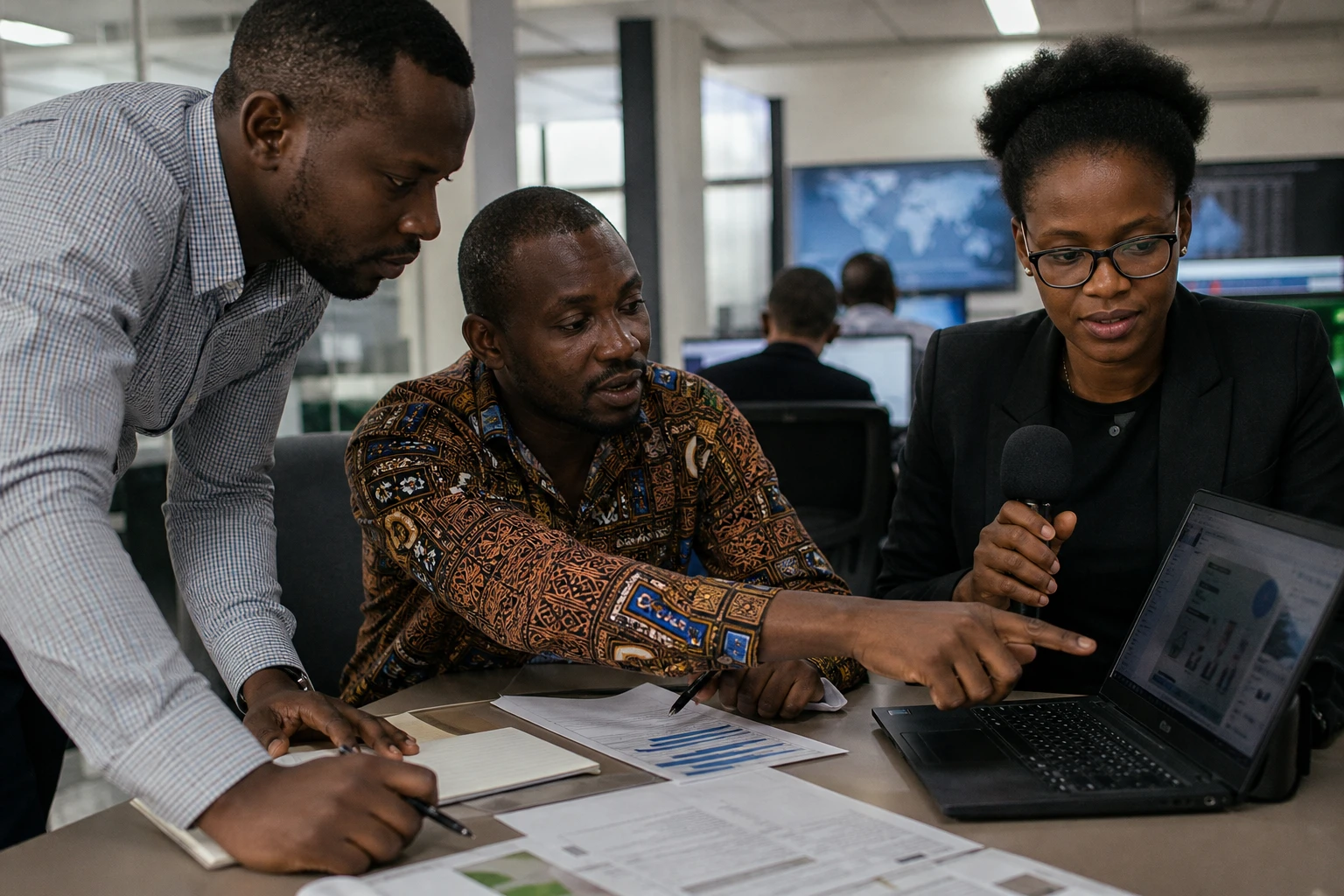
In the east of the Democratic Republic of the Congo, the response to Ebola is not playing out only in treatment centres. It is also playing out in homes, on roads, in queues and in the trust — or lack of trust — between residents and health teams. As the epidemic advances, one point is becoming clear: useful information is not always enough. Care must also be accessible, delays must be short and local contacts must be able to report a suspected case quickly.
This framing is particularly important in Ituri, a border province marked by high mobility, population displacement and security constraints. Bunia, the provincial capital, is the focus of some of the medical response, but outlying areas are often harder to reach. In this context, the Southern African Development Community, ECCAS and regional health cooperation mechanisms are not abstractions: the disease travels with people, markets and families, as well as with health emergencies that go untreated for too long.
Communities asking very practical questions
The infodemic bulletin covering the period from 27 to 31 July 2026 shows that reports from the ground are not limited to rumours. Residents first want to understand how Ebola is transmitted, which symptoms should raise the alarm, how treatment works and what happens to patients once they are admitted. The report also notes that discussions concern care, delays, information given to families and the continuity of services. This is therefore a need for clarity, not simply a rejection of the response.
The same reports also point to expressions of distrust. Some describe Ebola as a “business”, others as a political operation. The bulletin also mentions allegations that patients are being sacrificed in treatment centres. But the document’s authors go beyond simply countering misinformation: they call for families to be better informed, for explanations about free care, clearer treatment pathways and less delay in delivering laboratory results or ambulances. In other words, trust is also built through the practical organisation of public services.
This reading is consistent with findings published by WHO Africa. In Bunia, people are more involved when they understand what is happening and see a rapid response. WHO notes that communities are now asking for investigation teams, safe and dignified burials, protective equipment and information about treatments. This shift is decisive: it means residents are no longer merely recipients of health messages, but actors who demand services and help guide case detection through their alerts.
The heart of the problem: detect earlier, treat closer to home
At the same time, official data show that the epidemic remains active. As of 15 July 2026, WHO reported 2,124 confirmed cases and 828 deaths in the DRC, with cases spread across 46 health zones in five provinces. Ituri remained by far the worst affected, ahead of North Kivu, South Kivu, Haut-Uele and Tshopo. In the province, Bunia, Rwampara and Mongbwalu were among the hardest-hit areas.
These figures shed light on the authorities’ strategic choice: to bring the response closer to villages rather than concentrate most resources in Bunia. WHO has explained that some sick people leave localities where healthcare provision is too limited to reach the provincial capital, sometimes too late. This is a central point. In an epidemic that spreads rapidly, every delay increases the risk to the patient, their family and healthcare workers.
The difficulties are not only about geographical access. In Mongbwalu, at the end of July, response teams had to acknowledge delays in paying the allowances of service providers mobilised to fight Ebola. The authorities cited administrative complications, differences in pay scales and logistical problems in getting funds to the area. This kind of tension has serious consequences. When healthcare workers are operating in an environment already marked by insecurity and epidemic pressure, even the smallest disruption can weaken continuity of the response.
The situation is even more delicate because transmission chains have not been fully traced. As of 15 July, WHO said 12,693 contacts had been identified and monitored in Ituri, North Kivu and Tshopo. This figure shows the scale of the work already under way, but also the difficulty of covering a vast, mobile territory marked by population displacement. Community monitoring therefore appears to be a practical response, not just a slogan.
Communities, the new first line of the response
The approach is clearly changing. WHO and Africa CDC are promoting a village-centred strategy, with community health workers selected locally, trained and equipped to spot alerts, support contact monitoring and refer sick people for care. Since May, Africa CDC has stressed the need for continental coordination and a response that takes account of mobility, insecurity and cross-border links, particularly with Uganda. This approach reflects a simple reality: when a health system waits for a patient to come to it, it is often too late.
The same logic applies to essential services. In its field work, the IOM shared prevention messages with more than 1.4 million people in six Congolese provinces over the period from 27 July to 2 August 2026. But the challenge is no longer limited to raising awareness. The organisation also reports that patients travelling in search of care can sustain transmission, and that community surveillance must be strengthened in displacement sites. Here again, the aim is to raise the alarm more quickly, closer to where people live.
In Ituri, the change in approach also carries a political meaning in the best sense of the word: it puts residents at the centre of the response. WHO says it has observed greater acceptance of the response, with more rapid reporting and referrals to treatment centres. This outcome is no public health miracle. It stems from repeated discussions with local, religious, voluntary and community leaders. Public health cannot be imposed by decree; it must be negotiated with the realities on the ground.
A Congolese lesson that extends beyond Ituri
Ultimately, the Congolese response is a reminder of a lesson relevant to all of Central Africa: in areas where services are fragmented, epidemics spread less because of a lack of information than through a combination of delays, distance, mistrust and inadequate services. The DRC, with Kinshasa as its decision-making centre and the east of the country as its health front line, offers a difficult but valuable experience for regional responses. Community alert systems, cross-border cooperation and the ability to provide treatment closer to populations are continental issues, not merely national ones.
What happens next will therefore depend less on a single statement than on the ability to keep teams in the field, pay service providers on time, deliver laboratory results more quickly and embed surveillance in villages. This is where a decisive part of the effort to control the epidemic in the Democratic Republic of the Congo now lies.



