
 Algeria
 Egypt
 Libya
 Morocco
 Sudan
 Tunisia
 Benin
 Cabo Verde
 Côte d'Ivoire
 Ghana
 Guinea
 Guinea-Bissau
 Liberia
 Mali
 Mauritania
 Niger
 Nigeria
 Senegal
 Sierra Leone
 The Gambia
 Togo
 Cameroon
 Central African Republic
 Chad
 DR Congo
 Equatorial Guinea
 Gabon
 Republic of the Congo
 São Tomé and Príncipe
 Burundi
 Comoros
 Djibouti
 Eritrea
 Ethiopia
 Kenya
 Madagascar
 Malawi
 Mauritius
 Mozambique
 Rwanda
 Seychelles
 Somalia
 South Sudan
 Tanzania
 Uganda
 Angola
 Botswana
 Eswatini
 Lesotho
 Namibia
 South Africa
 Zambia
 Zimbabwe
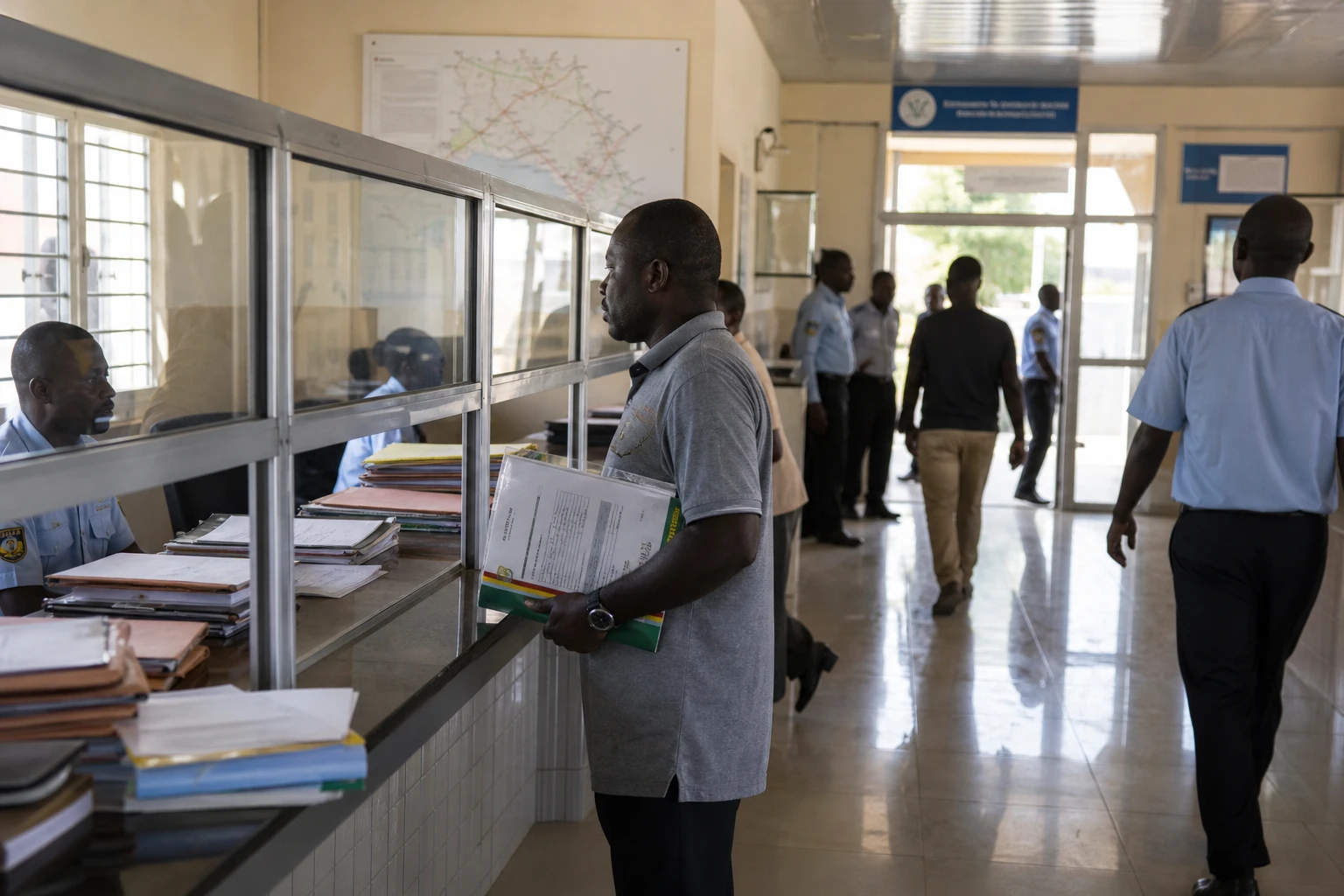
When roads become a security issue
Between Accra and Ouagadougou, road corridors do more than carry goods. They also shape the price of rice, tomatoes, fuel and spare parts. As soon as a stretch becomes riskier, transporters and traders — and ultimately consumers — bear the cost. In this pivotal zone between the Gulf of Guinea and the Sahel, security is therefore no military abstraction. It is a condition for economic life.
Ghana and Burkina Faso share a border, closely intertwined markets and converging interests in transit to the port of Tema and, more broadly, to the Atlantic. Burkina Faso depends on its coastal neighbours for a large share of its supplies. For Ghana, trade with the Sahel generates significant logistics, port and commercial revenues. In this context, securing the routes is not merely a diplomatic gesture: it directly affects regional integration in West Africa, at a time when the Alliance of Sahel States has reshaped several security balances since 2024.
An agreement focused on convoys and keeping trade flowing
Ghanaian and Burkinabè authorities have launched military cooperation aimed at better protecting trade corridors and convoys using cross-border routes. The principle is clear: strengthen escorts, share more information and reduce the exposure of goods and transporters to security risks. Burkina Faso’s Ministry of Territorial Administration confirmed, following talks held in Accra on 30 and 31 March 2026, that corridor security was central to discussions between the two capitals.
This initiative did not emerge from nowhere. The Burkina Faso embassy in Ghana had already said that a draft memorandum of understanding between the armed forces of the two countries had been circulated, while information-sharing between customs, immigration, police and the armed forces was described as essential to tackling organised crime, cross-border crime and terrorism. In other words, the issue is not solely military. It is also administrative, customs-related and logistical.
The rapprochement also took the form of seven bilateral agreements signed on 20 February 2026, following the work of the Joint Cooperation Commission. The agreements cover, among other things, mutual recognition of driving licences, road transport and transit, cross-border cooperation, disaster prevention and the fight against illicit trafficking. For businesses involved in trade, this accumulation of legal instruments is a signal: the two states want to treat the border as an organised crossing point, not a line of obstruction.
Trade between Burkina Faso and Ghana remains vital
Burkina Faso cannot afford to multiply alternative routes at the same cost. Its imports travel largely through coastal corridors, and Ghana plays a significant role in these flows. The bulletin of Burkina Faso’s ministry responsible for mobility shows that in the first quarter of 2026, the Ghana trade route accounted for 17,563 tonnes, compared with 15,840 tonnes in the first quarter of 2025, an increase of 10.88%. This growth confirms the Ghanaian corridor’s role in supplying the Burkinabè market.
For private-sector operators, the stakes are tangible. A safer corridor means fewer delays, lower security costs, reduced informal insurance charges and fewer losses of perishable goods. Conversely, every security incident weakens supply chains. The tomato sector was given a stark reminder after the 14 February 2026 attack in Titao, in northern Burkina Faso, in which a lorry carrying Ghanaian traders was targeted. Ghana’s Ministry of the Interior confirmed the incident, and several Ghanaian media outlets reported the deaths of seven Ghanaian nationals, while other figures circulated initially. This discrepancy calls for caution. The established fact remains the same: the attack sent shockwaves through the economy and politics.
In its aftermath, imports of tomatoes from Burkina Faso were temporarily suspended in Ghana. The measure exposed a sensitive trade dependence, as well as the vulnerability of a food market in which fresh vegetables move quickly and there is little room for contingency. For urban households, the impact is immediate: prices rise. For local producers, the episode may open an opportunity, provided investment is made in domestic production and storage.
What this cooperation means for the region
Politically, the initiative reflects a form of West African pragmatism. Ghana, which has stayed outside the Confederation of Sahel States, has nevertheless chosen to maintain practical cooperation with a Sahelian neighbour facing persistent insecurity. Burkina Faso, for its part, is seeking to preserve access to maritime trade and limit the economic cost of the armed threat. Both countries therefore have an interest in defusing tensions along their borders without waiting for the Sahel to stabilise as a whole.
On the ground, the expected impact will depend on whether routes can actually be protected, not just on agreements being signed. If convoy escorts become regular, transporters will have greater certainty, delays will fall and losses of perishable goods could decline. If, by contrast, the arrangements remain sporadic, the measure will be largely symbolic. That is why implementation by defence, police, customs and transport services will be decisive.
At continental level, this issue highlights a simple reality: economic security is now a central part of African sovereignty. In areas where borders are crossed every day by the movement of goods and people, states can no longer separate defence, trade and mobility. Ghana and Burkina Faso are testing a model of neighbourhood cooperation: protect the road to protect the market. The coming months will show what follows, as technical meetings are held, transport agreements are implemented and the two capitals seek to turn a security commitment into lasting results for their populations.



