Algeria
 Egypt
 Libya
 Sudan
 Tunisia
 Benin
 Burkina Faso
 Cabo Verde
 Côte d'Ivoire
 Ghana
 Guinea
 Guinea-Bissau
 Liberia
 Mali
 Mauritania
 Niger
 Nigeria
 Senegal
 Sierra Leone
 The Gambia
 Togo
 Cameroon
 Central African Republic
 Chad
 DR Congo
 Equatorial Guinea
 Gabon
 Republic of the Congo
 São Tomé and Príncipe
 Burundi
 Comoros
 Djibouti
 Eritrea
 Ethiopia
 Kenya
 Madagascar
 Malawi
 Mauritius
 Mozambique
 Rwanda
 Seychelles
 Somalia
 South Sudan
 Tanzania
 Uganda
 Angola
 Botswana
 Eswatini
 Lesotho
 Namibia
 South Africa
 Zambia
 Zimbabwe
An energy axis extending beyond Rabat and Abu Dhabi
Morocco is advancing on several fronts at once: securing its energy supply, improving water management and consolidating its position as a hub between West Africa, Europe and the rest of the continent. In this context, the Atlantic Africa gas pipeline, long presented as an infrastructure project, is taking on a broader diplomatic and regional dimension. It also intersects with the new intensity of relations between the Kingdom of Morocco and the United Arab Emirates, two partners seeking to turn their political closeness into concrete investment.
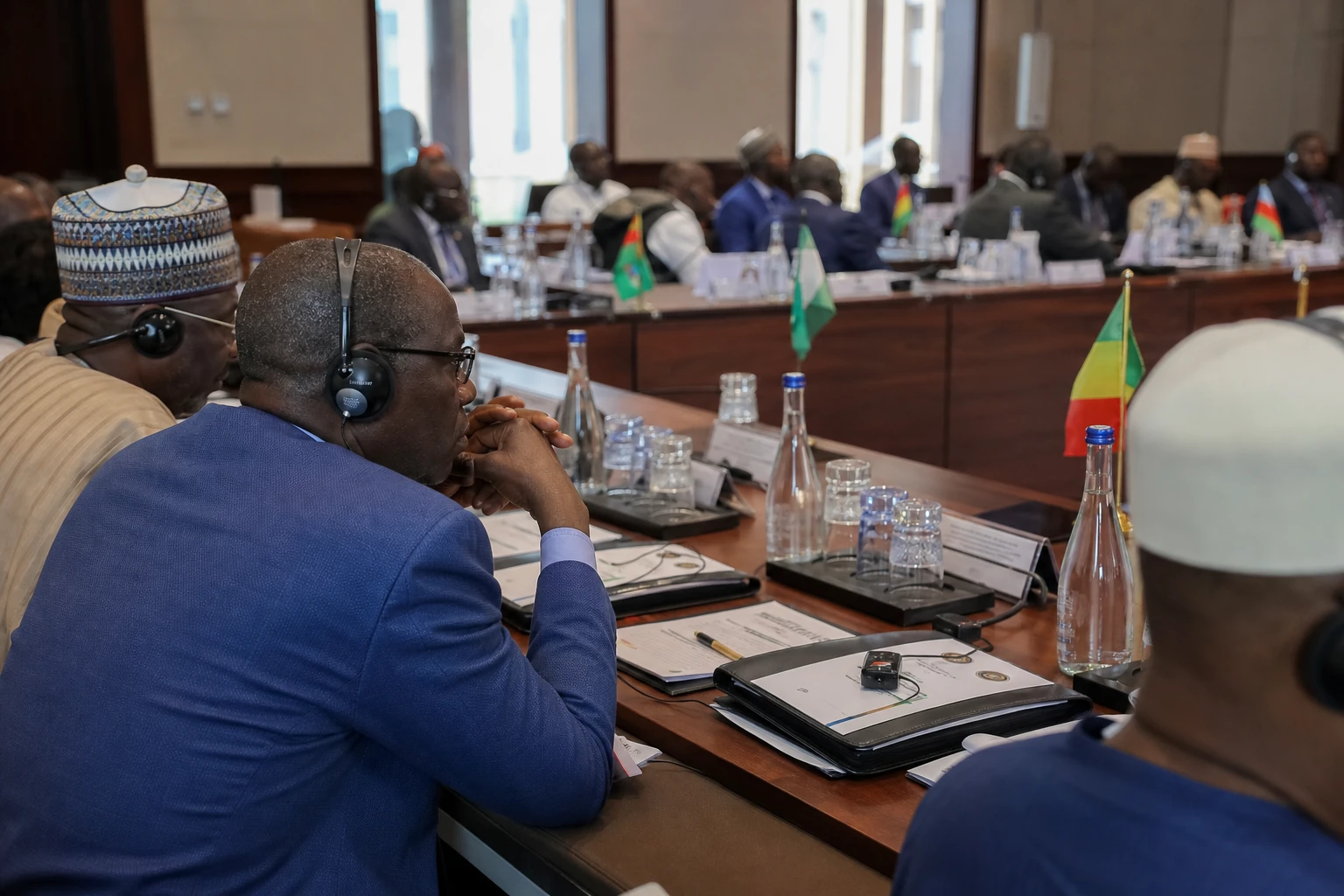
This shift comes as the Economic Community of West African States, ECOWAS, held its summit in Freetown on 19 July 2026 and signed the intergovernmental agreement for the Atlantic Africa gas pipeline project. The initiative therefore no longer concerns only Rabat and Abuja. It now reaches across a wider region, with transit, energy security and economic integration at stake for several West African capitals.
Big figures, but arrangements still need securing
Economic ties between Morocco and the United Arab Emirates strengthened after the declaration signed on 4 December 2023 in Abu Dhabi by King Mohammed VI and UAE President Mohammed bin Zayed Al Nahyan. In July 2024, the Emirati news agency WAM reported that the two countries had finalised the terms of a comprehensive economic partnership agreement, presented as a new framework for trade and investment. The same source cited the UAE as Morocco’s leading Arab investor, with more than $15 billion committed.
Non-oil trade between the two countries reached $1.3 billion in 2023, according to the report cited by the source article. This figure should be read as an indication of the scale of economic ties, not as a ceiling. Meanwhile, Morocco’s finance ministry has documented several strands of this cooperation, notably in water, energy and the reform of public enterprises, with major projects led by groups such as TAQA Morocco, Nareva and the Mohammed VI Investment Fund.
Morocco has already set clear energy priorities: scaling up renewables, securing supply and strengthening networks. The Moroccan government says installed capacity has reached 12,017 MW, with renewables accounting for 45.4%, and is targeting more than 52% by 2030. This trajectory lends coherence to the desalination, electricity transmission and gas-fired power plant projects presented as part of the Moroccan-Emirati partnership.
Atlantic Africa gas pipeline grows in scale
The project, formerly known as the Nigeria-Morocco gas pipeline, was renamed the Atlantic Africa gas pipeline in ECOWAS documents. The change is more than cosmetic. It reflects the project’s regional ambition: linking Nigeria to Morocco through an Atlantic corridor crossing several coastal states and also encompassing Mauritania and landlocked Sahelian countries. ECOWAS describes a network of about 6,800 kilometres, including 5,100 kilometres offshore, with a stated capacity of 30 billion cubic metres of gas a year.
Some of this volume is intended for the Moroccan and European markets. The project therefore has a dual purpose: improving access to energy for West African economies while opening a new export chain towards the continent’s northern shores. For Morocco, the stakes are immediate. Such infrastructure could strengthen the country’s energy security while boosting its role as a hub between West Africa and Europe. For transit countries, it could also become a driver of electrification, industrialisation and infrastructure revenues, provided governance agreements are robust.
The signing of the intergovernmental agreement in Freetown marks an important institutional milestone. It follows several years of feasibility studies and detailed design work. But the timeline remains lengthy. The countries concerned must now finalise the remaining bilateral agreements, particularly with Mauritania, and settle the terms for financing, security and tariffs. In projects of this kind, the quality of the contracts matters as much as laying the pipes.
For Morocco, an economic and political signal
The project’s significance for Morocco extends beyond the energy sector. It also touches ports, roads, water, aviation, financial markets, tourism and logistics. This portfolio approach is precisely what the strengthened partnership with the United Arab Emirates highlights. Projects announced in 2024 and 2025 point in the same direction: investing in major infrastructure while supporting sectors that can quickly boost jobs and economic activity.
Morocco also has a diplomatic interest in the project. By hosting or connecting initiatives involving ECOWAS, Mauritania and Gulf partners, Rabat reinforces its image as a useful intermediary between regions. This position nevertheless brings demands. It requires engagement with Sahelian states, European markets and Gulf investors alike, without losing sight of local needs: affordable energy, reliable water supplies, skilled jobs and dependable infrastructure.
The planned tourist complex at Lagouira in southern Morocco and programmes linked to desalination show that the partnership with the UAE is not limited to hydrocarbons. It forms part of a broader strategy for territorial development. In a country facing water stress and pressure on its networks, water is becoming a central economic issue, not merely an environmental one. This is also where bilateral cooperation will prove its real value: not in announcements, but in its ability to deliver useful projects that are clear to households and businesses alike.
What to watch next
The next stage concerns the legal, financial and diplomatic decisions surrounding the Atlantic Africa gas pipeline. It will be important to track the finalisation of the remaining agreements, the financing structure and the precise role of new partners, including the United Arab Emirates, in the project. At continental level, it is a test. It will show whether West Africa can still deliver, with its partners, a major cross-border infrastructure project designed for regional integration rather than simply exporting resources.