Algeria
 Egypt
 Libya
 Morocco
 Sudan
 Tunisia
 Benin
 Burkina Faso
 Cabo Verde
 Côte d'Ivoire
 Ghana
 Guinea
 Guinea-Bissau
 Liberia
 Mali
 Mauritania
 Niger
 Nigeria
 Senegal
 Sierra Leone
 The Gambia
 Togo
 Cameroon
 Central African Republic
 Chad
 DR Congo
 Equatorial Guinea
 Gabon
 Republic of the Congo
 São Tomé and Príncipe
 Burundi
 Comoros
 Djibouti
 Eritrea
 Ethiopia
 Kenya
 Malawi
 Mauritius
 Mozambique
 Rwanda
 Seychelles
 Somalia
 South Sudan
 Tanzania
 Uganda
 Angola
 Botswana
 Eswatini
 Lesotho
 Namibia
 South Africa
 Zambia
 Zimbabwe
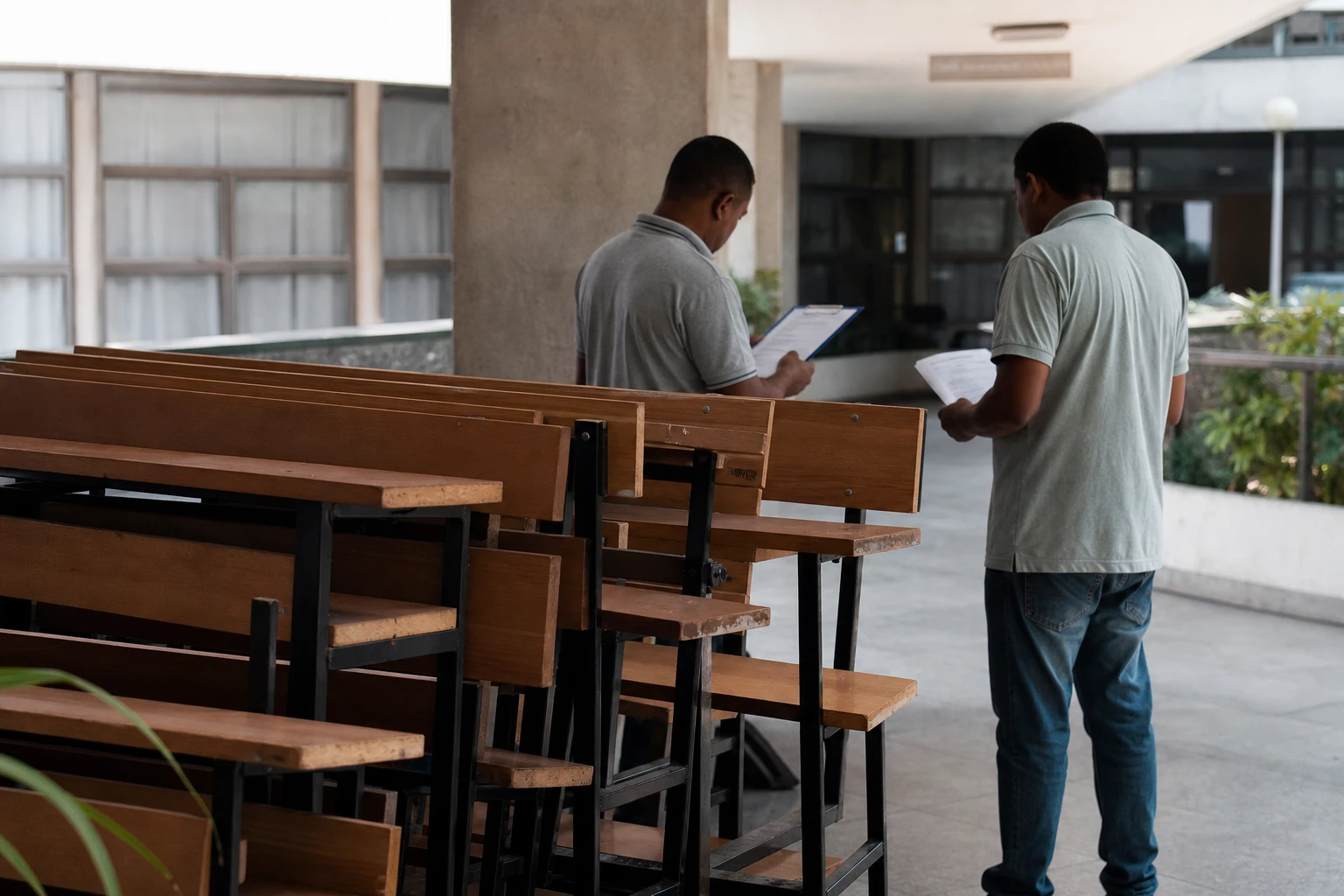
Missing desk-benches, but above all a system that let too many safeguards fail
In Madagascar’s public schools, a desk-bench is not just a piece of furniture. It is a place to work, a sign of stability, and sometimes the difference between a class that can progress and one that is overcrowded. A public procurement case in Antananarivo has therefore revived a very practical question: how can equipment paid for with public funds disappear between the order and the classroom?
The case touches on a sensitive issue in Madagascar: the management of assets intended for education, in a country where the authorities have already acknowledged the vulnerability of recruitment, purchasing and spending oversight procedures in the sector. The Ministry of National Education and the Independent Anti-Corruption Bureau (BIANCO) recently announced that they would strengthen their cooperation on public procurement and human resources.
In Antananarivo, the anti-corruption court investigates a sensitive public contract
According to information made public, the Ministry of National Education ordered more than 18,000 desk-benches for schools between 2020 and 2021. The damage is estimated at more than 800 million ariary, or about €160,000. The investigation refers to 1,841 desk-benches that were not delivered, nine people and three companies under investigation, and five suspects already in detention. These sensitive details must still be considered in the context of the ongoing investigation.
The case was referred to the courts through Madagascar’s specialised anti-corruption system. Madagascar has an anti-corruption framework built around the CSI, BIANCO, SAMIFIN and the Anti-Corruption Hubs, established to prosecute economic and financial offences. The Antananarivo PAC has been operating since 2018, and since 2024 the country has said that these specialised courts have nationwide coverage.
In this framework, the challenge is not simply to impose sanctions after the event. It is also to break the channels that make abuses possible. The issue raised by the case is the concentration of critical functions in too few hands: signing, receiving the equipment and making payments were reportedly handled by too few people. In a sound public procurement process, these steps should be separated and subject to checks at several levels.
What the case says about Madagascar’s public schools
Education plays a central role in the daily lives of Malagasy people. It is also a sensitive area for public spending. The ministry has previously said that the state budget could provide only about 45,000 desk-benches a year, while schools across the country still have significant needs. The contrast between visible needs and missing equipment fuels distrust among families, teachers and pupils.
The case therefore goes beyond the criminal question alone. For schools, it raises questions about the quality of the learning environment. For local authorities and school heads, it highlights the weakness of delivery and inventory procedures. For the state, it is a reminder that every lapse in oversight costs twice: in public money, and then in credibility.
Civil society organisations have been stressing this point for several years. Transparency International Initiative Madagascar regularly documents corruption risks in education, whether involving enrolment, transfers, recruitment or public procurement. The problem is therefore not isolated. It forms part of a broader pattern of practices that undermine the fairness of public services.
The Malagasy perspective on the case is also a budgetary one. When supplies intended for schools go missing, the burden falls on pupils, parents and local authorities. The most remote schools, often the least well-resourced, are affected more severely. In urban centres, by contrast, social and media pressure can prompt a faster institutional response. The scandal therefore has a different impact depending on the location and level of resources.
A test for the fight against corruption across the region
Madagascar is a member of SADC, the Southern African Development Community, which has 16 member states. The country held its presidency in 2025, giving any case involving public governance particular regional significance. The question in Antananarivo is therefore also political: how can the country project an image of regional probity when a school contract prompts suspicions of embezzlement?
The issue also has a continental dimension. Madagascar has ratified the United Nations Convention against Corruption, the African Union Convention on Preventing and Combating Corruption, and SADC’s anti-corruption protocol. In other words, the case concerns more than one ministry or a court investigation. It touches on international commitments already made by the Malagasy state.
One strong expectation remains: the recovery of any funds that may have been misappropriated. Several civil society groups point out that a conviction is not enough if the amounts are neither traced nor recovered. In a country where proceedings can take a long time and some people under investigation leave the country, asset recovery is as important a test of credibility as the verdict itself.
This case will therefore reveal much more than the fate of a few suspects. It will show whether Madagascar can turn a case involving missing school equipment into a useful precedent for public procurement as a whole. More broadly, it will show whether the fight against corruption can finally protect what matters most: trust in schools, the state and public spending.