Algeria
 Egypt
 Libya
 Morocco
 Sudan
 Tunisia
 Benin
 Burkina Faso
 Cabo Verde
 Côte d'Ivoire
 Ghana
 Guinea-Bissau
 Liberia
 Mali
 Mauritania
 Niger
 Nigeria
 Senegal
 Sierra Leone
 The Gambia
 Togo
 Cameroon
 Central African Republic
 Chad
 DR Congo
 Equatorial Guinea
 Gabon
 Republic of the Congo
 São Tomé and Príncipe
 Burundi
 Comoros
 Djibouti
 Eritrea
 Ethiopia
 Kenya
 Madagascar
 Malawi
 Mauritius
 Mozambique
 Rwanda
 Seychelles
 Somalia
 South Sudan
 Tanzania
 Uganda
 Angola
 Botswana
 Eswatini
 Lesotho
 Namibia
 South Africa
 Zambia
 Zimbabwe
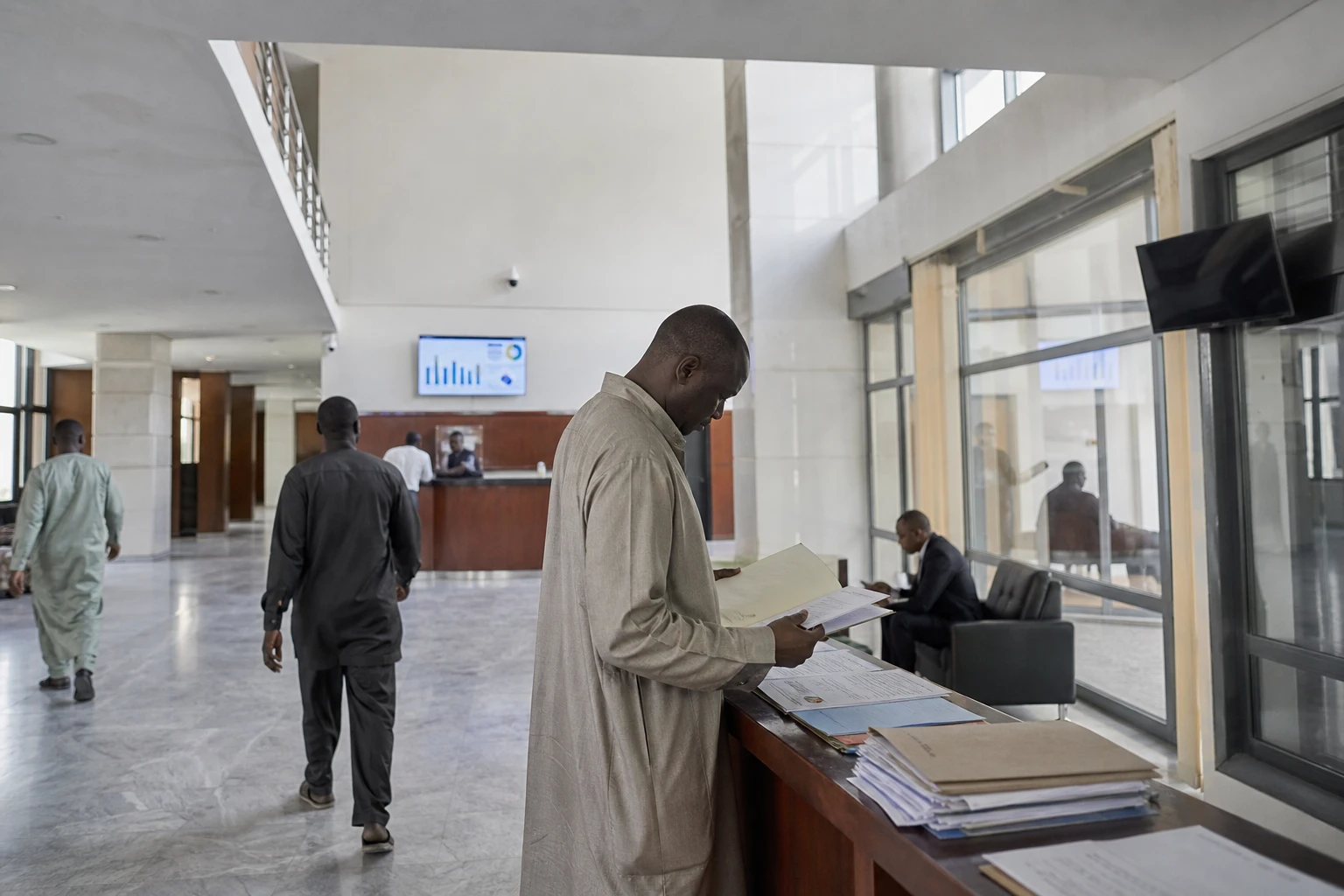
Guinea wants to retain control of its economic trajectory
In Conakry, the question is no longer simply whether growth will accelerate. It is above all how to prevent a future mining boom from weighing on public finances, prices and social expectations. The country is entering a phase in which the promise of iron ore must translate into real budgetary room for manoeuvre without undermining macroeconomic stability.
Since 2021, Guinea has moved forward with an institutional framework still shaped by the transition, followed by the constitutional and political process launched around Simandou 2040. In this context, ECOWAS is closely monitoring developments in economic governance in West Africa, where budgetary stability remains essential to credibility with markets and donors. At the regional level, Guinea matters because it combines mining revenue, major infrastructure projects and a need for public financing.
Agreement still subject to the Fund’s formal approval
International Monetary Fund staff and the Guinean authorities have reached a preliminary agreement on a new programme supported by the Extended Credit Facility, for 41 months. The package under discussion amounts to about $425 million, or 145% of the country’s quota. The agreement must still go before IMF management and then its Executive Board, with a review scheduled for September 2026.
This type of programme does not provide disbursements alone. Above all, it sets a framework for reforms and sends a signal to other financiers. That signal matters in Guinea, as the country seeks to reconcile higher development-related spending with improved tax collection and more transparent management of natural resources. Guinea’s finance ministry presented the agreement as a lever for stability, credibility and the mobilisation of domestic financing.
The stated priorities are familiar: higher domestic revenues, greater transparency over mining income, more rigorous management of public finances and better-quality spending. In the background, Guinea’s government is also seeking to strengthen governance, support the private sector and broaden the productive base beyond commodities alone.
Simandou, an expected engine of growth and a test of coherence
Guinea’s economic timetable remains dominated by Simandou, the vast iron ore and infrastructure project linked to a railway and port. The project was officially launched in November 2025 at Morébaya, and the authorities have made it the centrepiece of their transformation strategy. In the medium term, it is expected to boost growth, revenues and foreign exchange reserves, but also to increase pressure on public spending, infrastructure and household expectations.
The IMF now estimates Guinea’s real growth at 8.7% in 2026 on its country page, following 2025. The African Development Bank, for its part, forecasts 9.3% growth in 2026, driven by Simandou and household consumption. The two institutions agree on one essential point: Guinea’s momentum now depends on the country’s ability to turn mining investment into broader activity in industry, services, transport and employment.
The contrast between promise and risk is stark. If growth takes off without fiscal discipline, its effects may remain concentrated in a few sectors and areas. If, on the other hand, the state manages to capture more revenue, stabilise public finances and direct investment towards public services and infrastructure, the impact could spread to Conakry and the rest of the country, where access to energy, roads and services remains crucial.
What the new phase means for Guineans
For the authorities, the new agreement with the IMF offers some breathing space. It could ease access to other financing and reassure technical partners. For businesses, it could clarify the macroeconomic direction and reduce uncertainty over the budget trajectory. For households, the impact will depend more on the quality of public spending than on the announcement of a programme alone. Double-digit growth does not automatically mean lower prices, more formal jobs or more accessible services.
The programme also comes at a time when investors are scrutinising the credibility of the economic framework. In March 2026, Standard & Poor’s affirmed Guinea’s sovereign rating at B+ while revising its outlook from stable to positive. The move reinforced the view that reforms and Simandou’s expansion could improve the country’s financing profile, provided public management remains transparent and consistent.
For Conakry, the real challenge is therefore to prevent Simandou from operating as an enclave. The task is to link future mineral revenues to a stronger tax base, better-executed budgets and more visible diversification. That is where the difference lies between revenue that provides short-term relief and lasting transformation.
A Guinean issue, but a West African question
Guinea is not alone in seeking this balance. In several West African countries, the same equation keeps arising: how to benefit from natural resources without exposing public finances to excessive dependence. Guinea’s case will therefore be closely watched across the sub-region, because it combines an IMF-backed reform, a world-scale mining project and a long-term national ambition.
The next steps will unfold in the coming months, when the IMF Executive Board is due to review the agreement and the programme’s first operational stages are to be implemented. In the meantime, Guinea will have to show that the new economic cycle announced from Conakry is driven not only by Simandou’s iron ore, but also by firmer budget management and a broader development strategy.