
 Algeria
 Egypt
 Libya
 Morocco
 Sudan
 Tunisia
 Benin
 Burkina Faso
 Cabo Verde
 Côte d'Ivoire
 Ghana
 Guinea
 Guinea-Bissau
 Liberia
 Mali
 Mauritania
 Niger
 Nigeria
 Senegal
 Sierra Leone
 The Gambia
 Togo
 Cameroon
 Central African Republic
 Chad
 Equatorial Guinea
 Gabon
 Republic of the Congo
 São Tomé and Príncipe
 Burundi
 Comoros
 Djibouti
 Eritrea
 Ethiopia
 Kenya
 Madagascar
 Malawi
 Mauritius
 Mozambique
 Rwanda
 Seychelles
 Somalia
 South Sudan
 Tanzania
 Uganda
 Angola
 Botswana
 Eswatini
 Lesotho
 Namibia
 South Africa
 Zambia
 Zimbabwe
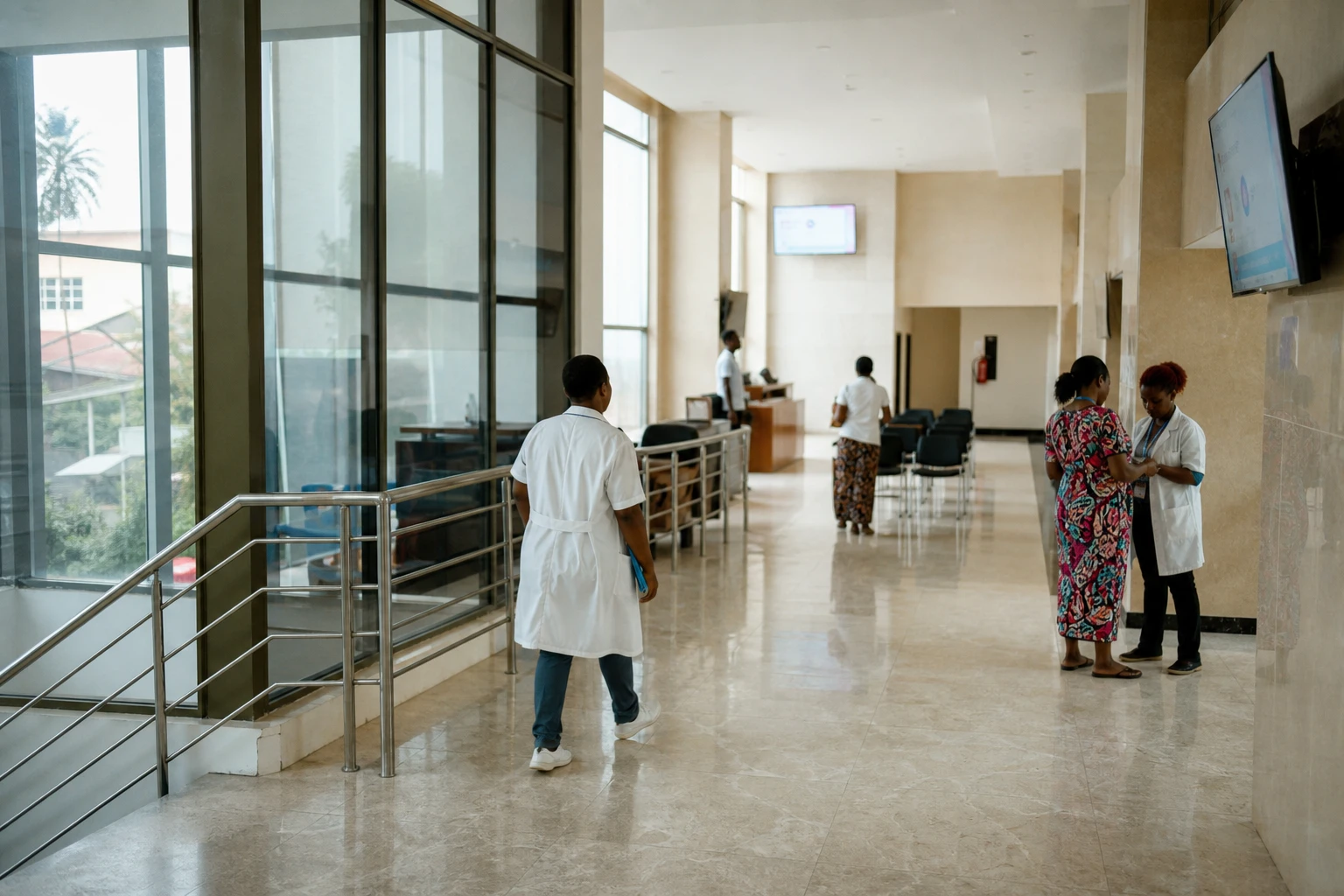
An outbreak still disrupting eastern DR Congo
In eastern Democratic Republic of the Congo, health emergencies rarely happen in isolation. They often intersect with population displacement, poor roads, pressure on hospitals and, once again, the effects of a conflict that is complicating the response. The current Ebola outbreak is a reminder that, in a fragile area, a virus can spread faster than the means to stop it.
The disease is mainly affecting Ituri and neighbouring north-eastern provinces. This outbreak is strategically important for Central Africa as a whole, because it is close to the borders with Uganda and South Sudan. Health authorities, the WHO and Africa CDC have also established cross-border coordination, a sign that the response cannot remain strictly national.
High figures, but they should be treated with caution
As of 11 August 2026, Congolese authorities reported 4,381 confirmed cases and 2,011 deaths. The case fatality rate reported for this outbreak is 45.9%. These figures reflect an already massive crisis, but they should be read as a surveillance tally, not a perfect snapshot of the situation on the ground, since some patients are still escaping medical follow-up.
The outbreak’s timeline also matters. The DRC declared this 17th Ebola outbreak on 15 May 2026. The authorities and the WHO later clarified that genetic analyses placed the start of the chain of transmission several months earlier, in February. In other words, the virus was circulating before the crisis was officially named.
This outbreak is linked to the Bundibugyo virus, a form of Ebola already known in East Africa, for which there is no specific licensed vaccine. The WHO nevertheless issued emergency recommendations in late May 2026 on the use of Ervebo, the authorised Ebola vaccine, to assess its possible cross-protection as part of a clinical trial.
Why the response remains so difficult
The core problem is not only medical. Health teams are working in areas where access is slow, conflict disrupts movement and supply chains remain fragile. Added to this are delays in care, late consultations and a breakdown in trust with some communities, all factors that drive up mortality.
The authorities have also had to contend with another obstacle: a lack of resources on the ground. Health facilities in Ituri, North Kivu and South Kivu remain unevenly equipped, while needs for testing, isolation, contact tracing and safe burials are rising quickly. In such circumstances, every logistical delay costs lives.
The response also depends on regional cooperation. The Congolese Ministry of Health, the WHO, Africa CDC, Uganda and South Sudan have launched joint coordination to monitor border crossings, align prevention messages and limit chains of transmission. This regional approach has become essential, because population movements do not follow administrative boundaries.
The political and social challenge is twofold. The authorities must contain the outbreak without worsening local tensions. Residents need to keep working, travelling, seeking medical care and burying their dead in ways that respect traditions without fuelling contagion. This is often where the success of a response is determined: by families’ willingness to cooperate, not only by official statements.
An alert for the DRC, but also for Africa
The outbreak’s significance extends beyond the DRC. In May 2026, Africa CDC classified it as a continental public health emergency, while the WHO recognised it as a public health emergency of international concern. These two decisions show that Africa now has its own tools for assessing and coordinating health crises.
The crisis also recalls a familiar lesson across the continent: when community surveillance, laboratories, roads, border posts and local communication do not work together, an epidemic can spread quickly. The DRC, which has faced repeated Ebola outbreaks since 1976, remains at the centre of this public health battle. But the challenge also concerns the entire Great Lakes region, where the movement of people and goods makes it necessary to think about public health on a regional scale.
What happens next will depend on how quickly new cases are detected, whether field teams can keep going and whether partners can sustain logistical and financial support. For now, the outbreak is a reminder of a simple reality: in Central Africa, health security is shaped as much in treatment centres as by regional mobility, local trust and the continuity of basic services.



