Algeria
 Egypt
 Libya
 Morocco
 Tunisia
 Benin
 Burkina Faso
 Cabo Verde
 Côte d'Ivoire
 Ghana
 Guinea
 Guinea-Bissau
 Liberia
 Mali
 Mauritania
 Niger
 Nigeria
 Senegal
 Sierra Leone
 The Gambia
 Togo
 Cameroon
 Central African Republic
 Chad
 DR Congo
 Equatorial Guinea
 Gabon
 Republic of the Congo
 São Tomé and Príncipe
 Burundi
 Comoros
 Djibouti
 Eritrea
 Ethiopia
 Kenya
 Madagascar
 Malawi
 Mauritius
 Mozambique
 Rwanda
 Seychelles
 Somalia
 South Sudan
 Tanzania
 Uganda
 Angola
 Botswana
 Eswatini
 Lesotho
 Namibia
 South Africa
 Zambia
 Zimbabwe
In Sudan, every corridor counts
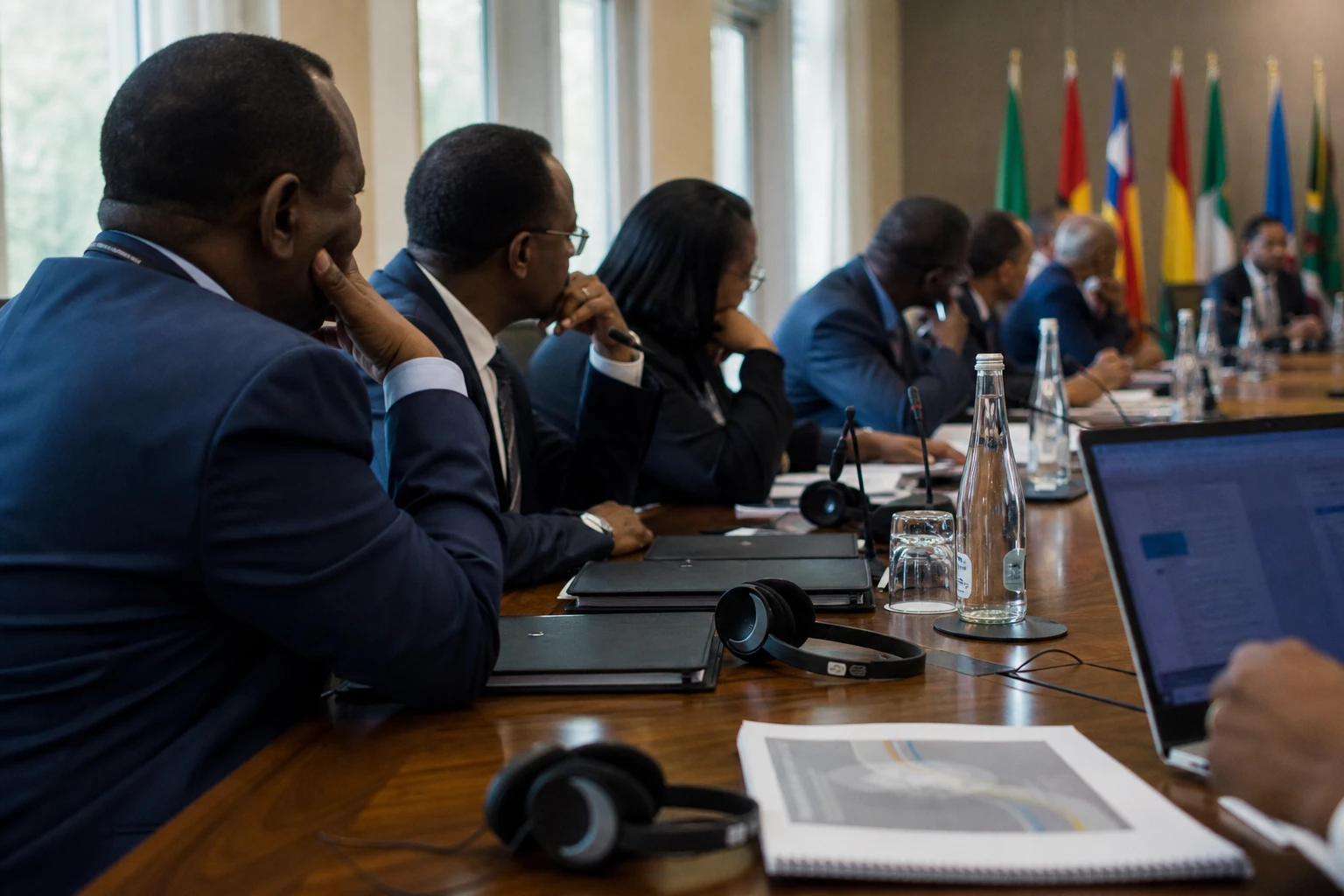
When a war drags on, the battle is also fought on the roads. In Sudan, humanitarian access has become as decisive an issue as the front lines, because it determines whether food and medicines can arrive and civilians trapped in the fighting can be evacuated. The call made in Rome on Sunday 9 August reflects this reality: calling for humanitarian corridors is not a symbolic gesture, but a response to an urgent situation on the ground.
Since April 2023, the conflict has pitted the Sudanese Armed Forces against the Rapid Support Forces. It has fractured the country, displaced millions of people and caused one of the continent’s gravest humanitarian crises. The United Nations, the African Union and the so-called “Quintet” coalition — the AU, IGAD, Arab League, European Union and UN — have repeated the same message for months: protect civilians, silence the guns and guarantee safe and unhindered humanitarian access.
El Obeid, a tipping point in North Kordofan
The city named by the pontiff is no coincidence. El Obeid, the capital of North Kordofan state, lies at the heart of a strategic corridor between Khartoum, Darfur and the centre of the country. The United Nations has voiced concern over the escalation of fighting around the city, while UNICEF reported in late July that at least 23 children had been killed and 25 others injured over two months in the region, amid drone strikes and intensifying hostilities.
El Obeid’s importance also stems from its logistical role. When the city comes under threat, markets, supply routes and health facilities in neighbouring areas are immediately put at risk. The World Food Programme has warned of the risk of a fresh wave of violence and mass displacement, calling for safe passage for people seeking shelter. The African Union, for its part, has called for hostilities to cease and for “safe and unhindered” humanitarian access to be guaranteed.
A call from the Vatican, and a political signal
The message delivered during the Angelus stressed the protection of civilians and the opening of humanitarian corridors. This kind of appeal follows a line already taken by the Vatican: on 11 May, Leo XIV received Sudanese Prime Minister Kamil El-Tayeb Idris Abdelhafiz in Rome, and their discussions focused on the country’s crisis, the need for a ceasefire and aid for the population. This precedent shows that the Holy See continues to monitor the Sudanese crisis at the highest level.
For Khartoum and Port Sudan alike, the stakes go beyond the humanitarian dimension. In a war where every military advance shifts the political balance, access to the population has become a test of credibility for both the authorities and the de facto forces on the ground. Under international humanitarian law, the parties are required to protect civilians and allow aid to pass. The calls from Rome, the UN and the AU therefore point in the same direction: reminding the parties of obligations that war has too often pushed into the background.
Khartoum, Port Sudan and control of aid
Sudan is not only a military theatre. It is also a space where roads, ports, borders and crossing points are contested. The UN’s announcement in late June that the Adre border crossing with Chad would remain open for an extended period showed how vital these corridors are for delivering aid to the west of the country. The ICRC, for its part, said it had launched direct flights between Port Sudan and Khartoum for the first time since the war began, proof that the resumption of connections remains fragile but possible.
Aid movements remain under pressure, however. UN agencies report access constraints, funding problems and persistent insecurity. The Office for the Coordination of Humanitarian Affairs says the humanitarian response in Sudan remains severely underfunded, while UNICEF says it is preparing large-scale deliveries via Port Sudan and cross-border corridors. In short, corridors do more than bring in lorries: they also make it possible to maintain a minimal presence of the humanitarian system where the state itself has weakened.
What the appeal changes, and what it does not
A papal appeal will not silence the guns. It does, however, broaden the moral and diplomatic pressure on the protagonists and their external backers. That pressure matters in Sudan, where the war is fuelled by supply chains, regional alliances and a conflict economy that several observers describe as entrenched. The African Union has also stressed Sudan’s sovereignty while calling for an inclusive political process, a reminder that no lasting way out of the crisis will come from outside alone.
For the population, the impact is tangible. In cities, families search for water points, markets that are still open and health centres that are functioning. In rural areas, displacement is often less visible but just as devastating, with villages emptied, crops lost and roads cut off. The call for humanitarian corridors is aimed precisely at this fragmented reality: enabling aid to reach Khartoum, El Obeid, towns in Kordofan and, beyond them, the country’s most isolated areas.
A Sudanese crisis with continental reach
Sudan’s impact extends beyond its borders. The crisis is driving displacement to Chad, South Sudan, Egypt and Ethiopia, and directly concerns IGAD, the African Union and the Arab League. The June joint declaration on the “political track” in Addis Ababa shows that mediation efforts are multiplying, but a solution remains elusive. The next signal to watch will be whether mediators can turn calls for aid into concrete access mechanisms, and then into a verifiable ceasefire.
In this war, opening humanitarian corridors will not solve everything. But it says something essential: in Sudan, protecting civilians is not an optional humanitarian extra. It is the minimum condition for a credible way out of the crisis, in Khartoum as in El Obeid, and a test for the entire region.