Algeria
 Egypt
 Libya
 Morocco
 Sudan
 Tunisia
 Benin
 Burkina Faso
 Cabo Verde
 Côte d'Ivoire
 Ghana
 Guinea
 Guinea-Bissau
 Liberia
 Mali
 Mauritania
 Niger
 Nigeria
 Senegal
 Sierra Leone
 The Gambia
 Togo
 Cameroon
 Central African Republic
 Chad
 Equatorial Guinea
 Gabon
 Republic of the Congo
 São Tomé and Príncipe
 Burundi
 Comoros
 Djibouti
 Eritrea
 Ethiopia
 Kenya
 Madagascar
 Malawi
 Mauritius
 Mozambique
 Rwanda
 Seychelles
 Somalia
 South Sudan
 Tanzania
 Uganda
 Angola
 Botswana
 Eswatini
 Lesotho
 Namibia
 South Africa
 Zambia
 Zimbabwe
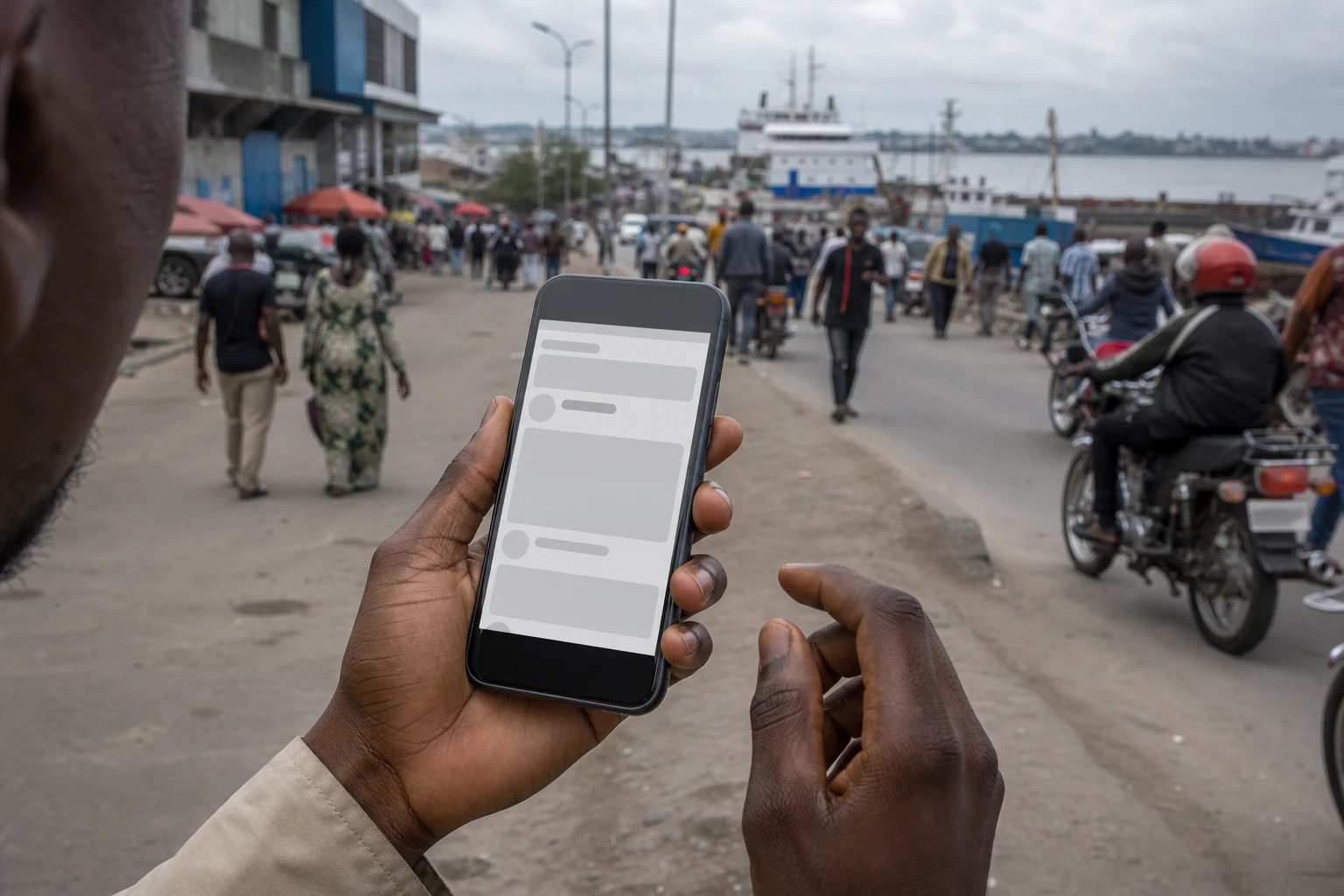
In Kinshasa, the river remains a strategic gateway
In Kinshasa, the Congolese capital, the river is more than just a backdrop. It is a logistical, commercial and public health artery. When a boat is reported on suspicion of carrying Ebola, the alert quickly extends beyond the individual case. It affects ports, markets, travelling families and the state’s ability to screen without paralysing movement. As the Democratic Republic of the Congo has been facing an outbreak of Ebola caused by the Bundibugyo virus since May 2026, the slightest uncertainty about a river journey takes on national significance.
This vigilance is also part of a broader regional framework. The outbreak was declared by the Congolese authorities on 15 May 2026, then classified as a public health emergency of international concern by the World Health Organization. Africa CDC, for its part, designated the event a continental public health security emergency. In other words, the movement of people and goods between the east, the centre of the country and the capital is no longer just a matter of domestic transport: it concerns all of Central Africa.
What the checks found
The boat held upstream of Kinshasa was eventually released after tests came back negative. The Congolese authorities said that passengers showing symptoms had been tested and that all the results were negative. The crew and travellers also helped correct an initial, erroneous account of the vessel’s origin: it had not come from Kisangani, but from Mongala. That correction changed how the risk was assessed.
The reason for the alert nevertheless remains serious. A person who had travelled on board developed a fever, diarrhoea and vomiting before dying after leaving the boat. No sample was taken from this case, leaving open the question of whether it was Ebola or another illness. The authorities therefore had to investigate, and quickly. The doctor in charge of the response also said that no cases had been detected in Kinshasa. This clarification matters because the capital comes under media, political and administrative pressure as soon as a health alert travels up the river.
The figures subsequently released help explain the decision. More than 200 passengers were quarantined in Maluku, 65 kilometres from Kinshasa, at the port upstream of the city. The vessel had left Mongala nearly three weeks earlier. The authorities considered that the monitoring period linked to this journey had passed. In this situation, health checks are no longer just about stopping a suspicious boat; they also serve to document the journey, check contacts and reduce the risk of the virus being brought into Kinshasa’s ports.
Why permanent checks change the response
The real shift lies here. After this incident, the authorities announced permanent checks on vessels 65 kilometres from Kinshasa. Two barges had already been inspected, and a form is now to be required of sailors and boat operators to report their departure, the number of passengers and any public health incident during the journey. This is not a mere administrative measure. It is an attempt to establish a chain of traceability in an area where river travel is frequent, sometimes irregular and essential to the informal economy.
This approach addresses a problem that is well known in the Congolese response to Ebola: time and distance. The current outbreak is concentrated mainly in the east of the country, particularly Ituri, where the authorities and their partners are already grappling with access difficulties, delays in care and tensions involving health teams. At the same time, Kinshasa must prevent a distant outbreak from turning into an urban crisis. The river strategy is therefore intended to head off a feared scenario: the silent arrival of a suspected case in a densely populated, mobile and highly connected capital.
There is also a question of public trust. The initial error over the boat’s origin showed that an incorrectly located health alert can trigger unnecessary fear, especially in a city like Kinshasa where rumours spread quickly. At the same time, setting up a lasting system upstream of the capital sends a clear message: surveillance will not be occasional, but integrated into the normal operation of river links. Within the DRC, this could improve early detection. Regionally, it is a reminder that an outbreak in the east of the DRC can prompt tighter checks far beyond the affected areas.
This story therefore says two things at once. First, the released boat did not reveal any cases of Ebola. Second, the DRC is strengthening a health barrier along a crucial river corridor between the country’s interior and Kinshasa. In a response where every delay matters, the capital is now protecting itself upstream too, on the river where national mobility, everyday economic activity and epidemiological surveillance intersect.