
 Algeria
 Egypt
 Libya
 Sudan
 Tunisia
 Benin
 Burkina Faso
 Cabo Verde
 Côte d'Ivoire
 Ghana
 Guinea
 Guinea-Bissau
 Liberia
 Mali
 Mauritania
 Niger
 Nigeria
 Senegal
 Sierra Leone
 The Gambia
 Togo
 Cameroon
 Central African Republic
 Chad
 DR Congo
 Equatorial Guinea
 Gabon
 Republic of the Congo
 São Tomé and Príncipe
 Burundi
 Comoros
 Djibouti
 Eritrea
 Ethiopia
 Kenya
 Madagascar
 Malawi
 Mauritius
 Mozambique
 Rwanda
 Seychelles
 Somalia
 South Sudan
 Tanzania
 Uganda
 Angola
 Botswana
 Eswatini
 Lesotho
 Namibia
 South Africa
 Zambia
 Zimbabwe
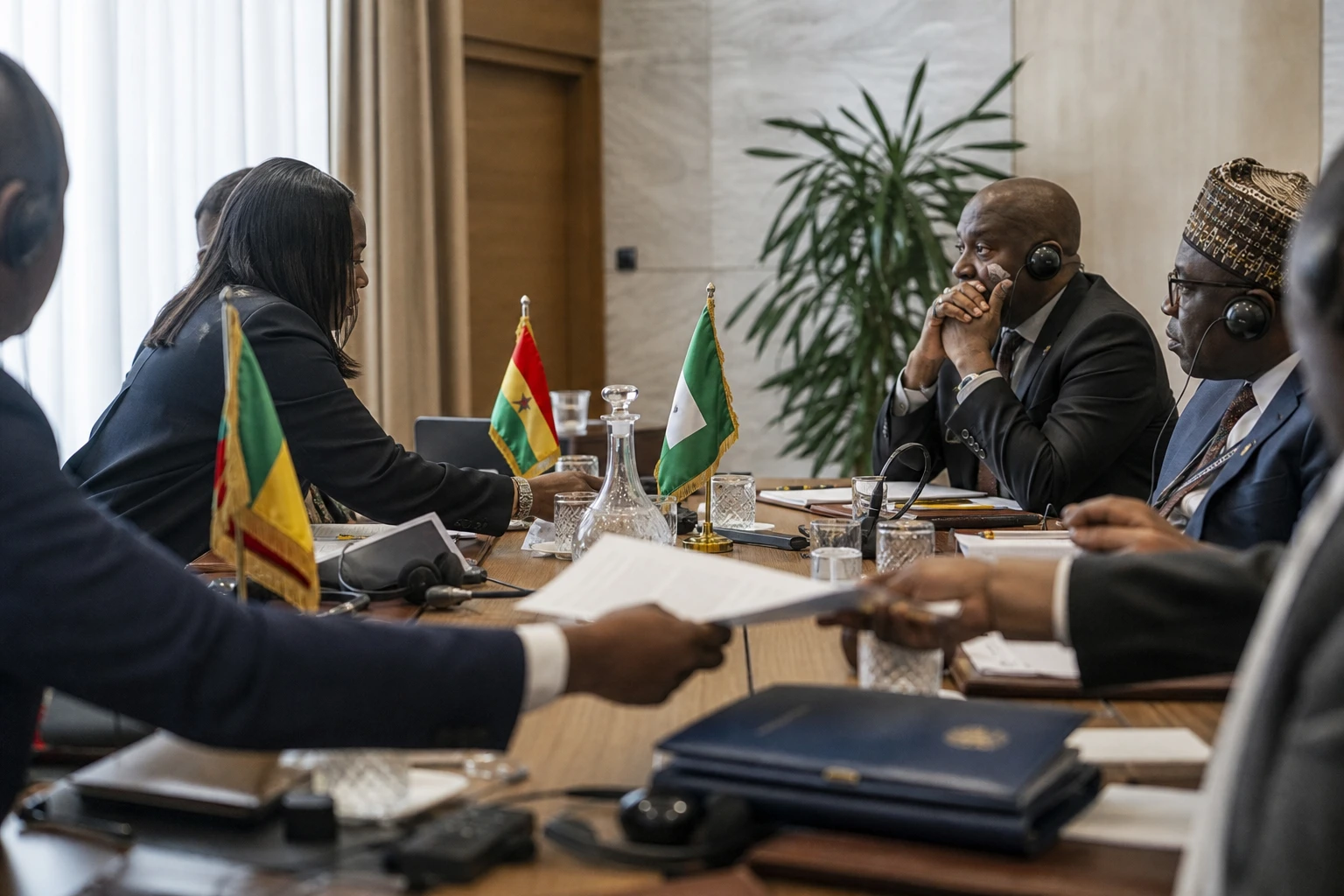
In Gaza, a Moroccan presence would be more than a logistical gesture
For Rabat, the stakes go far beyond a base, tents or a declared troop number. They touch on an already fragile balancing act: supporting the Palestinian cause, keeping a channel open to Washington and, at the same time, preserving an image of consistency in the eyes of Moroccan public opinion, which is highly sensitive to Jerusalem and Gaza. In this case, every military detail becomes a political signal.
Morocco is part of a broader framework here: the plan put forward by the United States and endorsed by the UN Security Council through Resolution 2803. The text authorises a temporary International Stabilisation Force in Gaza, with close coordination with Egypt and Israel. In other words, the operation is not an isolated Moroccan initiative, but an international arrangement still taking shape, politically sensitive and legally regulated.
What Rabat has signed, and what it means
On 15 July 2026, Rabat formalised its participation in the International Stabilisation Force for Gaza. The signing took place at the headquarters of the National Defence Administration, in the presence of Nasser Bourita, Abdeltif Loudyi and Nickolay Mladenov, the representative of the Board of Peace for Gaza, according to Moroccan state media and several outlets that confirmed the information. Official announcements refer to a contribution comprising senior officers from the Royal Armed Forces, members of the Royal Gendarmerie, personnel from the DGSN, Morocco’s national police, and a field military hospital.
At the same time, the diplomatic picture remains fluid. At the end of May, the Associated Press reported that several countries, including Morocco and Uganda, were being mentioned as potential contributors, but that the actual start depended on subsequent phases of the ceasefire. In July, planning documents cited by international media described a more modest arrangement than initially envisaged, in the form of a pilot deployment. At this stage, it is therefore important to distinguish between what has been signed, what is being considered and what has already been deployed. The proposed outpost described recently is still at the preparation stage.
According to these details, the planned facility would initially be rudimentary, with temporary accommodation and basic services, before any possible expansion. The proposed site would be in an area of Gaza currently under Israeli control, near the so-called “yellow line”, placing troop rotations in an environment directly dependent on the Israeli authorities and the ceasefire monitoring mechanism.
The political knot: Jerusalem, Gaza and Moroccan diplomacy
The controversy stems from a symbolic contrast. Mohammed VI chairs the Al-Quds Committee, an organ of the Organisation of Islamic Cooperation tasked with defending Jerusalem’s interests and supporting the Palestinians of the city. The OIC has highlighted this role for years, and Rabat makes it a pillar of its religious and political diplomacy. This function gives the Kingdom a distinctive place in the Palestinian issue. It also demands a high degree of consistency in the eyes of both its supporters and its critics.
This is where Moroccan participation in an arrangement coordinated with Israel becomes sensitive. The government defends a familiar position: humanitarian aid, support for a two-state solution and contributions to international stabilisation mechanisms. From this perspective, Rabat is not turning its back on the Palestinian cause; it is placing it within a multilateral framework. But for some members of the public, particularly in a country where demonstrations in support of Gaza remain visible, this justification does not always dispel suspicions of a double standard.
Morocco is not alone in facing this tension. Since the 2020 normalisation agreement, concluded under the Abraham Accords and accompanied by US recognition of Moroccan sovereignty over Western Sahara, Rabat has sought to maintain room for manoeuvre between its Arab ties, its relationship with Washington and its own agenda on the Sahara. The Gaza issue thus revives a longstanding calculation: how far can cooperation with Israel go without damaging the symbolic capital associated with Jerusalem and Palestine?
What this changes in Morocco and the region
Domestically, the issue is more than a diplomatic dispute. It affects perceptions of the king, the government and the security institutions. If the deployment goes ahead, it will give Morocco a tangible role in Gaza’s post-war period. But it will also expose the authorities to more specific criticism: no longer just of normalisation in general, but of direct participation in a stabilisation structure operating in an environment coordinated with Israel.
At the regional level, the message is just as important. Morocco wants to be seen as a diplomatic actor able to engage with Washington, Arab capitals and multilateral institutions. In North Africa and the Middle East, this positioning gives Rabat useful visibility. But it also sets a precedent: that of an Arab and African state agreeing to join a post-conflict security arrangement in Gaza, under a UN framework but with operational proximity to Israel. Several African and Arab capitals will be watching this closely.
The decisive issue now is not the political principle announced in July, but its implementation. Who will be in command? What exactly will the mandate be? How far will coordination with Israel go? What will the Moroccan contingent’s final size be? The answers will show whether Rabat gains additional diplomatic leverage, or whether this presence becomes a lasting political cost in a country where the Palestinian cause remains a powerful marker in public life.



