
 Algeria
 Egypt
 Libya
 Sudan
 Tunisia
 Benin
 Burkina Faso
 Cabo Verde
 Côte d'Ivoire
 Ghana
 Guinea
 Guinea-Bissau
 Liberia
 Mali
 Mauritania
 Niger
 Nigeria
 Senegal
 Sierra Leone
 The Gambia
 Togo
 Cameroon
 Central African Republic
 Chad
 DR Congo
 Equatorial Guinea
 Gabon
 Republic of the Congo
 São Tomé and Príncipe
 Burundi
 Comoros
 Djibouti
 Eritrea
 Ethiopia
 Kenya
 Madagascar
 Malawi
 Mauritius
 Mozambique
 Rwanda
 Seychelles
 Somalia
 South Sudan
 Tanzania
 Uganda
 Angola
 Botswana
 Eswatini
 Lesotho
 Namibia
 South Africa
 Zambia
 Zimbabwe
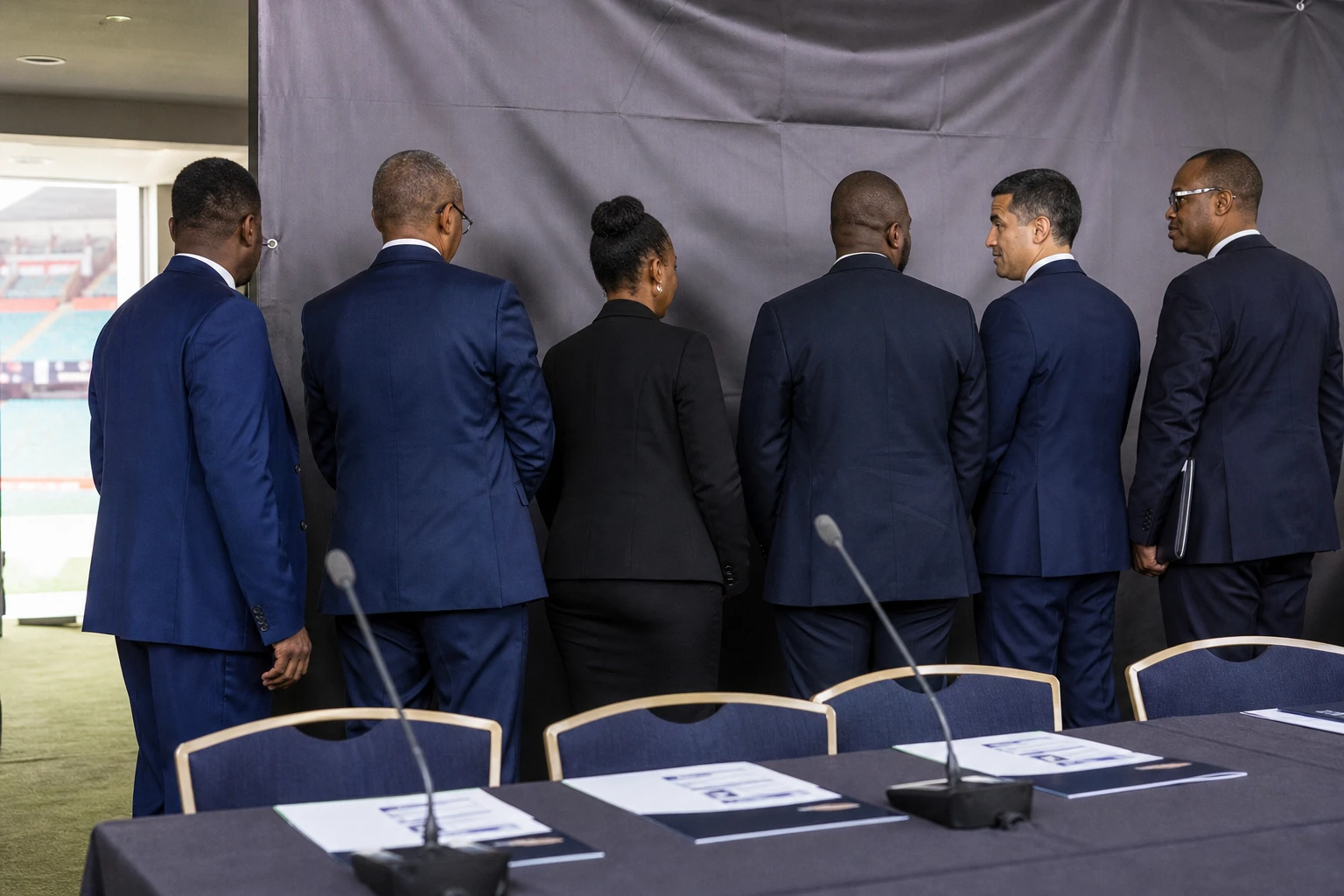
In Rabat, women’s football also becomes a diplomatic test
At first glance, the 2026 Women’s Africa Cup of Nations looks like a great celebration of football. In reality, it also brings a more sensitive question into view: how far can an African sporting body go when the pitch, the map and diplomacy intersect? In Morocco, the host country and an increasingly central sporting showcase for the continent, every visual detail carries political weight.
The tournament runs from 26 July to 16 August 2026, with the final scheduled to take place in Rabat. For the first time, 16 teams are taking part in the competition, divided into four groups. CAF has described this edition as the biggest ever staged in the history of the Women’s Africa Cup of Nations.
Morocco is placing this event within a broader strategy. The kingdom has already hosted several continental competitions and is also preparing to co-host the 2030 men’s World Cup. In this context, sport serves both to fill stadiums and to establish an image of stability, organisation and influence.
An edition with no map on display
What stands out this year is the near-total absence of cartographic representations in the competition’s official materials. The schedule published by CAF and the local organising committee is limited to the groups, kick-off times and stadiums. The graphics show neither a map of the continent nor an outline of Africa or any borders.
This choice is not insignificant. At continental competitions, maps often serve to place an event within a shared space. Here, graphic caution appears intended to avoid a subject familiar to African football: Western Sahara.
The precedent is recent. In 2025, during the previous Women’s Africa Cup of Nations, hosted in Morocco, a graphic broadcast on CAF’s international feed showed a map of Morocco without Western Sahara, sparking controversy in Rabat. Moroccan public broadcaster Arryadia then said it had merely relayed the feed provided by CAF. Moroccan media later reported that the confederation had apologised.
The dispute remains legal and continental
Western Sahara remains on the United Nations list of Non-Self-Governing Territories, where it has appeared since 1963. The UN says its status is part of an unfinished decolonisation process. In other words, the territory is not considered Moroccan by the UN system, although Rabat claims sovereignty over it and controls most of the territory.
At the African level, the position is just as delicate. The African Union counts both Morocco and the Sahrawi Arab Democratic Republic among its members. This coexistence has for years fostered a diplomacy of caution, in which each continental institution avoids taking a direct position on issues that divide member states. Morocco rejoined the continental organisation in 2017 after leaving the former Organisation of African Unity in 1984.
Football has already become a stage for this dispute. In 2024, the RS Berkane shirt case, involving the Moroccan club’s shirt displaying a map of Morocco that included Western Sahara, led to a series of sporting decisions and then an appeal to the Court of Arbitration for Sport. In a statement, CAS said the map conveyed a political message at the heart of an unresolved territorial dispute.
CAF has already faced this kind of tension. It knows that a logo, a shirt or a map background can become an act of positioning. In this context, removing the map is less about neutralising a detail than recognising that there is no consensual representation on this issue. It is a risk-management choice, not a political solution.
What this means for Morocco, CAF and the region
For Rabat, the stakes go beyond the pitch. The kingdom is investing in major events to show that it is an African sporting hub, capable of hosting major tournaments and shaping their narrative. Yet the graphics episode is a reminder that sporting influence is not enough to impose a territorial interpretation in pan-African forums. The showcase is there, but it does not erase the dispute.
For CAF, the calculation is more pragmatic. Not displaying a map avoids opening a new front with the host country and limits the risk of controversy at a time when the competition wants to focus first on performance, visibility and the development of women’s football. But this restraint also comes at a symbolic cost: it shows that a pan-African organisation has no simple visual narrative when sovereignty is contested.
For players and supporters, the stakes are more tangible: the competition is growing in size, exposure and prize money, with $1m promised to the winning team, according to details from the launch press conference. The 2026 Women’s Africa Cup of Nations must also send a signal about the rise of African women’s football, as qualification for the 2027 World Cup adds a major sporting dimension.
The continental significance is clear. When an African competition chooses to stop showing a map of the continent, it is not just a graphic void. It is a sign that some lines remain impossible to draw without conflict. Football is advancing, infrastructure is being modernised and schedules are expanding. But Western Sahara is a reminder that in North Africa, as elsewhere, sporting integration does not dissolve political disputes. At times, it brings them to light, even when efforts are made to hide them.



