Algeria
 Egypt
 Libya
 Morocco
 Sudan
 Tunisia
 Benin
 Burkina Faso
 Cabo Verde
 Côte d'Ivoire
 Ghana
 Guinea
 Guinea-Bissau
 Liberia
 Mali
 Mauritania
 Niger
 Nigeria
 Senegal
 Sierra Leone
 The Gambia
 Togo
 Cameroon
 Central African Republic
 DR Congo
 Equatorial Guinea
 Gabon
 Republic of the Congo
 São Tomé and Príncipe
 Burundi
 Comoros
 Djibouti
 Eritrea
 Ethiopia
 Kenya
 Madagascar
 Malawi
 Mauritius
 Mozambique
 Rwanda
 Seychelles
 Somalia
 South Sudan
 Tanzania
 Uganda
 Angola
 Botswana
 Eswatini
 Lesotho
 Namibia
 South Africa
 Zambia
 Zimbabwe
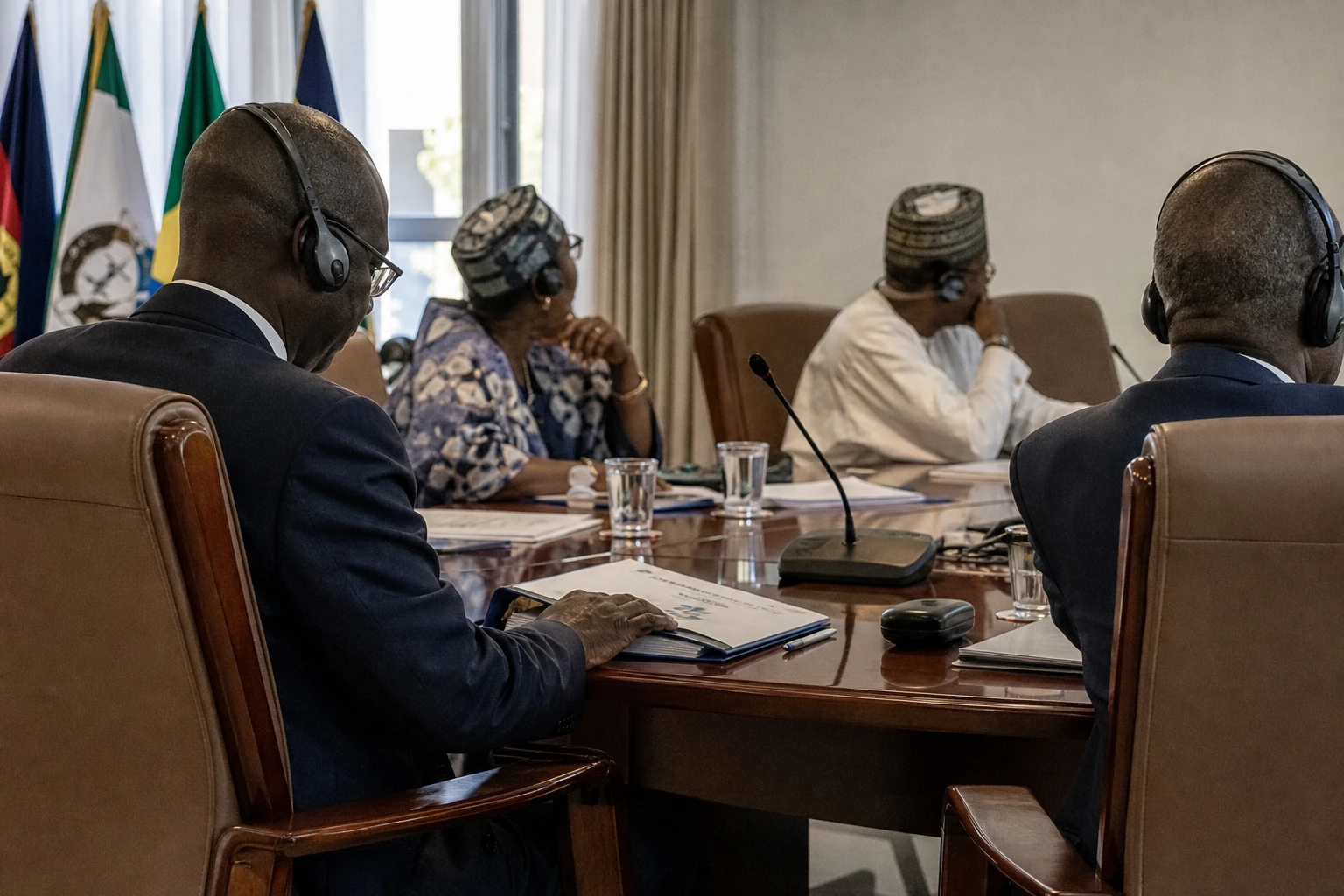
A prison letter that goes beyond the case of one opposition figure
In Chad, a letter written behind bars often says more than a public speech. It reveals the tension between a government seeking to lock down the political landscape and an opposition still looking for room to express itself in the capital, N’Djamena, where every public statement remains closely monitored. Max Kemkoye’s case lies along this fault line.
The leader of the Union of Democrats for Development and Progress, better known by its French acronym UDP, is one of the prominent figures in the Group of Political Actors’ Consultation, or GCAP, an opposition platform that has long challenged the management of the transition and then the return to constitutional order. In late April 2026, several coalition officials were arrested in N’Djamena. A few days earlier, the Supreme Court had declared the GCAP illegal, a ruling that served as the basis for the political crackdown that followed.
Chad’s context: a return to constitutional order, but a closed political climate
Chad has officially brought to a close the transition period that began after the death of Idriss Déby Itno in April 2021. In March 2025, the United Nations welcomed the definitive return to constitutional order. In practice, political life remains marked by deep tensions, and President Mahamat Idriss Déby Itno’s government operates in an environment where the opposition regularly denounces arrests, restrictions and the absence of credible dialogue.
This situation also affects regional balances. Chad is a member of CEMAC, the Economic and Monetary Community of Central Africa, which brings together Central African states that share common economic and monetary mechanisms. In this region, political tensions never remain confined to the Chadian capital. They influence border stability, the movement of people, investor confidence and the ability of regional institutions to speak with one voice.
What the letter says, and what the facts show
According to information made public by Chadian media and African news agencies, Max Kemkoye sent a letter from his cell to the president of the republic. In it, he denounces the country’s political, economic and social situation. He made the statement while in detention, where he has been held since 25 April 2026 alongside other opposition officials grouped within the GCAP. As of 6 August 2026, that amounts to just over 100 days in detention.
The core facts of the case are clear. On 24 April 2026, Chad’s Supreme Court declared the GCAP null and void and its activities illegal. On 25 April, several prominent figures from the group were detained in N’Djamena. They included Max Kemkoye and other political officials. The sequence ended with the cancellation of an opposition march planned for early May, followed by legal proceedings that, in the eyes of their supporters, have left the detained leaders in the status of political prisoners on a lasting basis.
The significance of the case, however, goes beyond the coalition targeted. Human rights organisations and civil society groups have denounced state repression. They have called for inclusive political dialogue and effective guarantees of the rule of law. At the same time, Max Kemkoye’s political circle and several outside supporters have raised the alarm over his health in detention, adding a humanitarian dimension to an already politically charged case.
A political signal at home, a test abroad
Inside the country, the case shows that institutional reopening alone is not enough to create a more peaceful political life. The return to constitutional order, welcomed by the UN, has not erased the centralisation of power or the persistent distrust between the government and the opposition. For government supporters, the dissolution of the GCAP and the subsequent arrests are a matter of complying with judicial decisions. For the opposition, they mainly reflect the closure of public space. Both interpretations coexist, but they are not equivalent when it comes to assessing the real impact on political freedoms.
Socially, Max Kemkoye’s message carries particular resonance. In Chad, the high cost of living, urban unemployment, pressure on informal incomes and inequalities between N’Djamena and the rest of the country have long fuelled distrust of the elites. A prison letter about the economy and living conditions is therefore more than a symbol. It speaks to a population that judges institutions by their ability to deliver stability, public services and predictable justice.
The regional balance of power also merits attention. Chad occupies a pivotal position between the Sahel, the Lake Chad basin and Central Africa. A political crisis in N’Djamena always has a knock-on effect on neighbouring security and diplomatic balances. In a CEMAC region already facing budgetary and security constraints, internal conflict in Chad could affect the credibility of the region as a whole. African partners are therefore watching the case as an indicator of the true quality of Chad’s return to constitutional order.
What to watch now
The decisive issue will not be the letter itself. It will be the authorities’ response, the next steps in the legal proceedings against GCAP detainees and whether political discussion will be possible before the case becomes deadlocked. In the coming weeks, everything will hinge on court decisions, the detainees’ health, the response of opposition parties and the stance of regional partners. In Chad, as is often the case in Central Africa, the way a government treats its opponents says a great deal about the strength of its institutions.