
 Algeria
 Egypt
 Libya
 Sudan
 Tunisia
 Benin
 Burkina Faso
 Cabo Verde
 Côte d'Ivoire
 Ghana
 Guinea
 Guinea-Bissau
 Liberia
 Mali
 Mauritania
 Niger
 Nigeria
 Senegal
 Sierra Leone
 The Gambia
 Togo
 Cameroon
 Central African Republic
 Chad
 DR Congo
 Equatorial Guinea
 Gabon
 Republic of the Congo
 São Tomé and Príncipe
 Burundi
 Comoros
 Djibouti
 Eritrea
 Ethiopia
 Kenya
 Madagascar
 Malawi
 Mauritius
 Mozambique
 Rwanda
 Seychelles
 Somalia
 South Sudan
 Tanzania
 Uganda
 Angola
 Botswana
 Eswatini
 Lesotho
 Namibia
 South Africa
 Zambia
 Zimbabwe
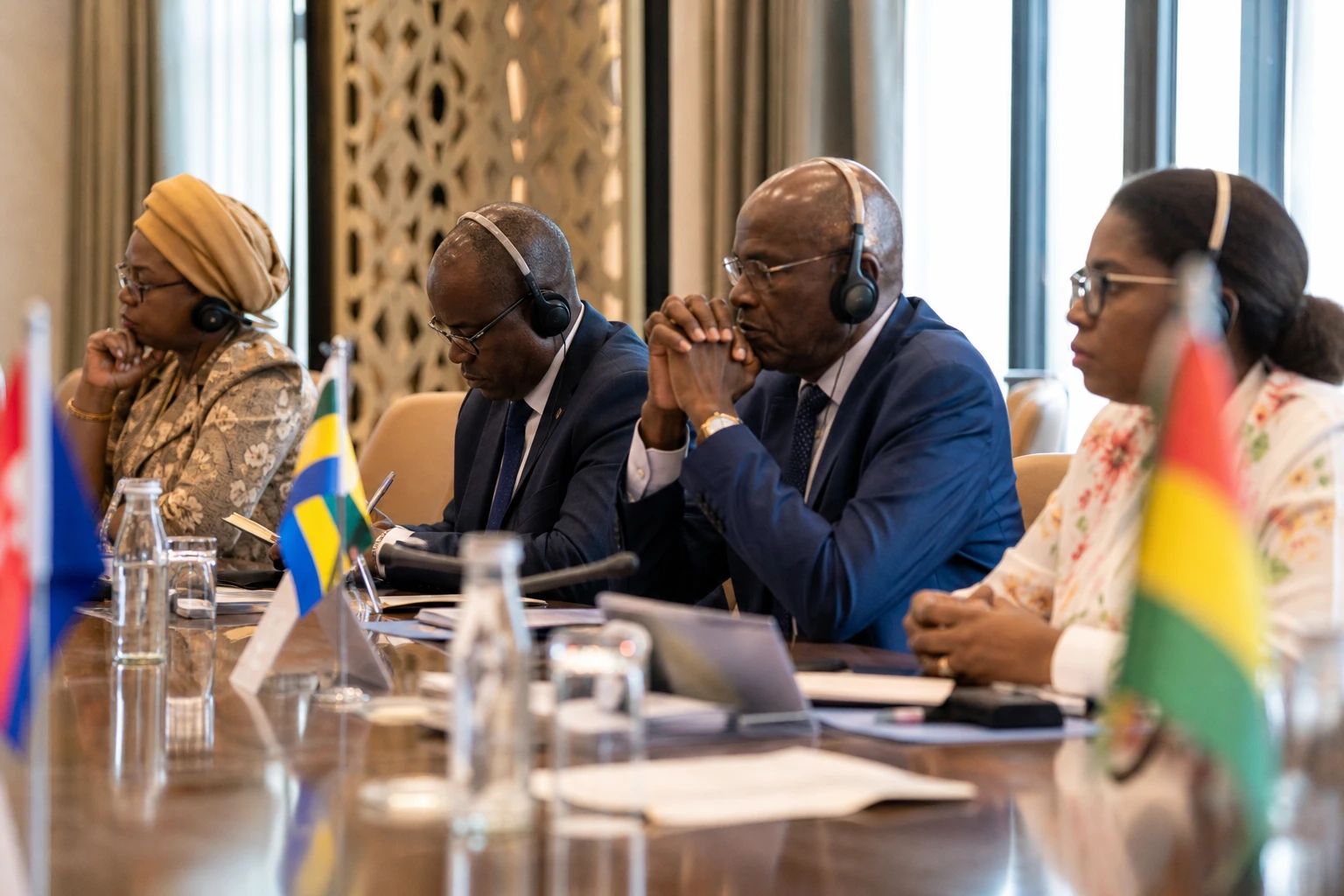
In Rabat, the diplomatic landscape extends far beyond Western Sahara
In Morocco, a diplomatic sequence can shift the balance of power well beyond a single issue. That is what has been unfolding since late July around Rabat, Washington and Madrid: Western Sahara remains at the centre, but the question of the Spanish enclaves of Ceuta and Melilla has also returned to the debate, driven by migration pressure and by the strategic calculations of the Kingdom’s allies.
This development is part of a longer trajectory. The United States recognised Morocco’s sovereignty over Western Sahara in December 2020, and under subsequent administrations maintained its support for the autonomy plan presented by Rabat as a “serious, credible and realistic” basis. In 2025 and 2026, other Western capitals also took a firmer tone in favour of this option, while the UN placed Moroccan autonomy at the heart of efforts to find a compromise.
The political reality: Washington strengthens its position, Rabat capitalises
What is new in the current debate is not simply the reiteration of US support for Western Sahara. It is the idea that Rabat would like to turn that support into broader leverage, including on sensitive issues affecting Spain. This reading gained traction after remarks attributed to observers of the issue, as the United States was also stepping up moves to strengthen economic and diplomatic ties with Morocco.
On the facts, the migration issue has indeed triggered a shock. In late July and early August 2026, the Spanish city of Ceuta saw a massive influx of people who had set off from northern Morocco. Agence France-Presse reported that the vast majority of those who crossed over the course of a few days had already returned to Morocco, while others remained stranded or scattered across the region. Estimates of the exact scale of the movement vary, but several media outlets reported tens of thousands of crossings.
Spain’s response was immediate. A defence minister accused Rabat of “blackmail” in the face of this flow, according to reports carried by the European press. At the same time, Madrid had to manage a domestic political crisis, with one of its coalition partners even calling for a rethink of co-hosting the 2030 World Cup with Morocco. This is no minor detail: bilateral relations are now viewed through the lenses of security, borders and major joint projects.
What this means for Morocco, Spain and the region
For Rabat, the sequence is useful on two fronts. First, it confirms that Western Sahara remains the main pillar of Moroccan diplomacy. Second, it shows that the Kingdom can make its priorities heard in an environment where Washington, Paris, Berlin, Ottawa and other capitals are reassessing their positions, often in favour of autonomy under Moroccan sovereignty. This convergence gives Morocco additional political capital, but also places it under closer scrutiny over its management of borders and migration.
For Spain, room for manoeuvre is shrinking. Ceuta and Melilla are two Spanish enclaves on the African shore of the Mediterranean. They are not part of the Schengen area, the European free-movement zone, and therefore remain permanent flashpoints where migration control, sovereignty and bilateral cooperation intersect. A crisis in Ceuta thus has an immediate impact on Spanish domestic politics, as well as on discussions with Rabat.
For local populations, the equation is more practical than geopolitical. In northern Morocco, around Fnideq and the Ceuta border, the informal economy, small businesses and daily movement are under pressure from closures, checks and diplomatic ups and downs. In Ceuta, the authorities must address the humanitarian emergency, security and asylum requests at the same time. In both directions, families, young people and precarious workers bear the brunt of the rapid shocks.
A Moroccan reading of the Western Sahara issue is now more widely heard in Africa
Morocco is no longer alone in promoting its autonomy plan in diplomatic forums. In 2026, several countries reaffirmed their support for this path, while the UN Security Council extended the negotiating approach based on it, leaving open a reference to the principle of self-determination within a political framework. This does not resolve the conflict, but it shows that the Moroccan option has gained prominence in international discussions.
At the same time, the issue’s African significance is clear. The Western Sahara dispute continues to weigh on the Maghreb balance, relations between Rabat and Algiers, and the way the African Union addresses contested sovereignty and regional integration projects. Ultimately, the question is not merely territorial. It concerns the ability of the continent’s states to secure lasting political solutions without allowing borders to become instruments of permanent pressure.
The next point to watch is therefore clear: how the Ceuta border is managed in the coming weeks, and how Washington, Madrid and Rabat translate their political signals into concrete decisions. On this issue, diplomatic announcements matter, but it is actions on the ground that truly show where the balance of power lies.



