Algeria
 Egypt
 Libya
 Morocco
 Sudan
 Tunisia
 Benin
 Burkina Faso
 Cabo Verde
 Côte d'Ivoire
 Ghana
 Guinea
 Guinea-Bissau
 Liberia
 Mali
 Mauritania
 Niger
 Nigeria
 Senegal
 Sierra Leone
 The Gambia
 Togo
 Cameroon
 Central African Republic
 Chad
 DR Congo
 Equatorial Guinea
 Gabon
 Republic of the Congo
 São Tomé and Príncipe
 Burundi
 Comoros
 Djibouti
 Eritrea
 Ethiopia
 Kenya
 Madagascar
 Malawi
 Mauritius
 Rwanda
 Seychelles
 Somalia
 South Sudan
 Tanzania
 Uganda
 Angola
 Botswana
 Eswatini
 Lesotho
 Namibia
 South Africa
 Zambia
 Zimbabwe
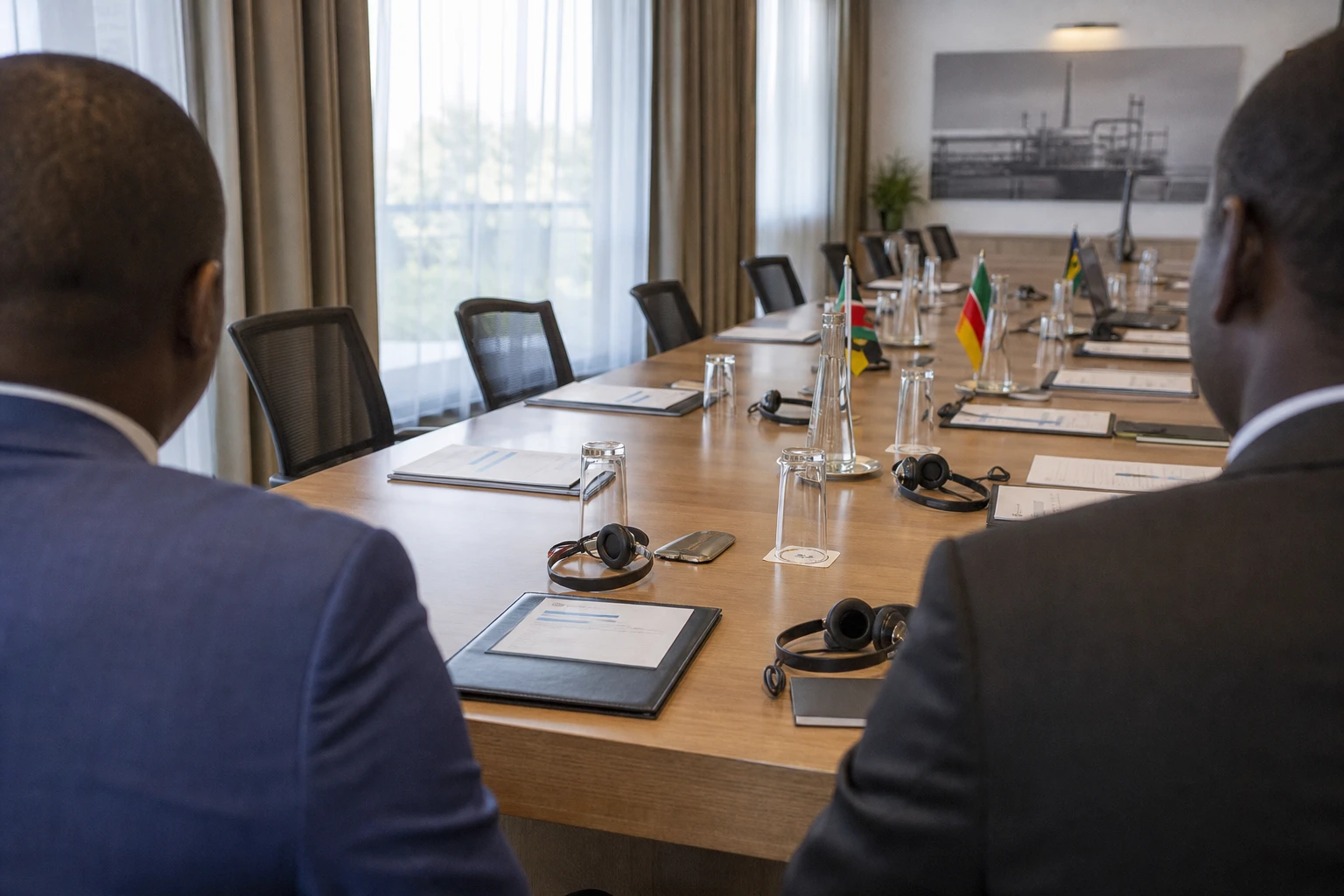
Training young people is welcome. Keeping them away from the site is less so.
In Mozambique, local content is no longer a conference slogan. It is becoming a political and social test. When a major gas project promises jobs, the first questions are not only about export volumes. They concern where people are trained, who is recruited and the real place of the provinces bearing the project’s costs. In a country where Cabo Delgado combines economic expectations with security vulnerabilities, the geography of training matters as much as the announced budget.
The debate concerns a major issue for Maputo as well as the Pemba-Palma corridor. Mozambique LNG officially resumed activities in January 2026 after the lifting of force majeure declared in November 2025, with the support of the Mozambican government and TotalEnergies. The project is part of the broader architecture of the national gas sector, in which the National Petroleum Institute oversees requirements for training, national employment and skills transfer. Regionally, Mozambique remains one of the 16 member states of SADC, the Southern African Development Community.
An academy launched in Maputo, challenged in Cabo Delgado
On 28 July 2026, TotalEnergies, Mozambique’s Ministry of Education and the Matola Industrial and Commercial Institute signed an agreement worth about $3 million to establish the Mozambique LNG Academy. The programme is to train 260 young technicians for the future Afungi complex. The announced plan provides for one year of theory in Matola, on the outskirts of Maputo, followed by three years of practical training at the Palma site in Cabo Delgado. In other words, the project is preparing technicians for infrastructure in the north of the country, but the first point of entry is more than 2,000 kilometres away.
That is precisely the point raised on 4 August by the Cabo Delgado Forum of Civil Society Organisations. The organisation argues that Pemba, the main provincial city and the project’s operational hub since work resumed in January, has the institutions and infrastructure to host the initial training. Its position is straightforward: if the province bears the pressures of a major investment, it should also secure a visible share of the skills, jobs and opportunities. This local perspective does not reject training; it challenges its centralisation in the capital.
Civil society’s argument also draws on a recent precedent. In March 2024, a Mozambique LNG-funded internship programme for 500 young Mozambicans was launched in Pemba, with a focus on proximity and local integration. At the same time, TotalEnergies says it has already mobilised more than 4,000 workers at the site, including more than 3,000 Mozambicans, while the group says it supports small and medium-sized enterprises and youth training in the province. The current disagreement is therefore not about whether local initiatives exist, but about their territorial roots and the practical access Cabo Delgado residents have to them.
Beyond the academy, the battle over local content
The controversy highlights a deeper tension. In a gas project spanning several decades, training is not merely a social expense. It is a way to prepare the workforce, secure operations and build a national supply chain. On paper, this benefits the state, local businesses and young graduates. In practice, the benefits depend on where training centres are located, the quality of instruction and the provinces’ ability to retain the skills developed. When training is centralised in Maputo, families in Cabo Delgado may see it as another promise captured far from home.
The issue also has a regional economic dimension. Mozambique is not isolated; it is part of SADC, where logistics corridors, ports and supply chains are already planned across southern Africa. Gas from Cabo Delgado can strengthen the country’s position as a regional energy player, but only if training, subcontracting and maintenance rely on credible local skills. That is also why the authorities talk about local content and companies highlight the hundreds of small and medium-sized enterprises supported and young people trained. Without territorial roots, these figures remain fragile promises.
The stakes are political, too. Since the attacks that shook Cabo Delgado in 2021, the resumption of the gas project has been closely watched in Mozambique and across the region. The government wants to show that work is restarting, security is improving and investment is returning. Civil society, meanwhile, wants the revival to be visible not only in Maputo but tangible in Pemba, Palma and neighbouring districts. The academy is thus becoming a symbol: it could represent shared skills development, or fuel the perception of development decided at the centre and distributed later, if at all.
What is at stake now goes beyond a single training centre. Mozambique is entering a phase in which several gas projects, from Mozambique LNG to Coral North and Rovuma LNG, are reshaping expectations around employment and public revenue. The question is no longer simply whether gas will be produced. It is who will be ready to produce it, transport it, service it and benefit from it. That is where the credibility of local content will be tested, for Cabo Delgado and the country as a whole.