Algeria
 Egypt
 Libya
 Morocco
 Sudan
 Tunisia
 Benin
 Burkina Faso
 Cabo Verde
 Côte d'Ivoire
 Ghana
 Guinea
 Guinea-Bissau
 Liberia
 Mali
 Mauritania
 Niger
 Nigeria
 Senegal
 Sierra Leone
 The Gambia
 Togo
 Cameroon
 Central African Republic
 Chad
 DR Congo
 Equatorial Guinea
 Gabon
 Republic of the Congo
 São Tomé and Príncipe
 Burundi
 Comoros
 Djibouti
 Eritrea
 Ethiopia
 Kenya
 Madagascar
 Malawi
 Mauritius
 Mozambique
 Rwanda
 Seychelles
 Somalia
 South Sudan
 Tanzania
 Uganda
 Angola
 Botswana
 Eswatini
 Lesotho
 Namibia
 Zambia
 Zimbabwe
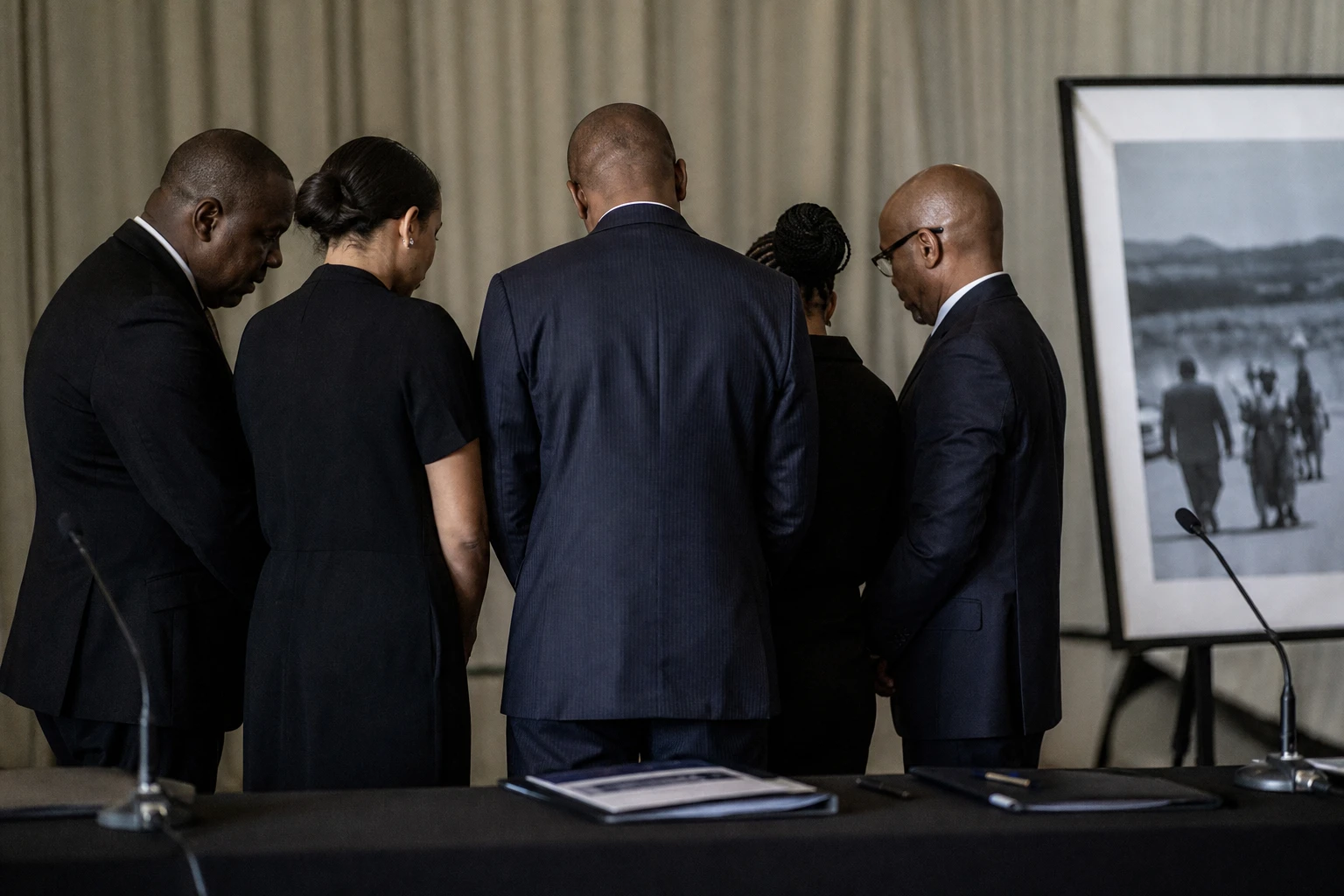
When a song becomes a shared point of reference
In South Africa, some works do more than fill a concert hall. They carry memories, cross forbidden lines and say, in a few words, what an entire country was not allowed to say aloud. It was in this space that Asimbonanga came to prominence, becoming far more than a stage hit: a marker of the struggle against apartheid and a reminder of the time when Pretoria sought to make Nelson Mandela invisible.
The word apartheid refers to the policy of racial segregation introduced in 1948 by the National Party government. The system did not collapse all at once. It was dismantled in stages, after negotiations, and replaced in 1994 by multiracial democracy. In the meantime, Mandela was arrested in 1962, sentenced to prison, sent to Robben Island in 1964 and kept out of public life for decades.
A work born in South Africa under a state of emergency
Asimbonanga did not emerge in an artistic vacuum. It took shape in the mid-1980s, in a South Africa shaken by the state of emergency, repression in the townships and the clandestine circulation of words, songs and images. The title means “we have not seen him” in Zulu. The refrain refers directly to Mandela, then a political prisoner, but the song also broadens the scope of remembrance by naming other figures of the resistance, including Steve Biko, Victoria Mxenge and Neil Aggett.
This was a risky choice. In apartheid-era South Africa, naming Mandela in public remained taboo. Yet the song spread quickly. It was performed by Savuka, Johnny Clegg’s new group, formed after his time with Juluka. The recording of Asimbonanga marked a more openly expressed artistic turn, bringing together pop, Zulu rhythms and direct political writing. The artist, who had also studied anthropology at the University of the Witwatersrand, had long spoken of a culture lived from within, rather than borrowed as a backdrop.
The musical context also mattered. In Johannesburg, the Concert in the Park in January 1985 had already shown that a major shared event could crack the lines of separation. According to Music In Africa, the event drew about 125,000 people to Ellis Park, with nearly 100,000 tickets sold. It was not a political rally, but the mingling crowd offered a glimpse of a country in which imposed boundaries no longer held completely, at least for the duration of a concert.
From the studio to a public anthem
The strength of Asimbonanga lies in its apparent simplicity. A short refrain. A forbidden name. A direct address to an absence that had become unbearable. At the time, the song did more than accompany South African history: it served as a rallying point at gatherings, in cultural campaigns and, later, in tributes to Mandela. South African History Online notes that Mandela took to the stage with Johnny Clegg during a performance of the song at a concert in 1999, after the end of apartheid and his accession to power as the country’s first black president in 1994.
The scene in Frankfurt crystallised something rare: a former political prisoner, now head of state, coming to pay tribute to a song born under the regime that had erased him. The image transcended Johnny Clegg’s career. It also demonstrated the power of South Africa’s cultural currents. In a country still shaped by the legacy of segregation, music sometimes expressed what society wanted to become faster than institutions could.
Johnny Clegg himself was long described as the “White Zulu”, a phrase that speaks both to the unease he provoked among white conservatives and to the extent of his integration into black urban cultures. This is no biographical footnote. It offers a clue to South Africa at the time: a country where crossing racial barriers in music was already an act of defiance. The creation of Savuka, a group that was both more pop-oriented and more direct in its message, extended that approach.
What the song still says about South Africa
Thirty years after the official end of apartheid, Asimbonanga remains useful for understanding contemporary South Africa. The country has secured democratic institutions, but it continues to grapple with deep inequalities inherited from racial geography, the labour market and the segregated city. Pretoria is now the seat of executive power, but political memory is not confined to state buildings: it also runs through songs, stadiums and stages where society told its own story before rewriting it.
Across the region, this history resonates throughout SADC, the Southern African Development Community. It is a reminder that liberation struggles produced more than constitutions and ruling parties. They also forged shared cultural repertoires, still evident in the way the continent’s artists champion political, urban and social causes. In southern Africa, music has often served as a language circulating between the street, trade unions, campuses and exile. Asimbonanga belongs to that tradition.
What remains to be watched is not a return to the past, but how this memory continues to be passed on. In schools, museums, digital archives and public ceremonies, South Africa’s story of liberation retains a civic function. It is a reminder that a song can become an archive, that culture can precede political recognition, and that in South Africa, as elsewhere on the continent, the dignity of a struggle also lies in how it is expressed.