Algeria
 Egypt
 Libya
 Morocco
 Sudan
 Tunisia
 Benin
 Burkina Faso
 Cabo Verde
 Ghana
 Guinea
 Guinea-Bissau
 Liberia
 Mali
 Mauritania
 Niger
 Nigeria
 Senegal
 Sierra Leone
 The Gambia
 Togo
 Cameroon
 Central African Republic
 Chad
 DR Congo
 Equatorial Guinea
 Gabon
 Republic of the Congo
 São Tomé and Príncipe
 Burundi
 Comoros
 Djibouti
 Eritrea
 Ethiopia
 Kenya
 Madagascar
 Malawi
 Mauritius
 Mozambique
 Rwanda
 Seychelles
 Somalia
 South Sudan
 Tanzania
 Uganda
 Angola
 Botswana
 Eswatini
 Lesotho
 Namibia
 South Africa
 Zambia
 Zimbabwe
A return that means more than simply choosing a coach
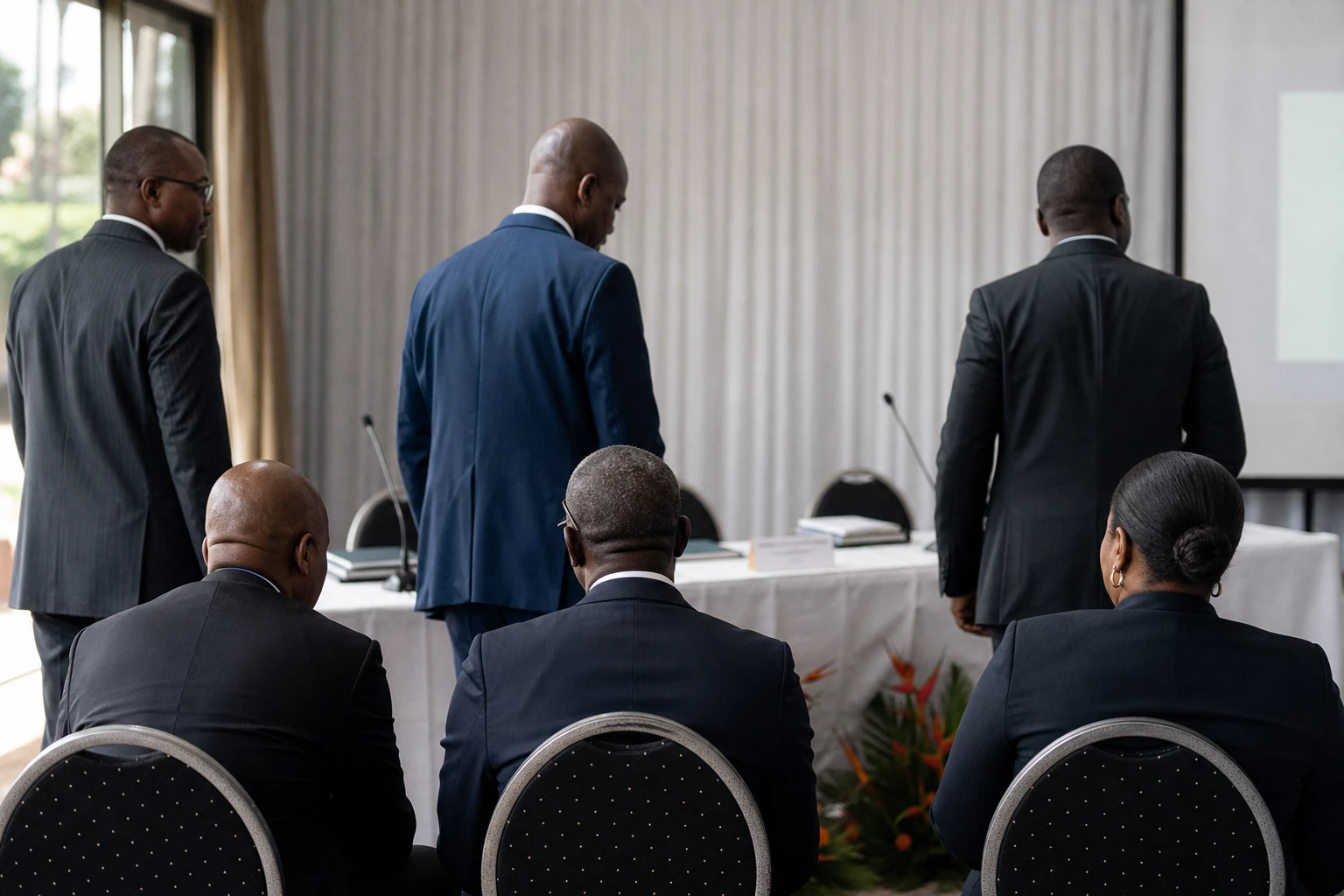
Ivorian football loves symbols. And Hervé Renard’s return to lead the Elephants is a powerful one. In Yamoussoukro as in Abidjan, this kind of decision is not read simply as a change in the dugout. It also speaks to the ambition of a national team that wants to remain at the top after returning to the continental spotlight. The Ivorian Football Federation announced the return on its official channels, while the French coach has already made his mark on Côte d’Ivoire’s history with the 2015 Africa Cup of Nations.
Context matters. Côte d’Ivoire is emerging from a packed period: a home Africa Cup of Nations victory in 2024, followed by the 2026 World Cup in North America, where the national team continued to demonstrate its new stature. At the same time, the Ivorian Football Federation is already preparing for internal renewal, with an elective general assembly scheduled for 12 September 2026 in Yamoussoukro. The sporting decision therefore comes amid a period of institutional reshaping, not simply a gap in the calendar.
What the FIF announced
According to a statement shared by the Ivorian Football Federation, Hervé Renard has been appointed to succeed Emerse Faé as head of the national team. The statement refers to a remit to prepare for and take part in upcoming international competitions, with a presentation in Abidjan announced for the following days. Renard is no stranger to the Ivorian football scene: he led the Elephants to the continental title in 2015, after a campaign that remains etched in African football’s memory.
The announcement comes after Emerse Faé’s spell in charge, whose success speaks for itself. The former Ivorian international led the team to victory at AFCON 2024, hosted by Côte d’Ivoire, before guiding it through to the 2026 World Cup. The transition is therefore unusual: it does not follow a sporting collapse, but comes after a period in which expectations have inevitably risen. In short, the bar is now higher because the country has tasted success at home and then on the world stage.
Why Renard remains a leading figure in Africa
Hervé Renard’s profile speaks first and foremost to the continent. He built his reputation in Africa, leading Zambia to the 2012 Africa Cup of Nations title, then taking Morocco to the 2018 World Cup and winning the 2015 title with Côte d’Ivoire. That track record explains his lasting standing among African federations: he knows the dressing rooms, popular expectations, preparation timelines and administrative constraints weighing on national teams across the continent.
His return to Abidjan also highlights a reality of African football: technical stability remains rare, even in the best-organised countries. Cycles are short, results are expected immediately, and federations often have to choose between a long-term project and the demand for instant performance. In Côte d’Ivoire, this tension is all the more visible because the national team carries a strong symbolic weight. It embodies national unity, sporting success and a share of the country’s international image.
This move should also be read in a wider regional context. Côte d’Ivoire is part of the ECOWAS region, where football often serves as a common language between coastal states and Sahelian countries. The performances of major West African national teams resonate beyond the pitch, raising the profile of leagues, player movement, television rights and diaspora ambitions. At this level, a national team coach is not just a tactician: he also becomes a manager of the continent’s image.
The stakes for the Elephants, clubs and the sporting state
For the Elephants, the immediate challenge is continuity. Renard arrives with a knowledge of the African group and of the country. That could make it easier to manage the dressing room, but it also creates very high expectations. Unlike a newcomer, he will not be given a long settling-in period. Supporters will quickly compare what comes next with the memory of 2015, even though Ivorian football has moved up a level since the Africa Cup of Nations hosted at home.
For the Federation, the choice is also political in the institutional sense. It must stabilise the national team while preparing for what comes next. The FIF is moving towards an elective assembly in September 2026 in Yamoussoukro, meaning that Ivorian football governance is entering a period of repositioning. In this context, appointing a recognised figure helps reassure the sporting public, secure the transition and maintain the international credibility of the Ivorian project.
For the state, finally, football remains a tool for cohesion and influence. Official communications around the Elephants show just how far the national team extends beyond the federation. Public presidential support during the 2026 World Cup illustrated this once again. In Côte d’Ivoire, major Elephants fixtures bring together diplomacy, the media, sponsors, supporters and the diaspora. The dugout thus becomes a strategic space, on a par with the pitch.
A decision to watch beyond Ivorian football
Renard’s return to Côte d’Ivoire will soon show whether this is a short-term appointment or a genuine relaunch. The coming weeks will be important: the official presentation, the appointment of the coaching staff, and then planning for international fixtures. In a West Africa where national teams are playing an increasingly significant role in the sports economy, every technical decision at this level sends a signal to neighbours, clubs, federations and commercial partners.
For Ivorians, the real question is not simply who will sit in the dugout. It is how a winning national team can shape the next chapter of its story without losing what made it strong: a competitive squad, a broad popular following and a now-established sporting identity. In a highly competitive continental landscape, Côte d’Ivoire is entering a phase in which every detail of governance will matter as much as the players’ talent.