Algeria
 Egypt
 Libya
 Morocco
 Sudan
 Tunisia
 Benin
 Burkina Faso
 Cabo Verde
 Côte d'Ivoire
 Ghana
 Guinea
 Guinea-Bissau
 Liberia
 Mali
 Mauritania
 Niger
 Nigeria
 Senegal
 Sierra Leone
 The Gambia
 Togo
 Cameroon
 Central African Republic
 Chad
 DR Congo
 Equatorial Guinea
 Gabon
 Republic of the Congo
 São Tomé and Príncipe
 Burundi
 Comoros
 Djibouti
 Eritrea
 Ethiopia
 Kenya
 Malawi
 Mauritius
 Mozambique
 Rwanda
 Seychelles
 Somalia
 South Sudan
 Tanzania
 Uganda
 Angola
 Botswana
 Eswatini
 Lesotho
 Namibia
 South Africa
 Zambia
 Zimbabwe
When a rumour becomes a public danger
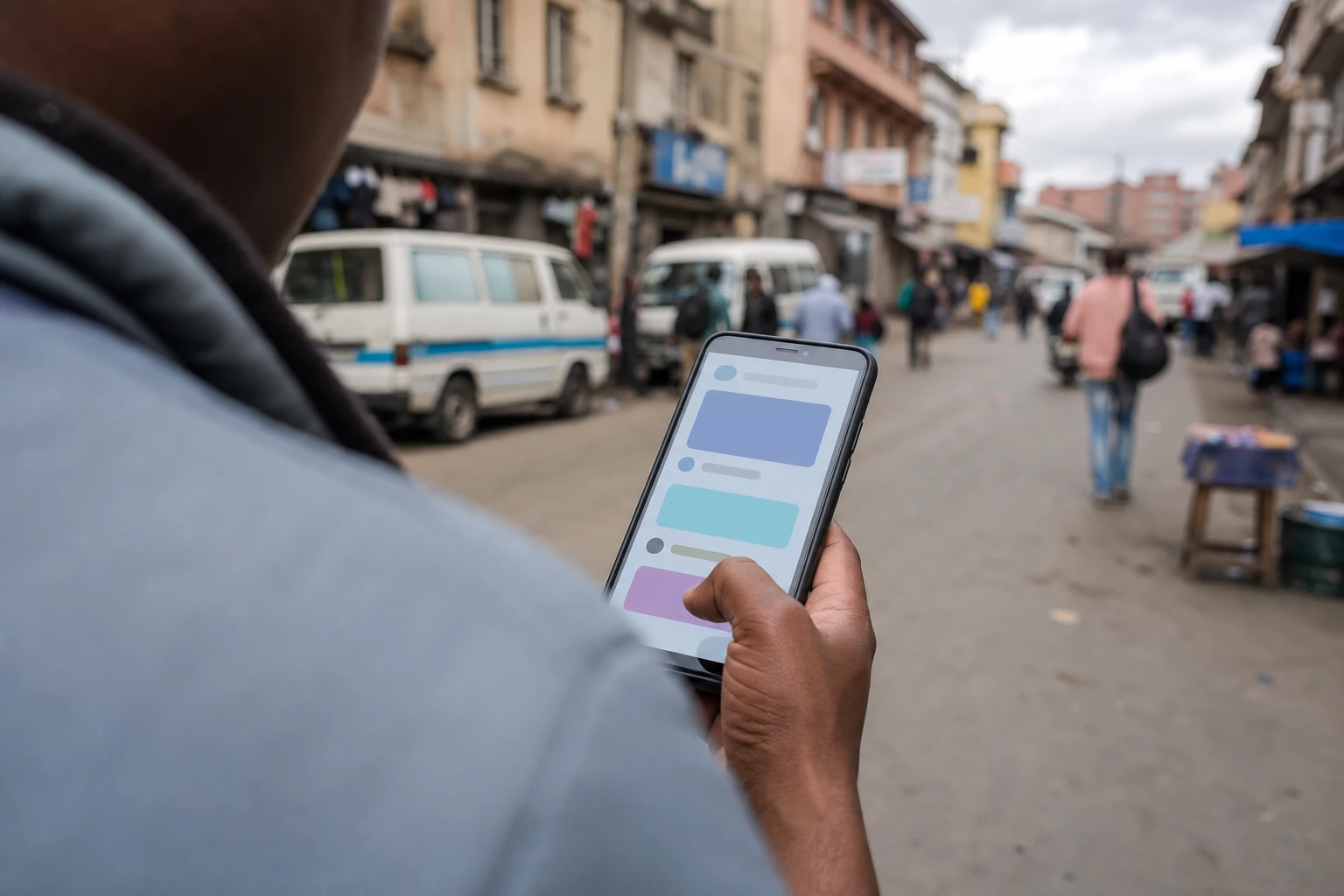
In Antananarivo, a disappearance no longer remains a simple news story for long. Within hours, it can become a viral rumour, a collective suspicion, then a real threat to someone falsely accused. In Madagascar, this dynamic is alarming families as well as those working on the ground to promote media literacy.
For several months, the country has been going through a period of insecurity and social tension that extends well beyond digital networks. Disappearances, particularly in and around the Malagasy capital, have become part of public debate. They have even prompted the Southern African Development Community, SADC — the regional bloc of which Madagascar is a member — to closely monitor the country’s political and security situation.
What content monitoring shows
A group of organisations specialising in media literacy has sounded the alarm over a rise in misleading content about disappearances. As part of its monitoring work, the NGO CID reported 148 problematic items identified between 1 and 10 July, with online hate speech up 45% in a month. These figures, drawn from the organisation’s monitoring, illustrate a sharp acceleration in the phenomenon.
The pattern is familiar, but its effects are devastating. On one hand, conspiracy theories are circulating, sometimes linked to human sacrifice or mining. On the other, messages identify a man, a neighbourhood, a figure filmed in haste. This practice of doxxing — publicly exposing someone’s identity or face — can prompt immediate social condemnation. In Madagascar, the line between an online accusation and a real-world attack has become too fine to ignore.
The danger is physical, too. Several local sources have reported attempted lynchings prevented by law enforcement, while others have described mob violence sparked by rumours. The Malagasy press has also reported that the authorities have opened coordination centres to monitor cases of disappearance and alleged abduction.
A crisis of trust, not just a security crisis
The heart of the problem goes beyond the simple increase in reported cases. It is about trust. When citizens can no longer distinguish a useful alert from disinformation, they turn to social media, neighbourhood groups or word of mouth. In a city such as Antananarivo, where information travels quickly and in fragments, a lack of verification fuels fear.
The authorities, too, have recognised the scale of the issue. The government has referred to the persistence of disappearances, and the police have stepped up their operations on the ground. But a security response is not enough without a sustained effort to promote media literacy, transparency around investigations and clear public communication. That is what determines whether a rumour dies out or causes harm.
In this context, the call to check sources before sharing information has very real significance. Civil society organisations are asking citizens to cross-check information, identify anonymous sources and see whether other reputable media outlets are reporting the same case. They are also asking the authorities to treat media literacy as a tool for preventing violence, not simply as a school project.
What this means for Madagascar and the region
At national level, there are two issues at stake. For families, every rumour can intensify the anguish of a real disappearance. For institutions, every false account further undermines the credibility of public investigations. In a country where radio remains a central medium outside major urban centres, the fight against disinformation must involve the media, schools and community networks.
At regional level, Madagascar is not alone. Other SADC countries are also facing political tensions, crises of trust and saturated information environments. The region has made democratic governance, the rule of law and stability an official area of focus. For Madagascar, disinformation around disappearances has thus become a test of institutional resilience as well as a public security issue.
The next steps will unfold on several fronts. It will be necessary to monitor the progress of announced investigations, the responses of local authorities, the ability of the media to verify information quickly without fuelling a frenzy, and any expansion of media literacy campaigns in neighbourhoods, schools and community radio stations. In Madagascar, the fight against disinformation is no longer a technical matter. It has become a condition for civil peace.