Algeria
 Egypt
 Libya
 Morocco
 Sudan
 Tunisia
 Benin
 Burkina Faso
 Cabo Verde
 Côte d'Ivoire
 Ghana
 Guinea-Bissau
 Liberia
 Mali
 Mauritania
 Niger
 Nigeria
 Senegal
 Sierra Leone
 The Gambia
 Togo
 Cameroon
 Central African Republic
 Chad
 DR Congo
 Equatorial Guinea
 Gabon
 Republic of the Congo
 São Tomé and Príncipe
 Burundi
 Comoros
 Djibouti
 Eritrea
 Ethiopia
 Kenya
 Madagascar
 Malawi
 Mauritius
 Mozambique
 Rwanda
 Seychelles
 Somalia
 South Sudan
 Tanzania
 Uganda
 Angola
 Botswana
 Eswatini
 Lesotho
 Namibia
 South Africa
 Zambia
 Zimbabwe
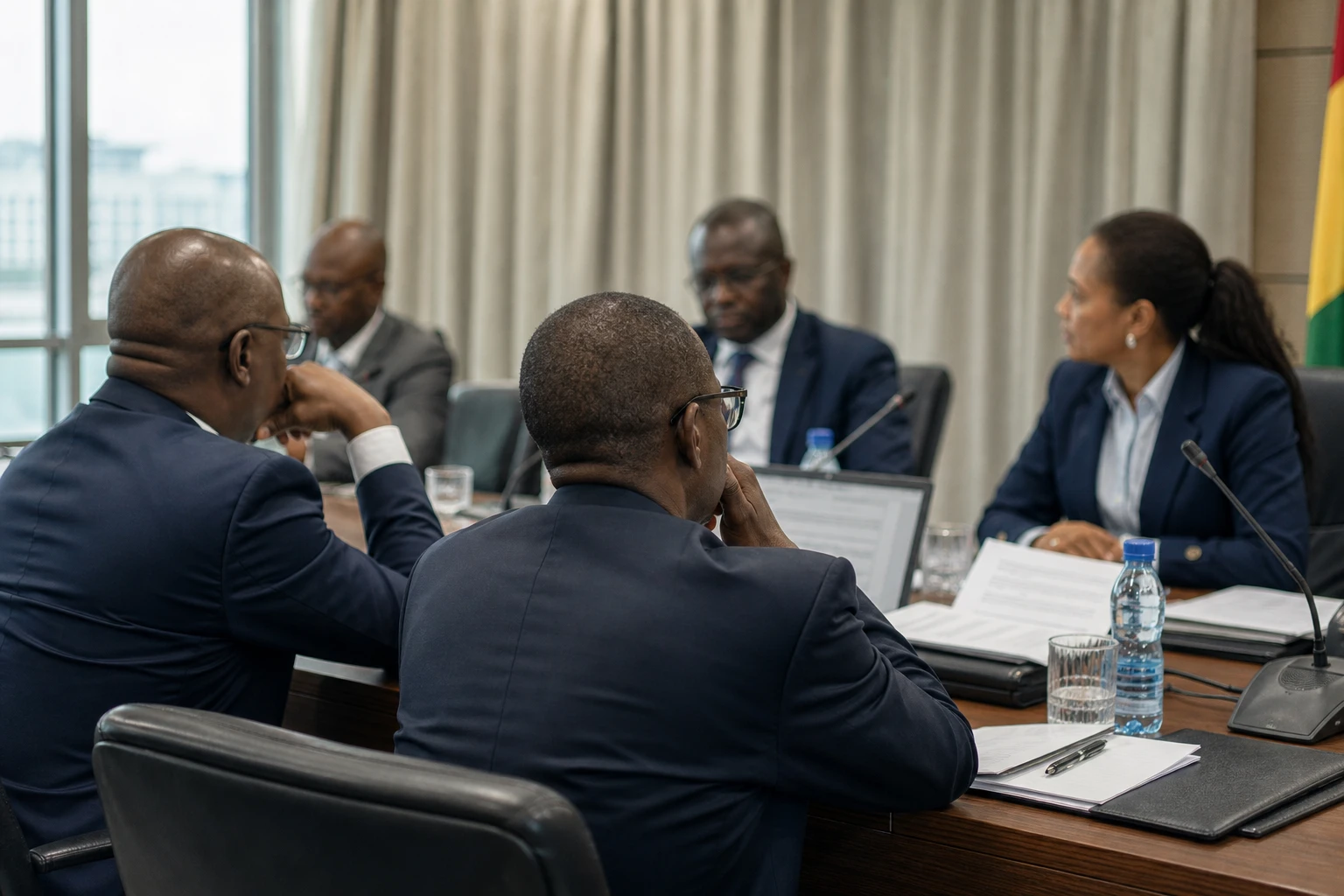
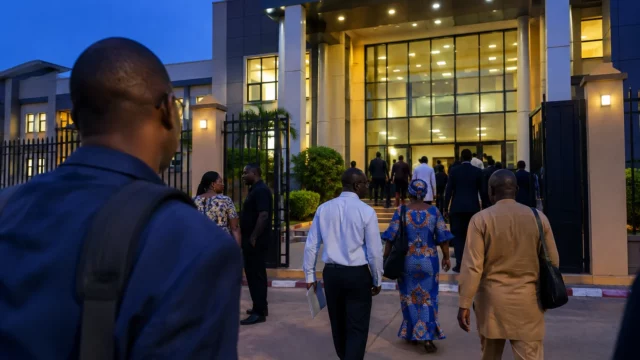
In Conakry, currency is more than a technical instrument
In Guinea, the debate over the eco is not limited to exchange rates. It touches on a broader question: who decides a country’s economic room for manoeuvre, and at what pace can regional integration advance without undermining national stability? In a West African context still marked by shifting timetables, Conakry maintains that its national currency remains a symbol of sovereignty and stability for Guineans. The Republic of Guinea also officially states that its currency is the Guinean franc, or GNF, and that Conakry is indeed the country’s capital.
This choice is part of a broader political and economic sequence. Since the transition began in September 2021, Guinea’s authorities have sought to rebuild their credibility at home and abroad while reaffirming their economic priorities. The presidency highlights a course based on economic transformation, dialogue with the private sector and efforts to create a clearer business climate. In this context, the national currency is not presented as a mere administrative relic, but as a policy tool the state wants to keep under its control.
The regional timetable is moving forward, but not all reservations have been dispelled
The Economic Community of West African States’ single-currency project has gathered pace. At the summit in Freetown on 19 July 2026, ECOWAS confirmed the launch of the ECO in 2027 and revived technical work on macroeconomic convergence, project governance and political oversight. The organisation also encouraged the Commission to convene a meeting of the presidential task force before the ordinary summit in December 2026.
This revival does not mean a frictionless transition to a common currency. ECOWAS documents and communiqués show instead that the project remains subject to requirements for convergence, fiscal discipline and an institutional framework. In West Africa, the currency question remains sensitive because it intersects with the legacy of the CFA franc, used by WAEMU countries, and the national currencies of countries such as Guinea, Nigeria, Ghana, Sierra Leone, The Gambia, Liberia and Cape Verde. The eco must therefore still reconcile economies with very different exchange-rate trajectories and inflation levels.
Why Guinea is approaching the eco with caution
In Conakry, the stated reservations are first and foremost based on economic calculations. The authorities and several analyses of foreign trade point out that Guinea remains more closely connected to distant markets, particularly in Asia, than to its immediate neighbours. Data from the World Bank and the WTO Trade Data Portal show that trade is heavily concentrated among a few partners, with China at the forefront of Guinea’s trade flows. In other words, a regional currency alone will not be enough to redirect import, export and financing channels.
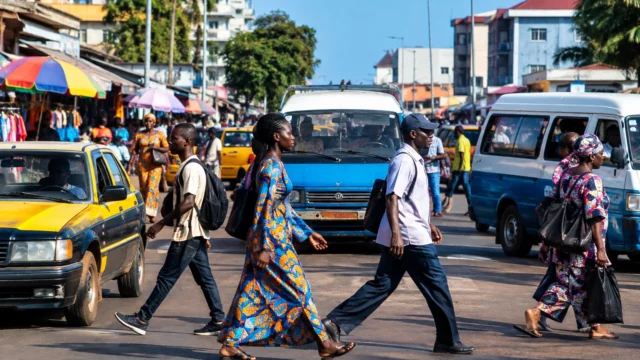
This point is central for households and businesses alike. For urban families, currency issues are reflected in the prices of rice, fuel, imported goods and transport. For businesses, they are measured in the cost of cross-border payments, access to credit and exchange-rate visibility. In Guinea, where the formal economy still depends heavily on imports and the informal economy accounts for a large share of everyday transactions, a regional currency will only have a useful effect if it guarantees convertibility, liquidity and clear rules. These are precisely the points on which Conakry wants assurances before committing further.
Guinea’s position also reflects a political calculation. After years of transition, the authorities in Conakry want to show that they are not being swept along by the regional agenda, but are taking part on their own terms. The lifting of remaining sanctions by ECOWAS in January 2026 fully reintegrated Guinea into regional mechanisms. In this new context, the country does not want to appear as a follower, but as an actor with influence over the rules. It is a way of defending an African vision of integration: not symbolic acceleration, but sustainable integration.
What this debate says about West Africa
The eco issue extends beyond Guinea. It points to ECOWAS’s structural difficulties: unequal levels of development, dependence on raw materials, weak intra-regional trade and the need for more credible solidarity mechanisms. ECOWAS itself is now emphasising the tangible benefits expected from integration: jobs, trade, energy, food security and economic opportunities. This shift matters because it places the single currency in the context of everyday life, rather than treating it as a mere diplomatic project.
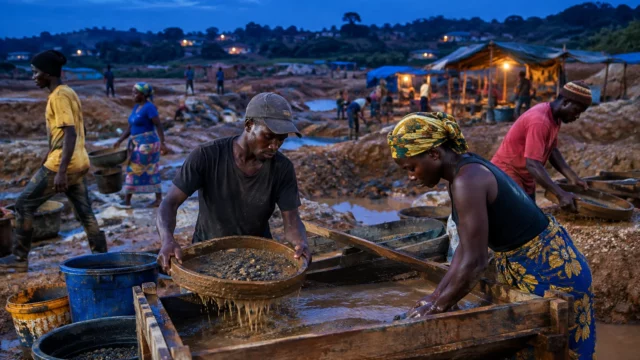
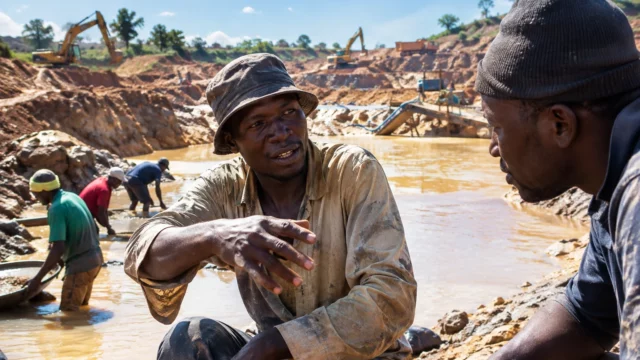
For Guinea, the stakes are twofold. On the one hand, the country wants to preserve the Guinean franc as a lever of economic sovereignty at a time when its revenues, mining investment and industrial ambitions are growing, particularly around Simandou and the “Simandou 2040” strategy. On the other, it cannot stay on the sidelines of a regional undertaking that will shape trade flows, financial standards and ECOWAS policy choices in the medium term. Guinea’s approach, therefore, is to wait for guarantees rather than reject the project in principle.
The continental implications are clear. If the eco fails once again, the credibility of West African integration and the region’s ability to create its own monetary instruments will be called into question. If it moves forward, it will do so only if it respects the diversity of member economies, including that of a country such as Guinea, whose institutional and trade trajectory differs from those of WAEMU countries and its major English-speaking neighbours. The next test will come at the preparatory meetings in December 2026, followed by ECOWAS’s ability to turn an announced timetable into a credible framework.