Algeria
 Egypt
 Libya
 Morocco
 Sudan
 Tunisia
 Benin
 Burkina Faso
 Cabo Verde
 Côte d'Ivoire
 Ghana
 Guinea-Bissau
 Liberia
 Mali
 Mauritania
 Niger
 Nigeria
 Senegal
 Sierra Leone
 The Gambia
 Togo
 Cameroon
 Central African Republic
 Chad
 DR Congo
 Equatorial Guinea
 Gabon
 Republic of the Congo
 São Tomé and Príncipe
 Burundi
 Comoros
 Djibouti
 Eritrea
 Ethiopia
 Kenya
 Madagascar
 Malawi
 Mauritius
 Mozambique
 Rwanda
 Seychelles
 Somalia
 South Sudan
 Tanzania
 Uganda
 Angola
 Botswana
 Eswatini
 Lesotho
 Namibia
 South Africa
 Zambia
 Zimbabwe
Currency remains an instrument of sovereignty, not just a symbol
In Conakry, the debate over the eco goes beyond monetary technicalities. It touches on a simple question: when should a country share its exchange-rate policy with its neighbours, and when should it retain room for manoeuvre? In Guinea, the official response remains cautious. The Guinean franc remains the national currency, and the authorities say they are continuing to consider the future single West African currency.
This choice comes at a particular moment for West Africa. In July 2026, in Freetown, ECOWAS confirmed that the eco project was moving towards a phased launch by 2027, after several delays. The organisation now speaks of a gradual start, with countries that meet the convergence criteria. In other words, the deficit, inflation, foreign exchange reserves and fiscal discipline remain at the heart of the issue.
Conakry is taking its time, but not standing aside
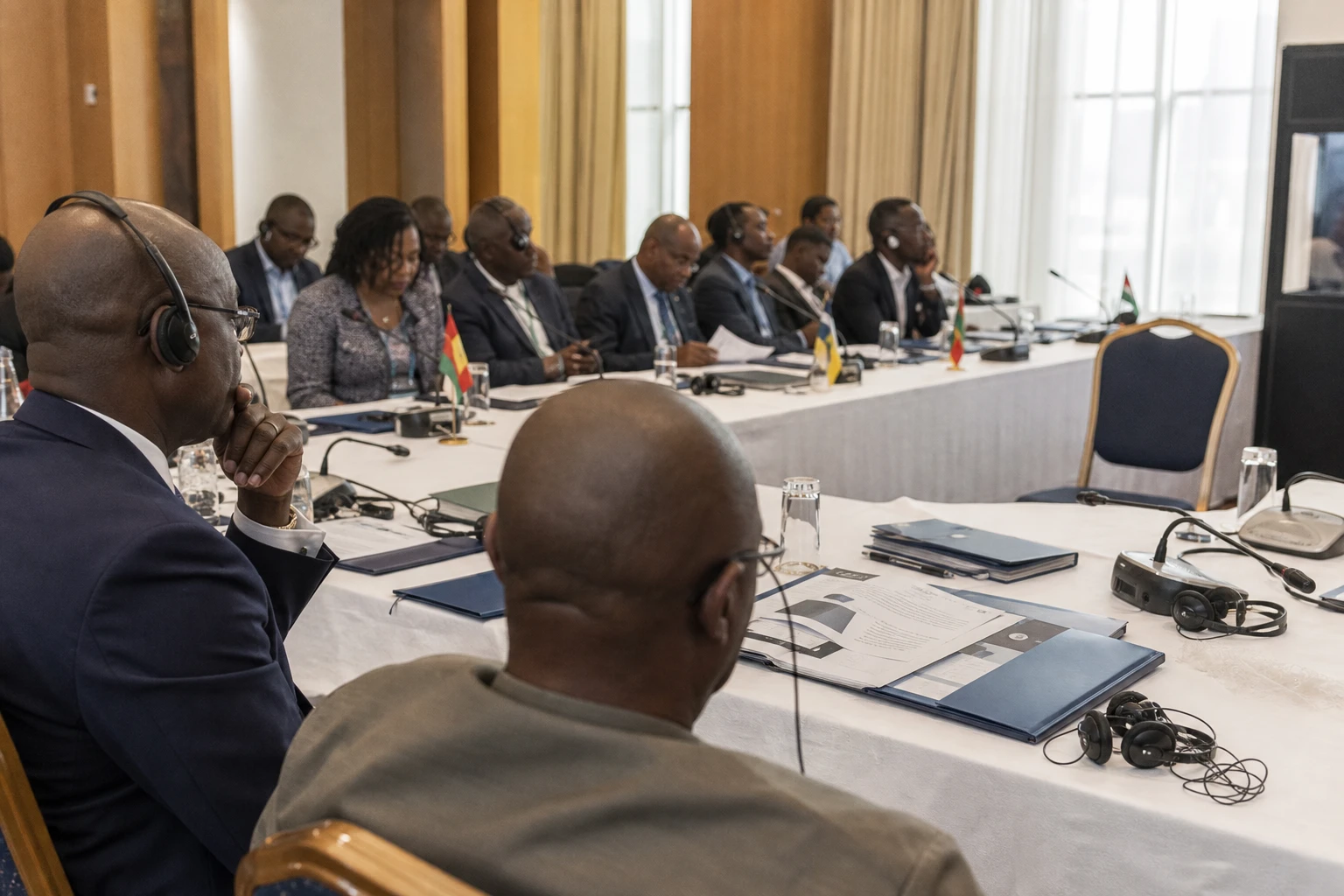
Guinea has not left the table. It is taking part in regional discussions and technical work. In September 2024, Conakry even hosted a meeting of the Convergence Council of ministers and central bank governors of the West African Monetary Zone, or WAMZ, one of the frameworks preparing the eco. This presence matters. It shows that Guinea wants to have a say in the final design, without rushing to join a system that is still unfinished.
At home, the country is sticking to its own priorities. The government is focusing on modernising the economy, fiscal sovereignty and transforming payments. The launch in July 2026 of NimbaPay, the national instant payment system, illustrates this direction. The reform aims to streamline transactions, reduce reliance on cash and strengthen financial inclusion. In practice, it also shows that Conakry is first working to consolidate its own monetary foundations before considering a wider union.
The facts: monetary caution and an economy still oriented outwards
The arguments for retaining the Guinean franc are well known. On the one hand, the country’s productive base remains fragile. On the other, the Guinean economy still trades little with its West African neighbours. An economist quoted by the local press notes that Guinea’s trade with its six neighbours accounts for only about 16% of its trade, while more than 80% of exports go to Asia, particularly China. This reliance on distant markets limits the immediate effect of a regional currency on day-to-day economic activity.
The macroeconomic context also explains the caution. Guinean budgetary and monetary documents show an economy still exposed to liquidity pressures, pressure on the Guinean franc and the need for stabilisation. The central bank and the finance ministry are working to strengthen reserves, modernise payments and support the circulation of money. The country is therefore not rejecting regional convergence. But it is seeking first to reduce its domestic vulnerabilities.
This approach has political resonance. In January 2026, ECOWAS lifted its remaining sanctions against Guinea and fully reinstated the country in its decision-making bodies, following the return to constitutional order confirmed by the September 2025 referendum and the December 2025 presidential election. Since then, Conakry has regained an active role in regional debates. The currency question has therefore resurfaced as Guinea seeks to consolidate its institutional normalisation.
What this means for Guineans
For the state, keeping the Guinean franc means retaining a lever over the exchange rate, money creation and the financing of the economy. This is valuable when prices are under pressure and tax revenues remain vulnerable to external shocks. For businesses, particularly importers and operators focused on the domestic market, the issue is predictability. A national currency still allows some parameters to be adjusted more quickly in the event of an imbalance.
For households, the question is more concrete. It is reflected in the cost of living, the availability of cash, money transfers and the price of imported goods. Reforms such as NimbaPay are helping to create a more formal and connected economy. But in the short term, they cannot replace a solid productive base or lasting price stability. That is precisely where the Guinean debate lies: before handing over part of its monetary sovereignty, the country wants to strengthen its foundations.
A West African question, not just a Guinean one
The Guinean case says something broader about regional integration in West Africa. The eco will be credible only if its rules are clear, its institutions credible and its exchange-rate mechanisms accepted by all. ECOWAS is therefore moving forward in a landscape of very different economies, uneven inflation rates and sometimes conflicting national priorities. Guinea, with its mineral resources, strategic position on the Atlantic and evolving market, wants to avoid a union that would freeze its room for growth before it has even consolidated it.
The continental significance is clear. If the eco succeeds, it will become a major test for African integration, alongside the AfCFTA, the African Continental Free Trade Area. If it fails again, it will show that a common currency cannot be brought into being by political will alone. For now, Guinea is mainly choosing to buy time. Not to isolate itself, but to join later, if it does so, with a less fragile economy and a stronger voice in regional negotiations.