Algeria
 Egypt
 Libya
 Morocco
 Sudan
 Tunisia
 Benin
 Burkina Faso
 Cabo Verde
 Côte d'Ivoire
 Ghana
 Guinea-Bissau
 Liberia
 Mali
 Mauritania
 Niger
 Nigeria
 Senegal
 Sierra Leone
 The Gambia
 Togo
 Cameroon
 Central African Republic
 Chad
 DR Congo
 Equatorial Guinea
 Gabon
 Republic of the Congo
 São Tomé and Príncipe
 Burundi
 Comoros
 Djibouti
 Eritrea
 Ethiopia
 Kenya
 Madagascar
 Malawi
 Mauritius
 Mozambique
 Rwanda
 Seychelles
 Somalia
 South Sudan
 Tanzania
 Uganda
 Angola
 Botswana
 Eswatini
 Lesotho
 Namibia
 South Africa
 Zambia
 Zimbabwe
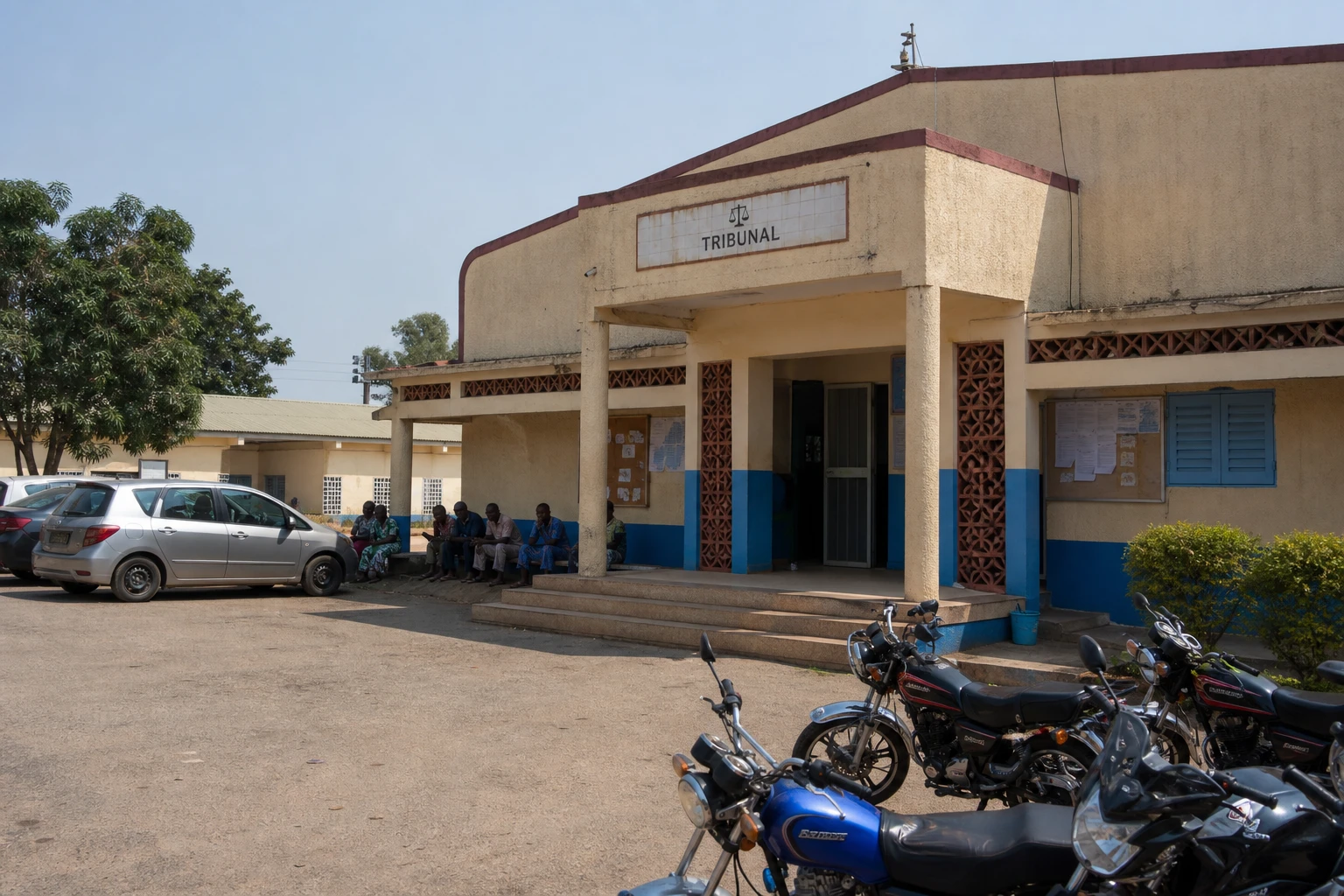
In Mandiana, justice is dealing with more than a criminal case
In Mandiana, in eastern Guinea, a sexual violence case has starkly reminded the country that a crime can spill beyond the courtroom. When images circulate, the harm affects not only the victims, but also their families, school, neighbours and confidence in the public response.
The case comes amid a sensitive climate in the Kankan region, which includes Mandiana prefecture. This border area in the east of the country lies at the intersection of security, mobility and public administration concerns. Authorities have recently made numerous visits and announced construction projects there, highlighting a territory that is strategic as well as rural.
Guinea, in West Africa, shares borders with six countries. Like several states in the sub-region, it continues to face the persistent problem of violence against women and girls. UN documents note that the country has adopted protection laws, but that putting them into practice remains a real challenge.
What the court ruled in Mandiana
On Thursday 30 July, the Mandiana court sentenced Moussa Condé to 15 years in prison and fined him 700 million Guinean francs, or about €70,000. Prosecutors had sought a 20-year sentence. The defence announced its intention to appeal.
According to information made public at the hearing, the man was tried as the main defendant in a gang rape case involving a teenage girl. He was arrested in April alongside three other suspects, while a fifth person remained wanted. According to the information released so far, he admitted his involvement before the court.
Initial public accounts of the case had already stated that four people had been arrested, including two minors, and that the victims were several teenage girls aged 12, 13 and 16, according to prosecutors. This detail matters. In cases of this kind, official statements must remain rigorous, as the ages, number of victims and role of each person accused can change as the investigation progresses.
The defendant, however, denied being responsible for recording and sharing the videos that later appeared on social media. Their circulation online took the case from the closed confines of the courtroom to national outrage. The footage was described as particularly violent, and its continued availability online prolonged the victims’ exposure.
The continued availability of this content also raises an immediate protection issue. When images of rape remain accessible, a court’s judgment is not enough to provide redress. At the same time, the images must be removed, reported and preserved as useful evidence, while further digital violence against the victims is prevented. This has become a central issue in many cases where phones and social media serve both as tools for gathering evidence and as amplifiers of crime.
A legal case, but also a social and digital one
The most visible response came from civil society. Organisations and groups called for silence around sexual assaults to be broken. Their intervention matters because in several regions of Guinea, the weight of social norms still discourages reporting, support and victims joining proceedings as civil parties. UN reports on Guinea specifically highlight the need to improve access to legal remedies, medical care, psychological support and justice.
The legal framework is in place. UN documents note that a reform of Guinea’s penal code addressed sexual violence and other forms of gender-based violence. But a law alone cannot change behaviour or the public response system. It also takes swift investigations, support for victims and consistent prosecutions through to the end.
In Mandiana, then, the issue goes beyond the punishment of one man. It concerns the work of the gendarmerie, prosecutors, judges, social services and local authorities. It also raises questions about institutions’ ability to protect victims in a prefecture far from Conakry, where access to specialist services is more difficult than in the capital.
The digital dimension is just as important. Sharing images of sexual violence turns a criminal case into a prolonged public ordeal. In Guinea, as elsewhere in West Africa, social media accelerates the circulation of sensitive content before removal mechanisms can catch up. This calls for a coordinated response by the justice system, police, platforms and victim support services.
What this case says about Guinea and the region
At national level, the sentence sends a signal of firmness. It shows that courts can impose a heavy penalty in a sexual violence case involving several people. But that signal will be complete only if the other suspects are found and brought to trial, and if the victims receive lasting support.
At regional level, the case resonates across West Africa. Guinea is a member of ECOWAS, a space where people, phones and videos circulate, and where protection gaps can also be found. States across the sub-region face the same question: how to punish, protect and prevent in a digital environment that makes assaults visible, but does not always make redress faster?
For Mandiana, the next challenge will be judicial before it is political. The announced appeal, the search for the fifth suspect and the handling of images still online will need to be followed. For Conakry, the case is a reminder that a policy to protect women and girls is judged not merely by the existence of laws, but by the actual speed of the public response, from the first report to the judgment.