Algeria
 Egypt
 Libya
 Morocco
 Tunisia
 Benin
 Burkina Faso
 Cabo Verde
 Côte d'Ivoire
 Ghana
 Guinea
 Guinea-Bissau
 Liberia
 Mali
 Mauritania
 Niger
 Nigeria
 Senegal
 Sierra Leone
 The Gambia
 Togo
 Cameroon
 Central African Republic
 Chad
 DR Congo
 Equatorial Guinea
 Gabon
 Republic of the Congo
 São Tomé and Príncipe
 Burundi
 Comoros
 Djibouti
 Eritrea
 Ethiopia
 Kenya
 Madagascar
 Malawi
 Mauritius
 Mozambique
 Rwanda
 Seychelles
 Somalia
 South Sudan
 Tanzania
 Uganda
 Angola
 Botswana
 Eswatini
 Lesotho
 Namibia
 South Africa
 Zambia
 Zimbabwe
An agricultural season under pressure
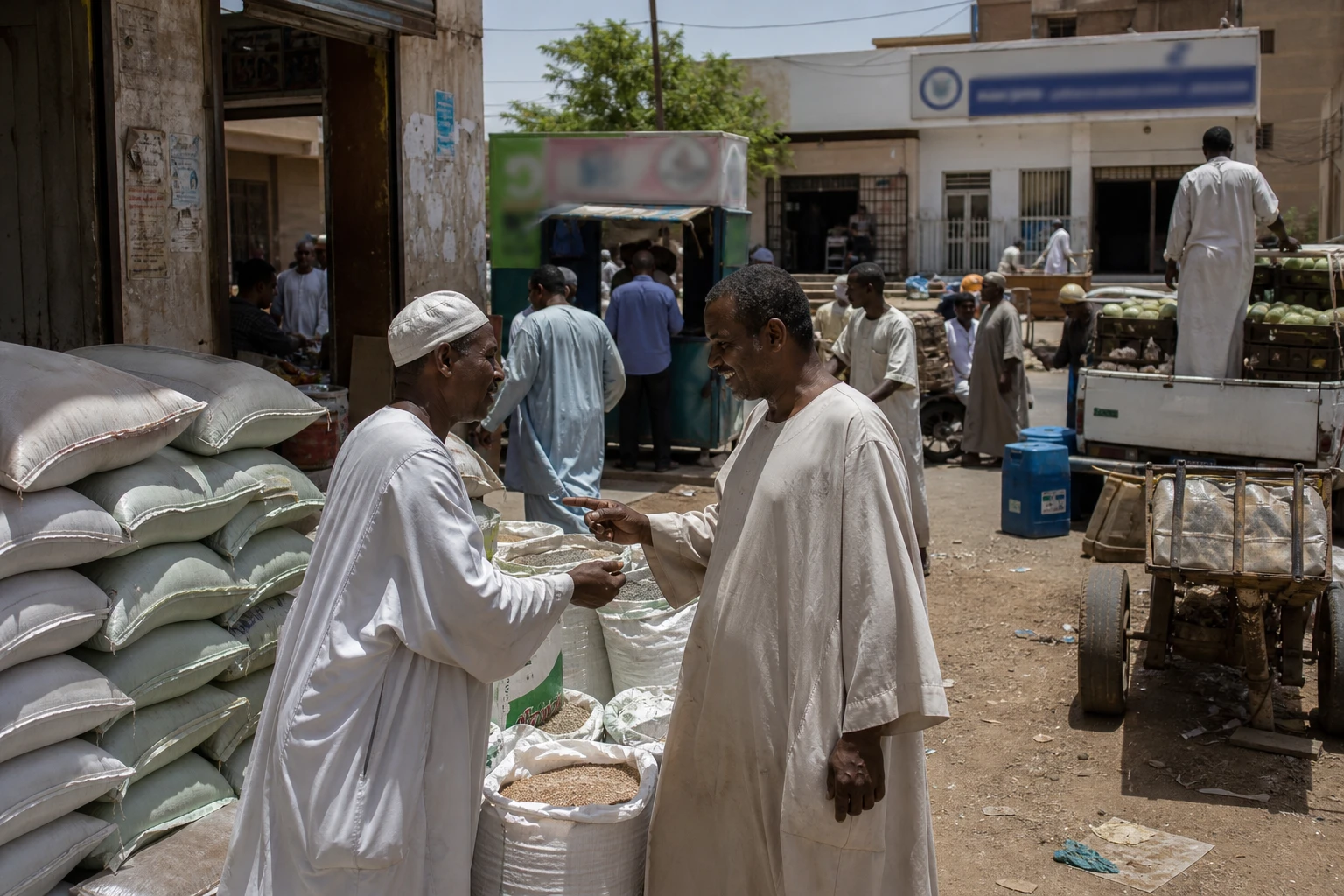
In Sudan, sowing is no longer routine. Every planting decision now depends on the price of diesel, the cost of fertiliser and actual access to land. In a country where agriculture feeds households and supports markets, even a small rise in input costs can lead to lower production, followed by higher food prices.
The problem goes beyond the rainy season alone. Sudan has been at war since 2023, a conflict that has fractured its logistics networks, displaced millions of people and disrupted production areas. At the same time, the country remains exposed to shocks in the global fertiliser market, much of which passes through the Gulf. This dependence leaves Sudan’s agricultural sector vulnerable to any tension across the Red Sea–Gulf–eastern Mediterranean region.
An agricultural country weakened by war
Sudan is one of the major agricultural countries of north-east Africa. The FAO says agriculture provides food and income for nearly 65% of the population, with key crops including sorghum, millet, wheat and sesame. The country also has considerable land potential, but only a limited share of suitable land is actually being cultivated.
This productive base is no longer enough to absorb shocks. The FAO says cereal production rebounded in 2024 thanks to better rainfall, with an estimated 6.7 million tonnes, but cereal prices remain exceptionally high. In other words, a good harvest does not automatically improve living conditions when war blocks roads, raises input costs and limits household incomes.
The country’s food vulnerability is now widespread. The IPC, the international system for monitoring food crises, estimated in June 2024 that 25.6 million people faced acute food insecurity between June and September, including 755,000 in a food catastrophe, while several areas were at risk of famine. The FAO, WFP and UNICEF subsequently confirmed that nearly 19.5 million people remained in crisis or worse in 2025.
Fuel, fertiliser and irrigation: how costs mount
The latest rise in costs is hitting at the heart of the agricultural calendar. Farmers in several parts of Sudan report that fertiliser prices have risen by about 67% in a year, while diesel, used in particular to power irrigation pumps, has more than doubled. In irrigated areas near Khartoum and Omdurman, the increase immediately reduces the area farmers can actually sow.
The shock is all the more severe because Sudan is heavily reliant on imports. UN Trade and Development notes that in 2024, 54% of fertiliser imported by sea from the Gulf was destined for Sudan. This dependence explains why a regional crisis, even one far from Sudanese fields, can quickly translate into higher bills for producers.
The chain of transmission is simple. When energy makes maritime transport more expensive, fertiliser prices rise. When fertiliser prices rise, production costs climb. When costs climb, small and medium-sized farmers reduce sowing, apply less fertiliser or abandon some plots. Food crops such as sorghum and millet, which are essential to local diets, are hit first. Cash crops such as sesame also become less competitive.
In the country’s central and northern agricultural areas, the war has already damaged infrastructure. FAO Sudan says irrigation systems, canal rehabilitation, access to certified seeds and distribution logistics remain urgent priorities. When a pump breaks down and diesel becomes too expensive, water ceases to be merely a technical issue: it becomes a direct factor in economic survival.
Khartoum, Kordofan and the agricultural fault line
Militarily, the country remains divided into several blocs. The army controls the centre and east, while the Rapid Support Forces dominate Darfur. Kordofan, between the two, is a focal point for major military and agricultural interests. The area matters because it connects transport routes, markets and part of the country’s production basins. Any prolonged deterioration there would directly affect harvests and urban prices, as far as Khartoum, the capital.
The social impact of the shock is clear. In rural areas, reduced sowing cuts immediate incomes and food available for household consumption. In cities, it fuels already high food inflation. For displaced households, which often rely on small markets, casual work or humanitarian aid, even a slight contraction in local supply has a double impact. The country is not only buying less fuel and fertiliser: it is also producing less food and relying more on imports.
The effects vary from one group to another. Irrigated farmers around Khartoum can still sow, but at a high cost. Small-scale farmers in rain-fed areas are more affected by payment delays, scarce inputs and insecurity on the roads. Traders, meanwhile, pass on the increases. Urban consumers end up footing the bill, often with no immediate alternative.
A warning for the Horn of Africa and the continent
Sudan’s case extends beyond its borders. It is a reminder that in Africa, a local war can coincide with a global shock to agricultural inputs. It is also a warning for the Horn of Africa, where several countries rely on the same shipping routes, the same fertiliser markets and the same emergency funding. Regional food security is therefore determined not only in fields, but also in ports, logistics corridors and international budget decisions.
At continental level, Sudan illustrates a key point: African agriculture remains too exposed to external shocks, even though it underpins rural employment, local markets and a vital part of social stability. As long as fertiliser, fuel, water and security remain difficult to access, agricultural seasons will remain vulnerable. The next indicator to watch will be farmers’ ability to get through the current season without a further contraction in the area sown, especially in irrigated areas and the country’s central corridor.
In a Sudan already ravaged by war, the question is therefore not only what the next harvest will bring. It is whether the national food system can continue to function at all, from Khartoum to the producing regions, and how a country can still feed its population when war and global markets are pulling on the same thread at the same time.