Algeria
 Egypt
 Libya
 Sudan
 Tunisia
 Benin
 Burkina Faso
 Cabo Verde
 Côte d'Ivoire
 Ghana
 Guinea
 Guinea-Bissau
 Liberia
 Mali
 Mauritania
 Niger
 Nigeria
 Senegal
 Sierra Leone
 The Gambia
 Togo
 Cameroon
 Central African Republic
 Chad
 DR Congo
 Equatorial Guinea
 Gabon
 Republic of the Congo
 São Tomé and Príncipe
 Burundi
 Comoros
 Djibouti
 Eritrea
 Ethiopia
 Kenya
 Madagascar
 Malawi
 Mauritius
 Mozambique
 Rwanda
 Seychelles
 Somalia
 South Sudan
 Tanzania
 Uganda
 Angola
 Botswana
 Eswatini
 Lesotho
 Namibia
 South Africa
 Zambia
 Zimbabwe
A monarchy seeking to show it is staying the course
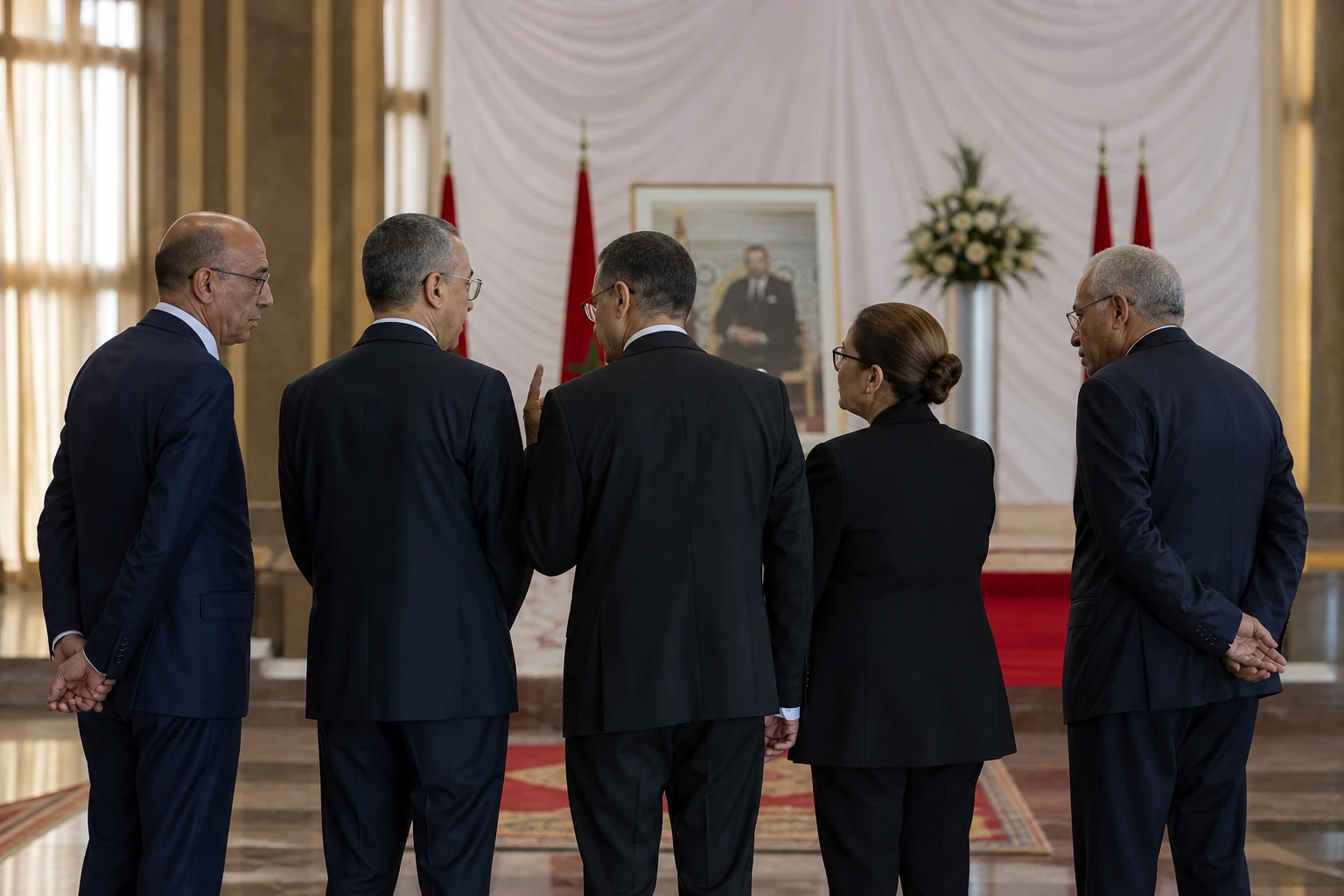
In Morocco, the Throne Day speech is more than a ritual. It is also a moment for political stocktaking. In Rabat, King Mohammed VI addressed the nation on the occasion of Throne Day, highlighting the kingdom’s stability, the continuity of its economic choices and the image of a country seeking to combine modernisation with social cohesion.
The timing is sensitive. The country is emerging from years marked by drought, pressure on prices and strong social expectations, particularly among young people and in rural areas. The royal speech therefore sought to answer a straightforward question: how can Morocco’s emerging-economy narrative be defended without playing down the inequalities that still cut across the country?
Political stability, growth and regional divides
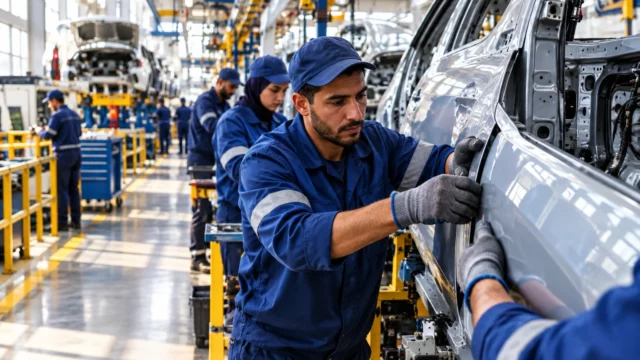
In his address, Mohammed VI stressed one central idea: economic gains were not the achievement of a single government, but the result of a long-term strategy. He attributed these results to the country’s “political and institutional stability”, as well as to a productive sector that had become more competitive, diversified and open. The monarch also cited an “industrial renaissance”, noting that industrial exports had more than doubled since 2014.
The king cited the automotive industry, aerospace, renewable energy, agrifood and tourism as drivers of the Moroccan economy. This assessment aligns with several recent international analyses describing a resilient country despite climate and external shocks. The IMF estimated in 2026 that Moroccan growth remained solid, with a rebound driven by agriculture, construction and services, while the World Bank put the pace at around 4.2% in 2026.
But the royal speech did not only celebrate macroeconomic indicators. It also acknowledged a more tangible warning: Morocco must not become a two-speed country. The monarch noted that the latest census had highlighted demographic and regional changes, and cited a fall in multidimensional poverty, from 11.9% in 2014 to 6.8% in 2024. The High Commission for Planning confirmed this decline in a study published in spring 2025.
This statistical improvement does not mean that disparities have ended. In the royal address, rural regions remain the most vulnerable, owing to a lack of infrastructure and basic facilities. The king called for a change in approach: moving from conventional social programmes to integrated regional plans based on local employment, schools, healthcare, water and rehabilitation projects tailored to each region.
A country looking to major events, but under social pressure
The speech also comes amid a highly visible sporting and diplomatic moment. Morocco has been confirmed as co-host of the 2030 World Cup with Spain and Portugal, while FIFA confirmed the shared hosting arrangement in 2024. The kingdom is also due to host the 2025 Africa Cup of Nations. These events feed the narrative of a Morocco capable of delivering major infrastructure and occupying a central place on the continental agenda.
This narrative, however, is challenged by some young people. In autumn 2025, the GenZ 212 movement put forward demands on education, healthcare and social justice, denouncing a gap between high-profile investments and everyday life. International agencies and media then noted that the protests had exposed divisions between major national projects and public services seen as inadequate, particularly in peripheral areas.
Seen in this light, the Throne Day speech is not merely intended to reassure. It also serves to regain control of the political timetable. Mohammed VI recalled that, with the next legislative elections about a year away, the electoral framework should be set before the end of the year, paving the way for consultations between the Interior Ministry and the relevant stakeholders. This signal matters because it puts institutional competition back at the centre, at a time when demand for social results is growing in cities and rural areas alike.
What this moment says about Morocco and North Africa
For Morocco, the stakes go beyond royal messaging. The kingdom wants to preserve a delicate balance: attract investment, deliver on major international events, and at the same time narrow gaps in access to schools, healthcare, water and employment. This equation is particularly important in a country where economic institutions now emphasise the quality of growth, not just its rate. The OECD, for example, calls for stronger social protection, action against the informal economy and improved competition.
Across North Africa, the message is also political. Rabat is restating its ambition to remain a stable hub, connected to Europe, Africa and major global markets. The king also referred to regional openness, the Arab Maghreb Union and relations with Algeria, calling for frank and brotherly dialogue. This positioning matters at a time when Maghreb relations remain deadlocked and neighbouring states are judged as much on their ability to stage major events as on their capacity to protect internal cohesion.
The continental significance is clear: Morocco presents its experience as that of a state investing in infrastructure, sports diplomacy and industry, while seeking to correct regional imbalances. What happens next will hinge on this point. If the announced local programmes produce visible results, the royal speech may form part of a trajectory of consolidation. Otherwise, the tension between declared modernisation and expected social justice will remain the kingdom’s real test.