
 Algeria
 Egypt
 Libya
 Morocco
 Sudan
 Tunisia
 Benin
 Burkina Faso
 Cabo Verde
 Ghana
 Guinea
 Guinea-Bissau
 Liberia
 Mali
 Mauritania
 Niger
 Nigeria
 Senegal
 Sierra Leone
 The Gambia
 Togo
 Cameroon
 Central African Republic
 Chad
 DR Congo
 Equatorial Guinea
 Gabon
 Republic of the Congo
 São Tomé and Príncipe
 Burundi
 Comoros
 Djibouti
 Eritrea
 Ethiopia
 Kenya
 Madagascar
 Malawi
 Mauritius
 Mozambique
 Rwanda
 Seychelles
 Somalia
 South Sudan
 Tanzania
 Uganda
 Angola
 Botswana
 Eswatini
 Lesotho
 Namibia
 South Africa
 Zambia
 Zimbabwe
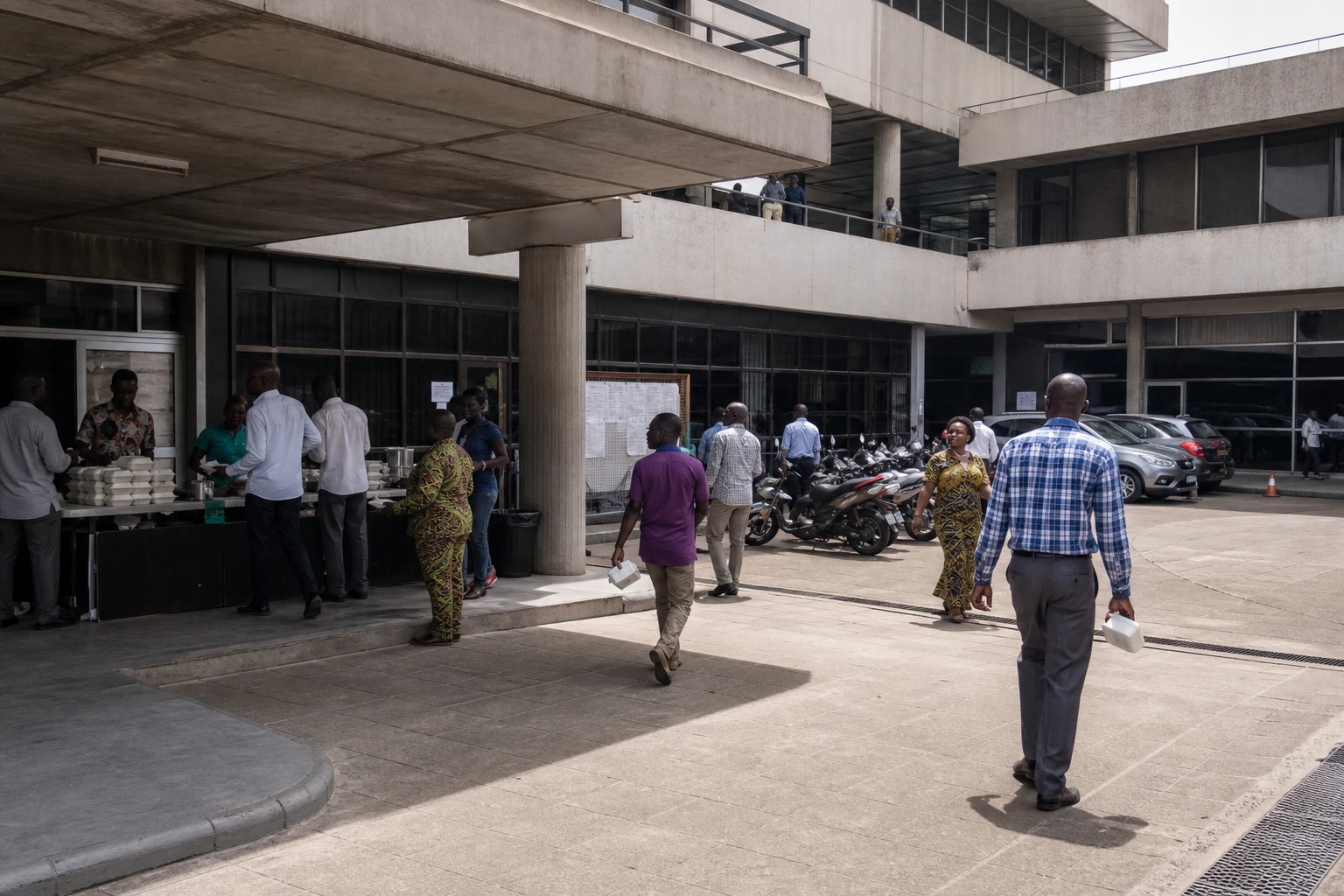
A popular lunch that says a lot about Abidjan
At midday in some Abidjan neighbourhoods, the question is not just what to eat. It also says how much money is left in your pocket, how much time you have between classes or appointments, and how much room the city still leaves for quick, affordable meals. Garba has become part of this daily equation because it is quick to eat, keeps you full for a long time and remains one of the cheapest meals in Côte d’Ivoire’s economic capital. In Côte d’Ivoire, whose political capital is Yamoussoukro, the dish tells its own story of urban life, the informal economy and the movement of seafood.
The subject goes beyond simple indulgence. Since 2024, the skills involved in making attiéké have been inscribed on Unesco’s Intangible Cultural Heritage list, giving a new institutional framework to a food already deeply rooted in Ivorian habits. Attiéké, a lightly fermented cassava semolina, is not just an accompaniment: it is part of a living heritage, produced and passed down locally. In the region, this recognition also matters because it highlights an agricultural, artisanal and commercial chain linking production areas, Abidjan and several markets across the sub-region.
What exactly is meant by garba?
Garba combines two simple ingredients: attiéké and fried tuna, served with a condiment made from onions, tomatoes and chilli. In practice, the dish has become a street-food speciality, highly visible in Abidjan’s working-class neighbourhoods, as well as in other cities across the country. Its origins are linked to the redistribution of pieces of tuna considered to have little value at the port of Abidjan. The name is generally attributed to Dicoh Garba, a former Ivorian minister for animal production under Félix Houphouët-Boigny. This attribution appears in several studies and published accounts on the subject, although the precise story is mainly passed down through urban memory and popular usage.
The key point lies elsewhere: garba has turned a fishery by-product into an economic circuit. A research paper on the port of Abidjan notes that “false tuna” or “false fish” are local categories for fish that have been rejected or undervalued, then redirected into low-cost sales channels. University studies and fieldwork show that this sector supports a far-reaching popular restaurant trade, generating income, employing young people and creating micro-jobs in several Abidjan municipalities.
Price, a filling meal and social life
Garba’s success is primarily down to its price. At many outlets, a meal costs around 1,000 CFA francs, or about €1.50. This price remains central in a city where income gaps are wide and many workers in the informal sector operate on tight margins. A study on garba consumption also notes that consumers see it as an economical meal and a place for social connection. The dish is not merely “cheap”: it lets people eat out without putting too much pressure on their daily budget.
This affordability explains its popularity among students, office workers, drivers, dockers and passing workers. Garba meets a very practical need: to eat quickly, without ceremony, at a reasonable cost. In several surveys, customers also say they value generous portions, fresh fish and the quality of the attiéké. In other words, the dish remains a genuine choice, not just a matter of necessity. This matters in a city such as Abidjan, where popular restaurants serve as a social barometer as much as a food market.
Available research also links garba to the urban informal economy. Studies of garba sellers show that the trade can offer young people an economic foothold in an environment where formal employment remains insufficient. Garbadromes, the small restaurants specialising in the dish, thus provide a means of economic survival for operators and a food option for customers. The phenomenon is therefore not just about culinary culture: it also concerns the organisation of work and the ways people make ends meet in the city.
What garba says about Côte d’Ivoire today
The dish is part of a broader national trajectory. Côte d’Ivoire is seeking to modernise its agricultural and fisheries sectors while contending with a powerful and indispensable street economy. Garba shows that value is not created only through industrial channels or major retail chains. It is also made at the port, in neighbourhoods, beside cooking pots and in direct contact with consumers. This explains its lasting place in Abidjan, as well as its ability to travel to other Ivorian cities and beyond.
Unesco’s recognition of attiéké offers another perspective. It lends legitimacy to a product long associated with everyday popular life and is a reminder that African urban cuisines also embody skills, supply chains and identities. In this sense, garba is more than street food. It connects fishing, cassava processing, informal trade, life in Abidjan and a confidently expressed culinary pride. In ECOWAS, where food and trade flows are constant, this kind of dish also shows how West African cities are devising their own models of fast consumption, adapted to local incomes and rhythms.
What needs watching now is not just how the prices of fish or cassava change. It is also how Côte d’Ivoire will choose to recognise these popular economies, or not, in its agricultural, health and urban policies. Garba remains a powerful marker of Abidjan’s identity. But above all, it is a revealing sign of a society seeking to feed its urban population quickly without giving up its own codes or the dignity of its everyday meals.



