Algeria
 Egypt
 Libya
 Morocco
 Sudan
 Tunisia
 Benin
 Burkina Faso
 Cabo Verde
 Côte d'Ivoire
 Ghana
 Guinea
 Guinea-Bissau
 Liberia
 Mali
 Mauritania
 Niger
 Nigeria
 Senegal
 Sierra Leone
 The Gambia
 Togo
 Cameroon
 Central African Republic
 Chad
 DR Congo
 Equatorial Guinea
 Gabon
 Republic of the Congo
 Burundi
 Comoros
 Djibouti
 Eritrea
 Ethiopia
 Kenya
 Madagascar
 Malawi
 Mauritius
 Mozambique
 Rwanda
 Seychelles
 Somalia
 South Sudan
 Tanzania
 Uganda
 Angola
 Botswana
 Eswatini
 Lesotho
 Namibia
 South Africa
 Zambia
 Zimbabwe
An archipelago of memory, not just landscapes
In São Tomé and Príncipe, heritage is not found only in forts, churches or rainforests. It is also found in the former plantations, the roças that tell the story of the cocoa economy, colonial organisation and forced movements that shaped the archipelago. Their addition to the UNESCO World Heritage List gives this past new visibility, but above all an official place in world history.
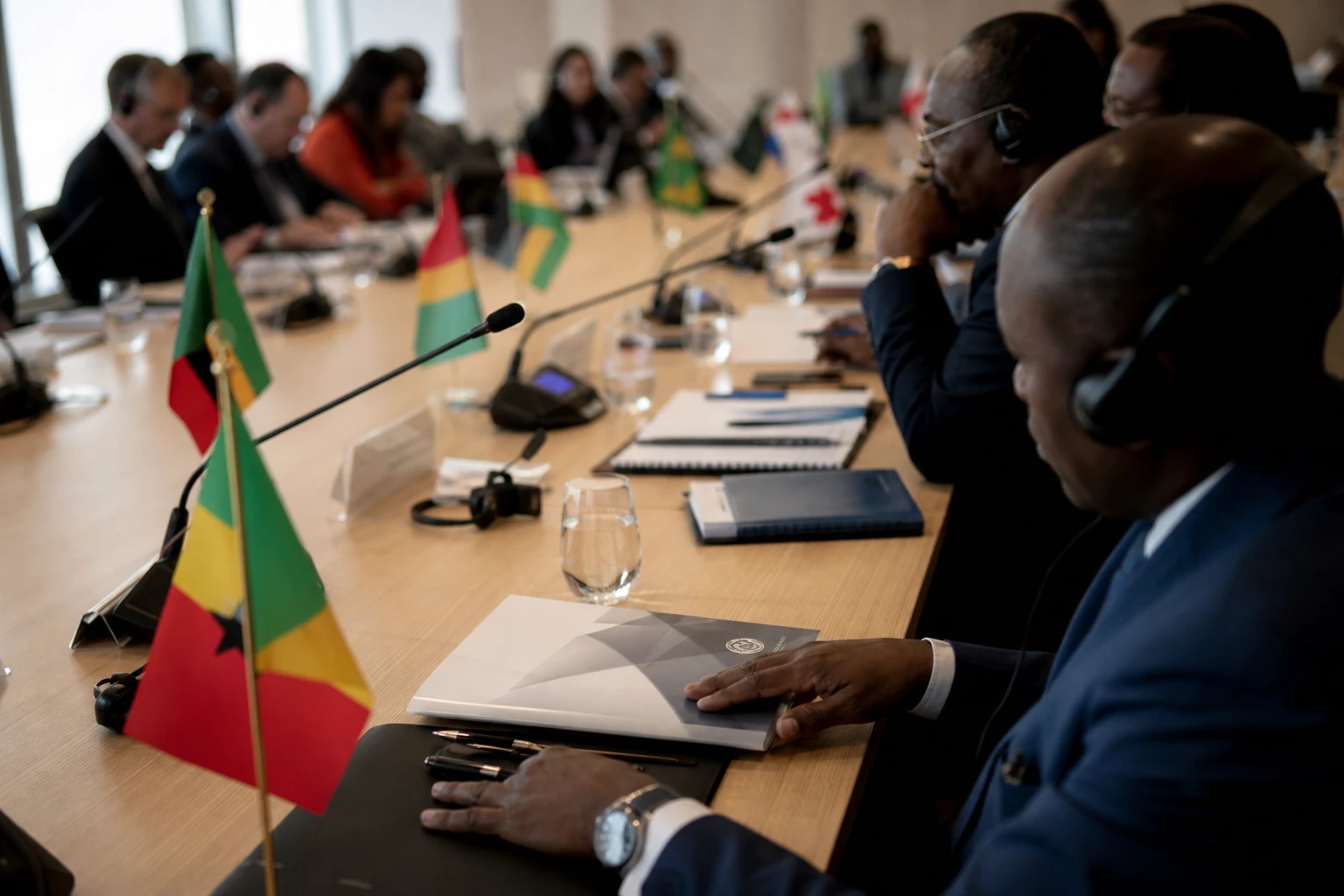
The inscription comes as UNESCO holds the 48th session of the World Heritage Committee in Busan, Republic of Korea, from 19 to 29 July 2026. The choice is significant for São Tomé and Príncipe, a small island state in Central Africa already known for its biosphere reserve on the island of Príncipe, but until now absent from the World Heritage List.
What the inscribed roças comprise
The inscription covers a serial property comprising six sites spread across São Tomé and Príncipe: Monte Café, Agua Izé, Diogo Vaz, São João, Sundy and Belo Monte. UNESCO describes them as a colonial plantation system structured around coffee and cocoa production, with farmland, industrial infrastructure, residential areas and social facilities designed to serve this economic model.
The nomination submitted by the São Toméan state was accepted under two cultural criteria, relating to the overall organisation of the sites and their testimony to the exchanges and constraints of the colonial period. The evaluation by Icomos, the leading advisory body for cultural properties, preceded the final examination by the World Heritage Committee.
In November 2024, São Tomé and Príncipe submitted its first-ever nomination dossier. This matters. It shows that the inscription is not a belated addition to the World Heritage catalogue, but a step built on several years of preparation, documentation and telling the story of a complex heritage.
Heritage recognition, but also political and economic
For São Toméans, the decision has a tangible significance. First, it validates an entire chapter of national history. The roças are not merely architectural remains. They embody the social hierarchy, export crops and movements of labour that shaped the country for decades. Inscribing them on the World Heritage List recognises that this history is part of the shared narrative, without reducing it to a tropical postcard.
Second, the inscription could strengthen conservation, research and cultural tourism. But the effect is not automatic. Without funding, a management plan and local involvement, an international label can remain symbolic. That is why UNESCO experts increasingly link heritage to climate resilience and sustainable development, particularly in small island developing states. São Tomé and Príncipe falls precisely into this category, highly exposed to climate shocks and external dependencies.
The country has already undertaken heritage and environmental initiatives in this area. In 2025, UNESCO worked with the São Toméan authorities to protect cultural sites from climate risks, a sign that preserving old buildings is no longer separate from issues of soil, water, erosion and planning. For communities living near the roças, the challenge is therefore twofold: to preserve memory, but also to make these places useful, liveable and economically viable.
The national context reinforces this reading. In recent days, the UN Secretary-General’s Special Representative for Central Africa praised the country’s tradition of peaceful democratic processes in São Tomé and Príncipe. In a small state, where institutional balances carry considerable weight, heritage recognition also becomes a means of projecting itself internationally and building confidence at home.
An African significance beyond the islands
This inscription goes well beyond the case of São Tomé and Príncipe. UNESCO says the three new African inscriptions announced in Busan mark progress for the continent and for small island states. The message is clear: Africa’s representation on the World Heritage List is growing, but remains incomplete and uneven across regions.
For Central Africa, the case of São Tomé and Príncipe has particular significance. The archipelago belongs neither to CEMAC nor to SADC; it lies at the crossroads of Gulf of Guinea routes and Atlantic and island dynamics. Its inscription shows that a small state can make its own heritage narrative heard, without depending on a large neighbour or an external framework. It is also a reminder that the preservation of African colonial sites is not solely about the memory of empires, but first and foremost about the cultural sovereignty of the countries concerned.
The next steps remain. The most important task now will be implementation on the ground: protecting the sites, managing visitor flows, involving local residents and aligning the effort with development policies. In Busan, São Tomé and Príncipe secured a label. In São Tomé, on the main island, and on Príncipe, the priority will be to turn that label into a tool for education, employment and sustainable preservation.