Algeria
 Egypt
 Morocco
 Sudan
 Tunisia
 Benin
 Burkina Faso
 Cabo Verde
 Côte d'Ivoire
 Ghana
 Guinea
 Guinea-Bissau
 Liberia
 Mali
 Mauritania
 Niger
 Nigeria
 Senegal
 Sierra Leone
 The Gambia
 Togo
 Cameroon
 Central African Republic
 Chad
 DR Congo
 Equatorial Guinea
 Gabon
 Republic of the Congo
 São Tomé and Príncipe
 Burundi
 Comoros
 Djibouti
 Eritrea
 Ethiopia
 Kenya
 Madagascar
 Malawi
 Mauritius
 Mozambique
 Rwanda
 Seychelles
 Somalia
 South Sudan
 Tanzania
 Uganda
 Angola
 Botswana
 Eswatini
 Lesotho
 Namibia
 South Africa
 Zambia
 Zimbabwe
Monetary stabilisation under constraint
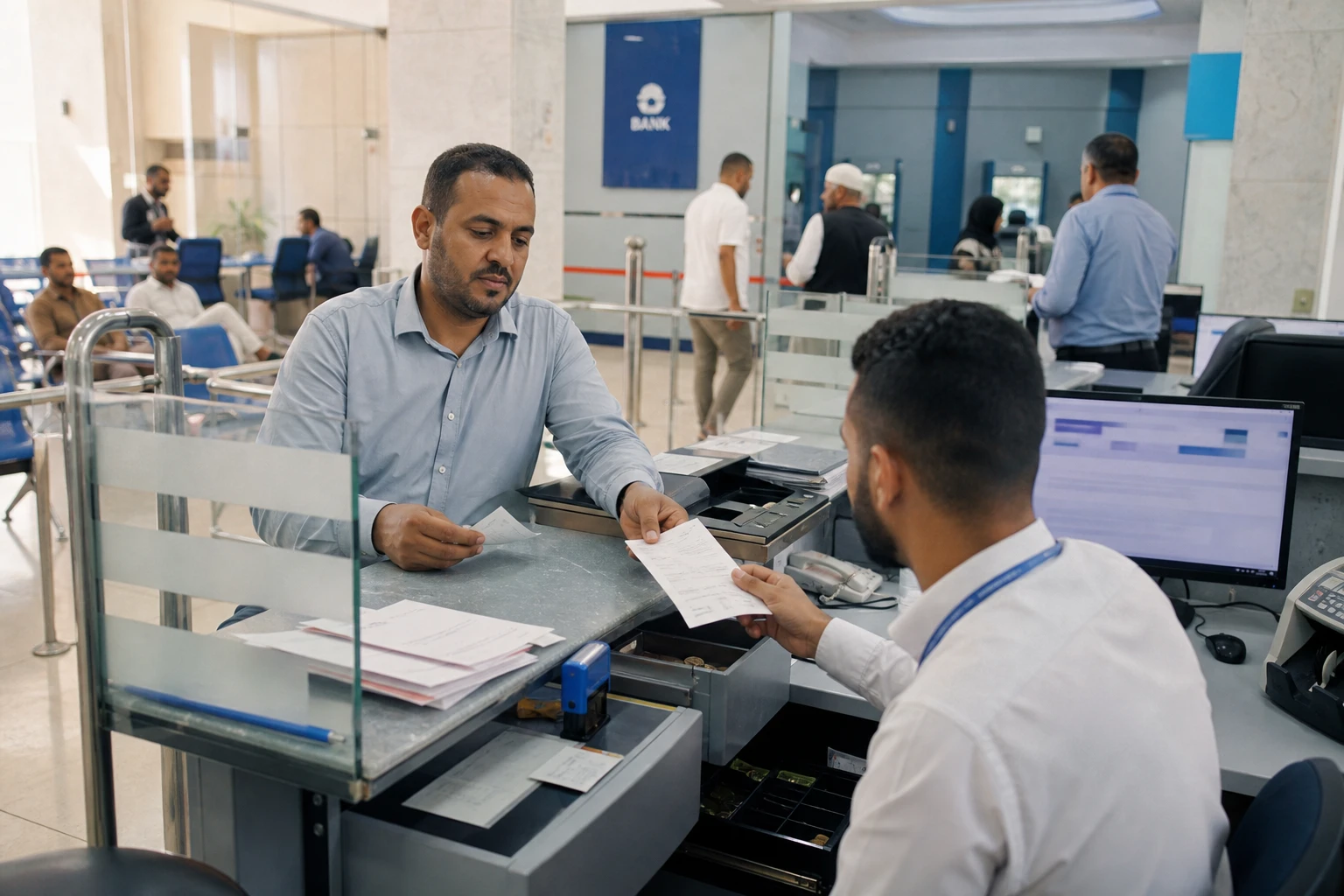
In Tripoli, the Central Bank of Libya is trying to contain a strain that has become familiar to Libyans: a currency weakened by external imbalances, dependence on hydrocarbons and sustained demand for foreign currency. On 26 July 2026, the institution announced a package of emergency measures, including $2bn to support the foreign exchange market and facilitate commercial and personal transactions.
At the same time, the central bank also approved the first phase of its August liquidity plan, allocating 5bn Libyan dinars to commercial banks to supply their branches and meet demand for cash. The two-pronged measure says much about the local situation: the country must both defend the dinar and keep cash circulating in a banking system still under pressure.
A monetary authority still caught up in political divisions
Libya has been marked by an incomplete institutional architecture since the fall of Muammar Gaddafi in 2011. The central bank, based in Tripoli, operates in an environment where political rivalry and institutional fragmentation complicate the conduct of a coherent economic policy. This fragility weighs on imports, confidence in the currency and the ability of households and businesses to access foreign currency.
The regional context also matters. In the north of the continent, Libya remains an important player in the Maghreb and Africa, but its economic integration is limited by internal deadlock. At the continental level, its case illustrates a familiar paradox: a country endowed with substantial energy revenues, yet forced to resort to defensive monetary measures to preserve the stability of its financial system.
What the central bank plans
According to the official statement, $1bn will be allocated to financing letters of credit. This mechanism is used to pay for imports through banks and secure the supply of goods and services. The second billion will go towards foreign exchange transactions for personal use and currency reservations through the central bank’s electronic platform. Commercial banks must also extend their opening hours for over-the-counter dollar sales.
This announcement does not come out of the blue. In spring 2026, the central bank had already begun selling dollars in cash through commercial banks and announced a new wave of authorisations for letters of credit and transfers. The data it published on foreign currency use also show that, between 1 January and 30 April 2026, letters of credit accounted for 80.9% of approved foreign currency requests. In other words, the country’s external demand remains dominated by imports.
The dinar remains under pressure despite successive adjustments
The current sequence is part of a series of adjustments. The central bank devalued the dinar by 13.3% in April 2025, then by 14.7% in January 2026. Its own exchange-rate policy history confirms this. The IMF had already noted in its 2025 report that, in April 2025, the new rate was equivalent to 5.57 dinars to the dollar, after a long-standing peg to the basket of special drawing rights.
These adjustments have not eliminated the gap between the official rate and the parallel market. In January 2026, press sources cited in the original dispatch put the dollar at around 9 dinars on the informal market, compared with a much lower official rate. Even if the gap varies, the signal is clear: demand for foreign currency exceeds what the banking channels can supply, and the economy continues to operate with multiple exchange rates.
For businesses, the stakes are tangible. Letters of credit determine access to imports of food, intermediate goods and equipment. For households, the issue is the ability to buy foreign currency for personal needs, healthcare, education or travel. For banks, finally, the challenge is also to restore a minimum level of confidence in a system often criticised for its delays and administrative constraints.
What this decision says about Libya and North Africa
The significance of this announcement goes beyond managing an exchange rate. It shows how a central bank can become the main stabilisation tool in a country where fiscal, political and security levers are not fully coordinated. In Libya, monetary policy serves simultaneously as a bulwark against depreciation, a release valve for imports and a buffer against cash shortages.
The issue is also relevant across the continent. Economies dependent on a single resource, heavily exposed to imports and beset by institutional tensions are watching these trade-offs closely. In North Africa and elsewhere, the question is not simply one of setting a rate. It is also necessary to restore the circulation of money, transparency in financial flows and the credibility of the rules. Tripoli’s ability to narrow the gap between the official dinar rate and market reality will be determined in the coming months.