Algeria
 Egypt
 Libya
 Morocco
 Tunisia
 Benin
 Burkina Faso
 Cabo Verde
 Côte d'Ivoire
 Ghana
 Guinea
 Guinea-Bissau
 Liberia
 Mali
 Mauritania
 Niger
 Nigeria
 Senegal
 Sierra Leone
 The Gambia
 Togo
 Cameroon
 Central African Republic
 Chad
 DR Congo
 Equatorial Guinea
 Gabon
 Republic of the Congo
 São Tomé and Príncipe
 Burundi
 Comoros
 Djibouti
 Eritrea
 Ethiopia
 Kenya
 Madagascar
 Malawi
 Mauritius
 Mozambique
 Rwanda
 Seychelles
 Somalia
 South Sudan
 Tanzania
 Uganda
 Angola
 Botswana
 Eswatini
 Lesotho
 Namibia
 South Africa
 Zambia
 Zimbabwe
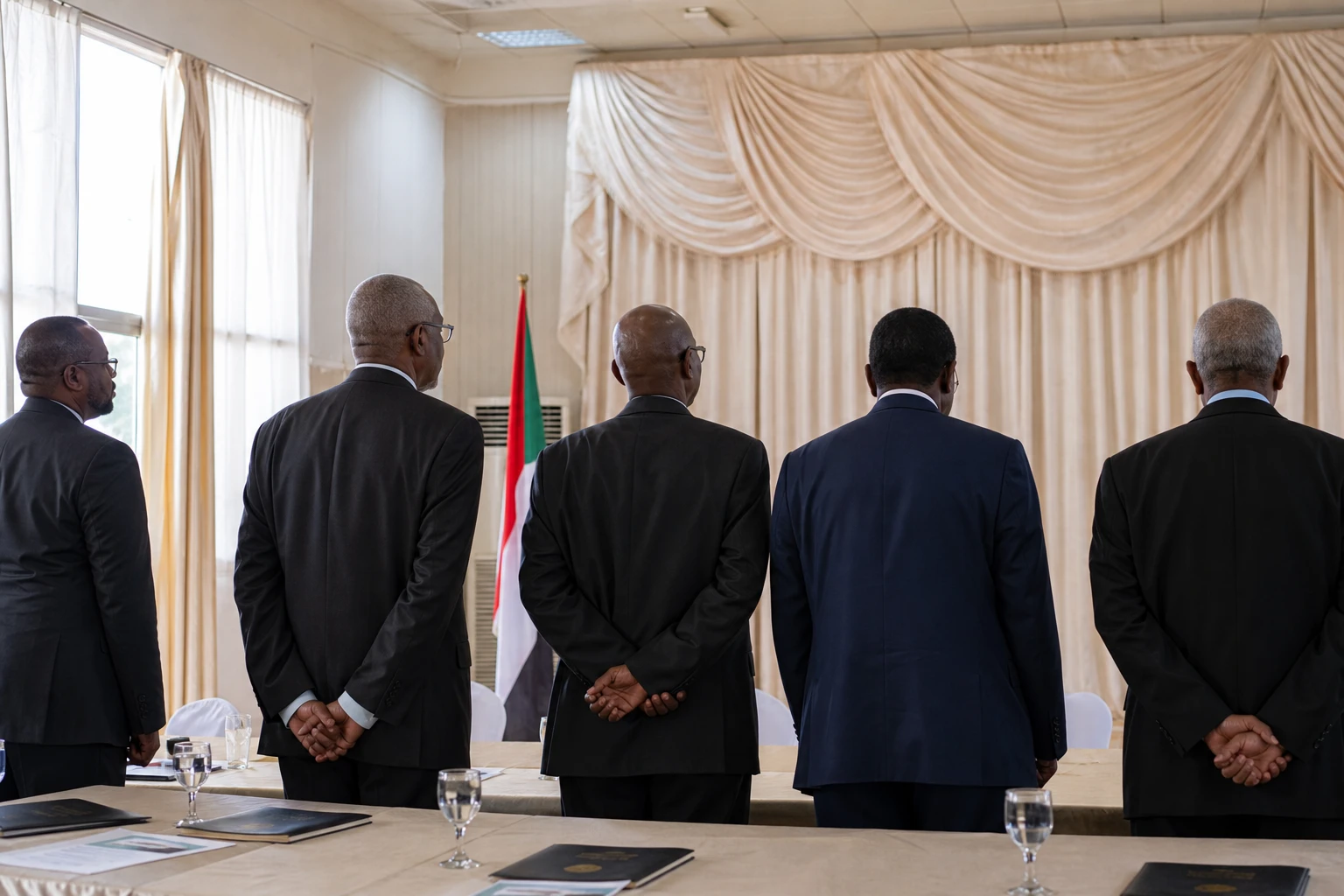
A road, and much more than a road
In western Sudan, retaking a road is about more than military territory. It is also a matter of supplies, the movement of food, and breathing space for cities already under pressure. Between Khartoum and El Obeid, every kilometre counts because the route connects the capital to a major logistics hub in Kordofan.
Since April 2023, the Sudanese Armed Forces have been at war with the Rapid Support Forces, a conflict that has fragmented front lines and shifted the centre of gravity of the fighting towards Kordofan and Darfur. El Obeid, the capital of North Kordofan, has remained a strategic hub, militarily, commercially and in humanitarian terms. In recent weeks, the African Union and IGAD have warned of the rapid deterioration of the situation around the city.
What the army says it has retaken
On 27 July 2026, the Sudanese army said it had retaken control of the Al-Sadarat highway, also known as the export route, linking Khartoum to El Obeid. According to this account, fighting lasted two days and enabled the recapture of several towns between the two cities, including Um Qurfa and Jarigakh. The stated aim is clear: to halt the paramilitaries’ advance towards El Obeid and reopen a corridor for the movement of troops, fuel and supplies.
This claim is not a minor tactical detail. For several months, the road had been one of the most important levers of pressure around the city. UN sources had already reported in June a major paramilitary build-up around El Obeid, with the risk of an imminent ground offensive. In late June and early July, the United Nations, the African Union and IGAD described a de facto siege, marked by repeated drone strikes and growing threats to civilians.
The announced recapture of the route could also have an immediate effect on the local economy. El Obeid is a crossroads for trade between the centre of the country, Kordofan and part of Darfur. When this road is closed, transporting fuel, food and medicines becomes slower, more expensive and sometimes impossible. Conversely, a secure corridor could ease the pressure on markets and humanitarian aid, at least temporarily.
A military gain, civilians still exposed
On the ground, nothing indicates that the battle around El Obeid is over. The paramilitaries have intensified their drone strikes in response, according to the same sources. These attacks have already hit civilian infrastructure, including water and energy facilities and fuel distribution points. The UN Human Rights Office said it had documented 15 drone strikes on El Obeid and its surroundings between 6 and 28 June, killing at least 45 civilians and injuring 41.
The ordeal is also part of daily life. In the city’s neighbourhoods, access to water has become a struggle. Essential services are under strain, and population movements are making access to healthcare even more difficult. UN agencies have warned that women and girls face two risks: the fear of drones during the day and the threat of sexual violence at night when they go in search of water. This is not an abstract image. It is a siege dynamic that slowly but surely wears down civilian life.
The overall human toll of the war remains difficult to establish. The World Health Organization recorded more than 1,600 deaths in 2025 in its surveillance system for attacks on healthcare, across 201 incidents verified since April 2023. Meanwhile, estimates cited by the UN and several international media outlets put the death toll at tens of thousands and the number of displaced people at millions. In such a fragmented conflict, these figures should remain attributed to the organisations that publish them, as tolls change rapidly and vary according to counting methods.
Why this phase matters beyond Sudan
El Obeid now brings together several issues that go beyond the military balance of power alone. First, the city embodies the struggle for communication routes in a Sudan undergoing realignment, where control of each road shapes supply lines and the political leverage of the warring parties. Second, it highlights the growing role of drones in this war, with direct effects on civilians, public services and the movement of displaced people. Finally, it shows that the battle for the country’s centre could determine the balance of power in western Sudan.
Across Africa, the Sudan crisis remains a test for the continent’s mediation mechanisms. The African Union is calling for Sudan’s unity and territorial integrity to be preserved, while IGAD stresses the need for a ceasefire and sustained humanitarian access. In practice, these statements still carry little weight against the military dynamic, but they set out the political framework within which a way out of the crisis will have to be built.
The immediate next steps will therefore unfold on two fronts. First, it will be necessary to establish whether the recapture of the Al-Sadarat highway holds over time. Second, it will be necessary to see whether this advance genuinely opens a humanitarian corridor to El Obeid or merely triggers a new wave of strikes. In today’s Sudan, control of a road can change the pace of the war, but it is not yet enough to change its outcome.