Algeria
 Egypt
 Libya
 Morocco
 Sudan
 Tunisia
 Benin
 Burkina Faso
 Cabo Verde
 Côte d'Ivoire
 Ghana
 Guinea
 Guinea-Bissau
 Liberia
 Mali
 Mauritania
 Niger
 Nigeria
 Sierra Leone
 The Gambia
 Togo
 Cameroon
 Central African Republic
 Chad
 DR Congo
 Equatorial Guinea
 Gabon
 Republic of the Congo
 São Tomé and Príncipe
 Burundi
 Comoros
 Djibouti
 Eritrea
 Ethiopia
 Kenya
 Madagascar
 Malawi
 Mauritius
 Mozambique
 Rwanda
 Seychelles
 Somalia
 South Sudan
 Tanzania
 Uganda
 Angola
 Botswana
 Eswatini
 Lesotho
 Namibia
 South Africa
 Zambia
 Zimbabwe
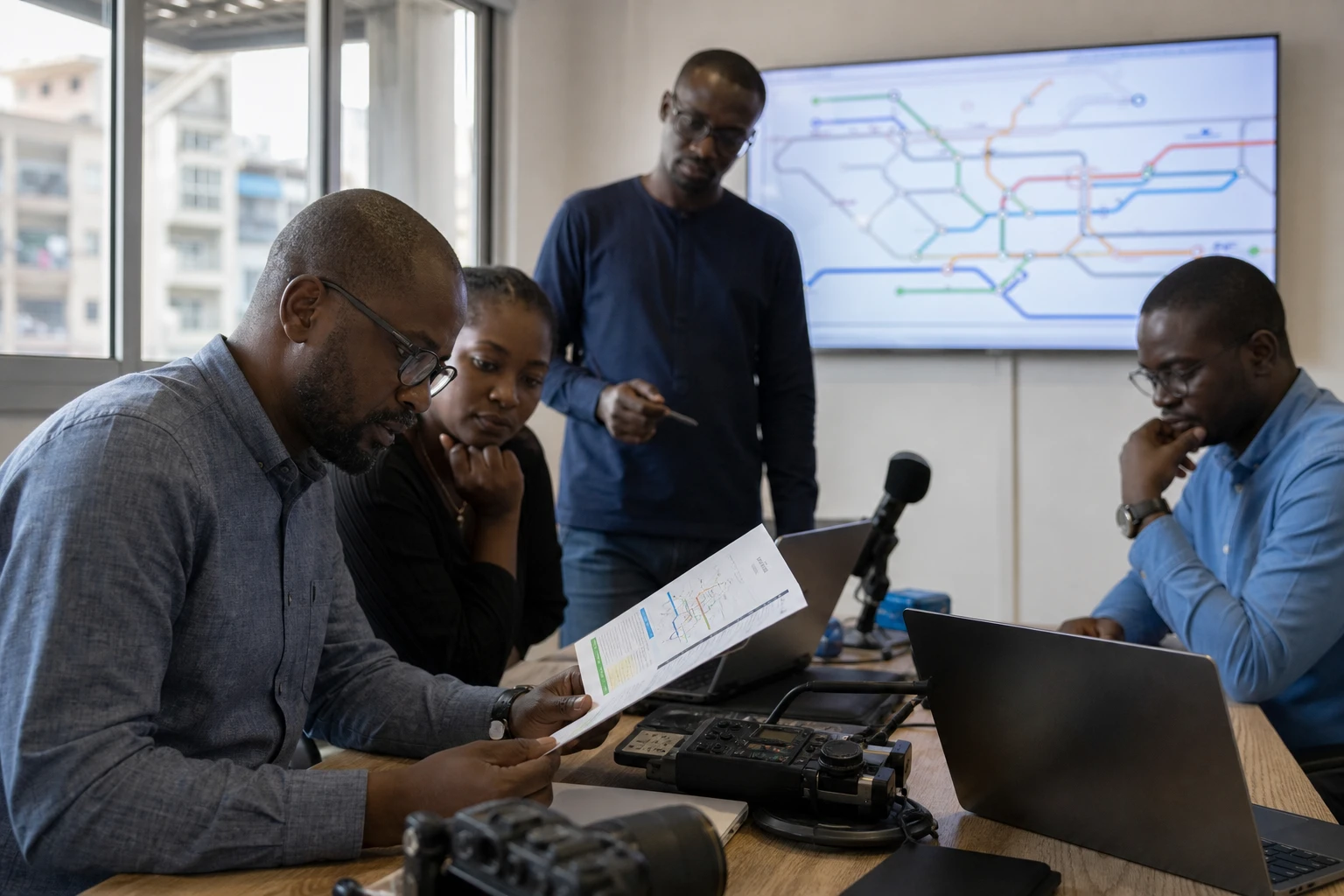
In Dakar, the TER first changed timetables. Tomorrow, it could change the country’s economic map. The extension to Thiès is about more than tracks: it affects commutes, access to industrial jobs and how the capital is connected to another major urban centre in Senegal.
Thiès: a territorial choice as much as a transport choice
Senegal is emerging from a period in which urban mobility has become a central economic issue. President Bassirou Diomaye Faye has made rail a national priority, calling in February 2026 for the modernisation of the Dakar-Tambacounda line to be accelerated and a railway policy for 2050 to be finalised. At the same time, the National Transformation Agenda Senegal 2050 document places the future Dakar-Tambacounda route at the heart of a corridor intended to structure trade with the West African hinterland.
Against this backdrop, Thiès is a logical next stop. The region has 2,524,516 inhabitants, according to 2024 data from the ANSD, making it second only to Dakar in population. It is also a highly urbanised area, where population density and daily flows make transport a decisive issue for households, businesses and public services.
The city and its region also have a long-standing industrial role. Activities linked to materials, quarries, cement and logistics account for jobs and regular journeys to Dakar, Mbour, Diamniadio and neighbouring municipalities. This is precisely the kind of area that a regional train can serve more efficiently than a congested road corridor.
What the agreement announced in July will fund
On 24 July 2026, a memorandum of understanding was signed to fund preliminary design studies for the TER extension to Thiès. The announced funding amounts to €10 million, with €4 million provided by the French Development Agency and €6 million by the European Union. Senegalese authorities describe this as a preparatory step to determine the route, costs, social impacts and environmental constraints before any construction begins.
This is not an isolated development. In March 2026, the Senegalese government had already said that phase three of the TER would extend the network towards Thiès and Mbour, and that European support would complement funding already committed by the AFD. The significance of this coordination between European funders and the Senegalese state comes down to a simple point: a railway project of this scale is not just a track, but a collection of structures, stations, access routes, land acquisitions and urban connections.
Dakar’s TER already provides the technical basis for the extension. Launched in December 2021, it has become one of the symbols of transport modernisation in Senegal. The AFD says the Dakar-Diamniadio line, extended towards Blaise Diagne International Airport, was conceived as a tool for regional development and easing congestion in the capital. The extension to Thiès would carry this approach beyond the immediate metropolitan area.
A direct impact on workers, businesses and municipalities
The main issue is a practical one: time. Thousands of workers, students, traders and service providers already travel between Dakar and Thiès, often at considerable cost and with little predictability. A fast rail link could reduce dependence on road transport, make arrival times more reliable and bring greater predictability to working patterns. For households, that means less fatigue, fewer disruptions and, sometimes, the option of living further from work without losing a day to traffic jams.
For businesses, the expected benefits are twofold. Industrial firms and logistics operators would gain greater reliability, while areas along the Dakar-Diamniadio-Thiès corridor could attract new property, retail and service projects. Senegalese authorities also see the railway as a way to spread development more widely across the country, rather than concentrating all growth around Dakar.
The precedent set by Dakar’s TER underpins this ambition. According to the authorities, the first phase cut the journey from Dakar to Diamniadio to about 45 minutes, from nearly 90 minutes previously, with a stated capacity of 115,000 passengers a day in the initial phase. Passenger figures cited by SENTER and reported by the APS already put the number carried at 41 million in 2023, suggesting that rail can become part of everyday urban life in Senegal when services are regular and easy to understand.
But Thiès represents a change in scale. This is no longer just about serving the outskirts of Dakar. The project must connect two major urban and economic centres, raising questions about land, integration with existing stations, neighbourhood-to-neighbourhood access and links with other forms of transport. Its success will therefore depend as much on how the infrastructure is integrated into the lived city—with its taxis, fast-moving buses, motorbikes, markets and business districts—as on the railway itself.
Part of a wider West African network
The project’s significance extends beyond Senegal. The Senegal 2050 Agenda describes the future Dakar-Tambacounda route as a corridor that could connect to Bamako and then to a wider West African rail network. This places Senegalese rail within a regional framework consistent with integration through ECOWAS and WAEMU, where the smooth flow of trade remains a major economic objective.
In this context, Thiès is an intermediate step. If the extension goes ahead, it will test an approach: first fund robust studies, align international partners with national priorities, then build a network oriented not only towards Dakar but also towards the interior of the country and, eventually, cross-border corridors. This is also the point made by Senegal’s presidency when it stresses the importance of strengthening good-neighbourly relations and African integration in implementing Vision Senegal 2050.
The next milestone will be the studies: route, total cost, timetable, land requirements and environmental impacts. A crucial part of the project will be decided at this stage. In Senegal, as elsewhere in West Africa, major infrastructure transforms the economy only when it is designed with the territories it crosses, not imposed upon them.