Algeria
 Egypt
 Libya
 Morocco
 Sudan
 Tunisia
 Benin
 Burkina Faso
 Cabo Verde
 Ghana
 Guinea
 Guinea-Bissau
 Liberia
 Mali
 Mauritania
 Niger
 Nigeria
 Senegal
 Sierra Leone
 The Gambia
 Togo
 Cameroon
 Central African Republic
 Chad
 DR Congo
 Equatorial Guinea
 Gabon
 Republic of the Congo
 São Tomé and Príncipe
 Burundi
 Comoros
 Djibouti
 Eritrea
 Ethiopia
 Kenya
 Madagascar
 Malawi
 Mauritius
 Mozambique
 Rwanda
 Seychelles
 Somalia
 South Sudan
 Tanzania
 Uganda
 Angola
 Botswana
 Eswatini
 Lesotho
 Namibia
 South Africa
 Zambia
 Zimbabwe
SME lending remains at the heart of Côte d’Ivoire’s economic challenge
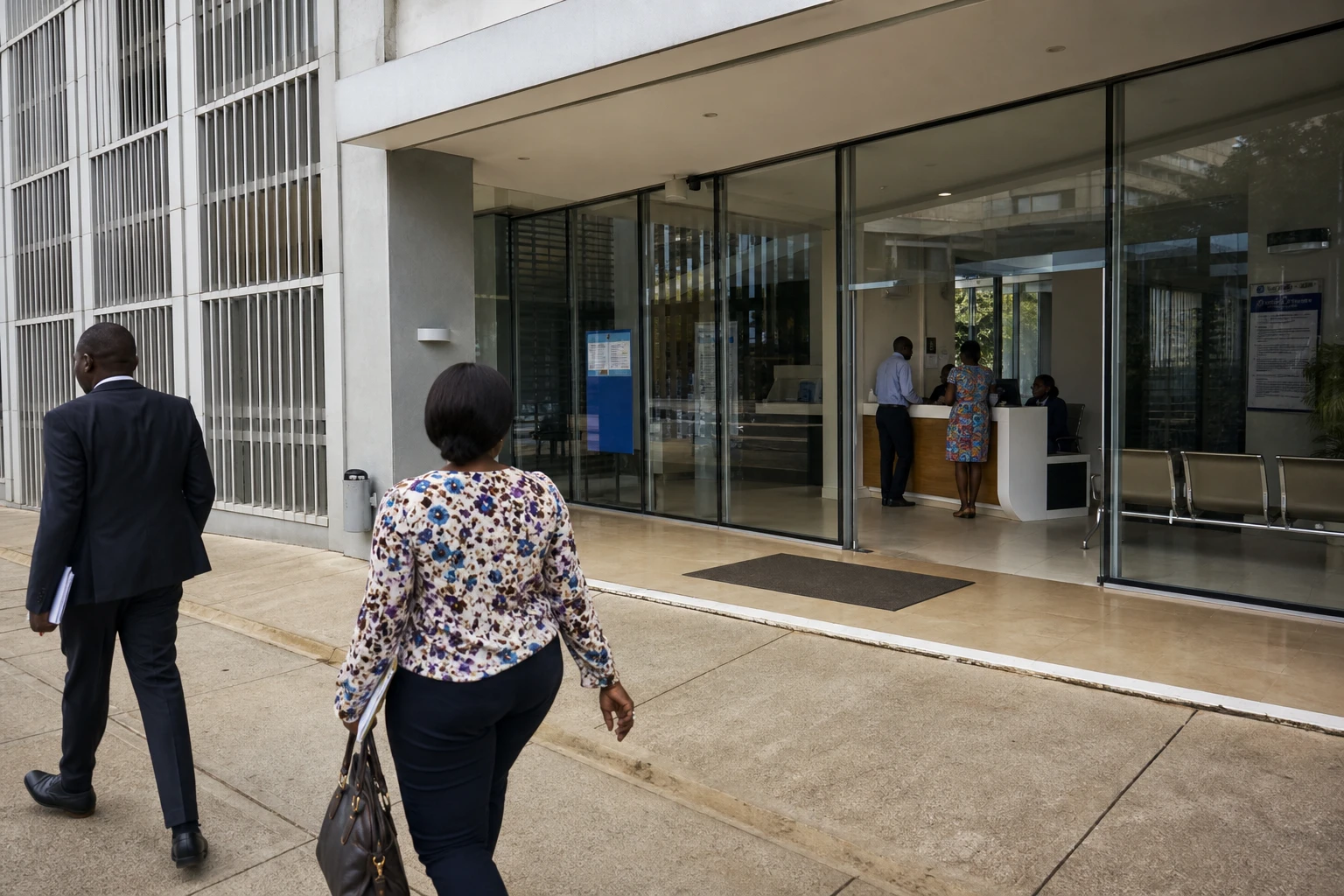
In Côte d’Ivoire, many small businesses know how to sell, produce or hire. But they still face the same hurdle: convincing a bank to lend without sufficient collateral. In a country where the business fabric relies heavily on micro, small and medium-sized enterprises, access to credit remains a decisive step in turning a successful business into sustainable growth.
It is against this backdrop that the Société de garantie des crédits aux PME ivoiriennes, or SGPME, is expanding its partnerships with financial institutions. The mechanism is simple: rather than bearing the risk alone, the bank shares part of it with SGPME. This type of partial portfolio guarantee can open up access to finance without requiring entrepreneurs to provide security they cannot possibly assemble.
The approach also fits within the financial architecture of the West African Economic and Monetary Union, or WAEMU, where the BCEAO oversees financial institutions and SME support schemes. SGPME is also licensed by the central bank as a financial institution with banking status, according to the BCEAO and information published by the Ivorian institution itself.
Two agreements, one goal: broaden lending and better target women
On 23 July 2026 in Abidjan, Orange Bank Africa and SGPME signed two partial portfolio guarantee agreements that are expected to mobilise up to CFAF 17bn for micro, small and medium-sized enterprises and mid-sized companies in Côte d’Ivoire. The information was reported and detailed by the Ivorian press, while SGPME’s data on its guarantee role and capital confirm the structure of the scheme.
The first facility amounts to CFAF 5bn. It targets very specific sectors: hotels, restaurants, tourism, transport, financial services, technology, agriculture and crafts. The second agreement adds up to CFAF 12bn in guarantees. Under both agreements, CFAF 2bn is reserved for women-led businesses. This allocation is not merely for show. It responds to a familiar market reality: women entrepreneurs are often more exposed to collateral hurdles, even though they underpin a significant share of informal and semi-formal activity.
The choice of sectors is no accident either. It reflects the country’s real economy — services, mobility, agro-processing and crafts — rather than just the major projects visible in the economic capital. In practice, the businesses concerned include neighbourhood enterprises, SMEs in industrial zones, regional transport operators and domestic tourism providers. For them, a public guarantee can make the difference between replenishing stock, maintaining a fleet or missing a season.
Orange Bank Africa, a digital player seeking to scale up lending
Orange Bank Africa is not entering an untapped market. The digital bank was launched in Abidjan in July 2020, with the stated ambition of democratising access to small loans and mobile savings. Orange and its long-standing banking partner presented Côte d’Ivoire at the time as the starting point for this regional model.
Five years later, the bank is highlighting its rapid growth. The Ivorian finance ministry’s 2025 annual report on financial inclusion says Orange Bank Africa recorded 340,723 accounts opened and 340,444 credit beneficiaries in 2024, for a volume of CFAF 153.8bn, with a repayment rate of 95%. The AIP, for its part, reported that Orange Bank Africa said it had reached CFAF 500bn in cumulative microloans since 2020. These figures do not cover the same scope, but they point to the same trend: the rapid growth of digital retail lending in Côte d’Ivoire.
The partnership with SGPME adds a different element. This is not just about personal microcredit, but guaranteed financing for more structured businesses. That is a useful step forward. A digital model can serve small loans. A public guarantee, in turn, can bring more businesses into broader, longer-term bank lending that is better suited to productive investment. This is precisely the point of intersection between financial innovation and public policy that Abidjan is seeking.
What the scheme means for Ivorians, from the economic capital to the regions
Côte d’Ivoire has made Yamoussoukro its political capital, but Abidjan remains the country’s financial, banking and business centre. This is where guarantees are negotiated, credit products are structured and SMEs seek their first banking partner. Yet the challenge extends far beyond the metropolis. In inland towns and rural areas, a creditworthy business often lacks not ideas but a track record, not a market but collateral.
The SGPME–Orange Bank Africa scheme could therefore have a genuine knock-on effect. For banks, it reduces perceived risk. For SMEs, it makes credit more accessible. For the state, it complements a strategy to support the private sector without replacing it. And for women entrepreneurs, the dedicated CFAF 2bn allocation could help redress a well-known imbalance in access to formal finance.
The usual caveat remains: a guarantee cannot replace profitability. It has a lasting impact only if the financed projects are monitored, carefully selected and properly supported. Otherwise, the risk is that lending is supported without enough value being created. SGPME says it operates a risk-sharing mechanism and already has several financial partners involved in its scheme. This is a useful foundation, provided implementation remains rigorous.
A development to watch across the WAEMU region
This operation goes beyond Côte d’Ivoire. Across the WAEMU, governments are seeking to improve SME financing, as these businesses remain the backbone of employment. The BCEAO regularly stresses the importance of SME support schemes and the role of guarantees in improving access to finance. The Ivorian case is therefore a practical test: can more businesses be brought into formal lending in a still-cautious banking economy without undermining the sector’s stability?
The answer will be measured not only by the amounts announced, but by the number of applications funded, the quality of the portfolio and the ability of supported businesses to generate activity beyond Abidjan alone. That is where the agreement’s real impact will be determined: not by the announcement itself, but by whether credit actually reaches the workshops, hotels, farms, digital service providers and shops that sustain the Ivorian economy every day.