Algeria
 Egypt
 Libya
 Morocco
 Sudan
 Tunisia
 Benin
 Burkina Faso
 Cabo Verde
 Côte d'Ivoire
 Ghana
 Guinea-Bissau
 Liberia
 Mali
 Mauritania
 Niger
 Nigeria
 Senegal
 Sierra Leone
 The Gambia
 Togo
 Cameroon
 Central African Republic
 Chad
 DR Congo
 Equatorial Guinea
 Gabon
 Republic of the Congo
 São Tomé and Príncipe
 Burundi
 Comoros
 Djibouti
 Eritrea
 Ethiopia
 Kenya
 Madagascar
 Malawi
 Mauritius
 Mozambique
 Rwanda
 Seychelles
 Somalia
 South Sudan
 Tanzania
 Uganda
 Angola
 Botswana
 Eswatini
 Lesotho
 Namibia
 South Africa
 Zambia
 Zimbabwe
When a video exposes a wider problem
In Guinea, some cases of sexual violence do more than devastate a family. They also raise questions about the state’s ability to protect girls, uphold due process and prevent humiliation from continuing online.
The case from Mandiana, in Upper Guinea, illustrates this tension. What has been described as the gang rape of two teenage girls first circulated in local conversations. Then videos spread on social media, turning a court case into a national issue and provoking rare levels of emotion and anger extending well beyond the prefecture.
In a country where gender-based violence remains a documented social problem, according to specialist organisations, the public reaction signals something new: demands for justice are no longer satisfied by a statement. People want visible, swift and consistent answers.
Mandiana, Upper Guinea and a justice system under pressure
Mandiana lies in eastern Guinea, in an area bordering Mali. This matters. Border prefectures often face high mobility, commercial flows, the rapid spread of information and difficulties with administrative oversight. In such areas, trust in local justice carries considerable weight because it also influences whether victims and their relatives speak out.
The case is also part of a broader national pattern. UNFPA data indicate that gender-based violence remains widespread in Guinea, while child marriage and female genital mutilation are still very common. These realities do not tell the whole story of the Mandiana case, but they help explain why an alleged rape can send shockwaves far beyond the individual incident.
An institutional response is in place. Guinean authorities have highlighted specialised structures for the protection of women, children and vulnerable people, as well as a one-stop centre for support for victims of gender-based violence. But on the ground, the issue is not just what the law says. It is also a question of timing, access to services and continuity of the investigation.
What we know about the case
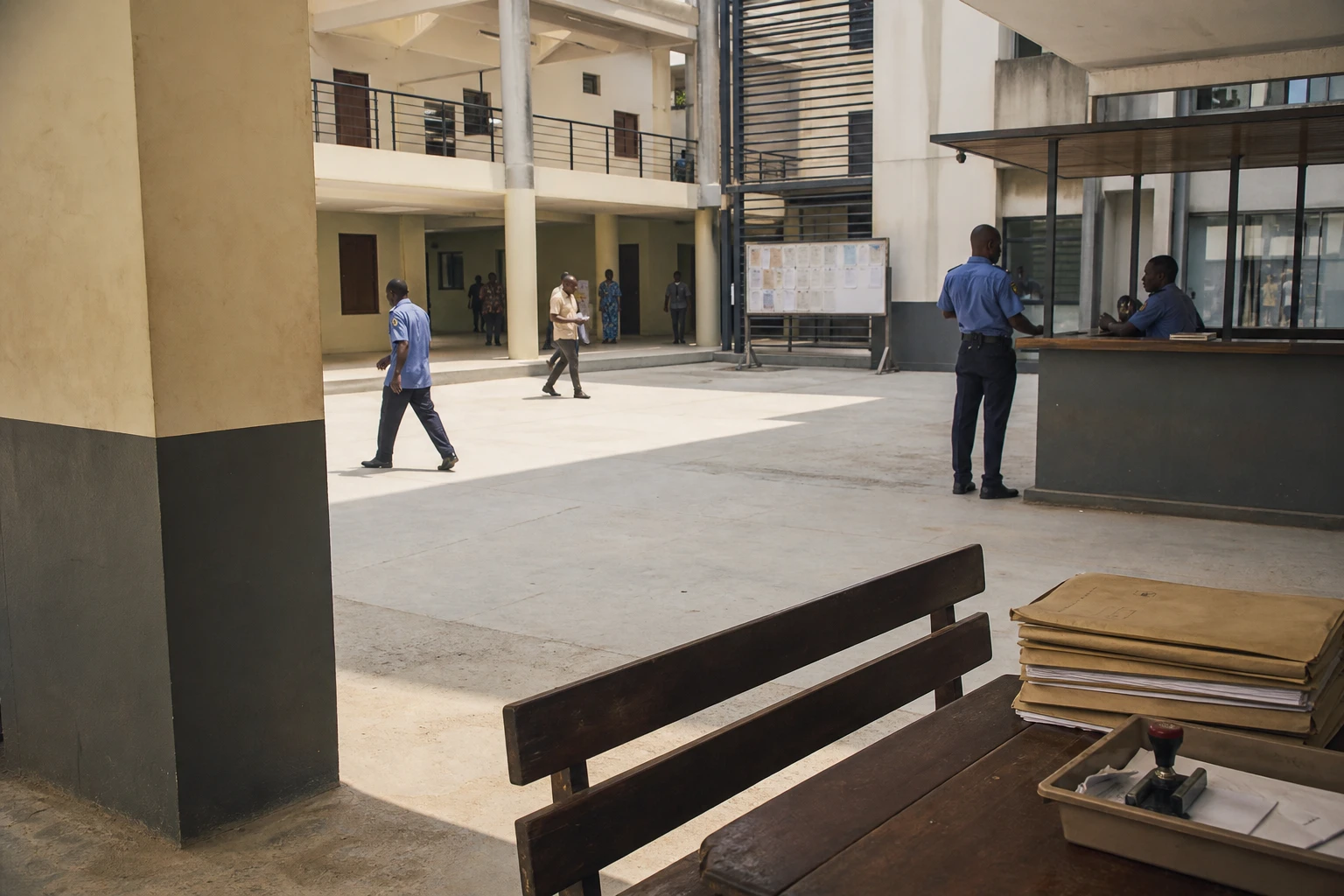
According to information made public by the judicial authorities, the investigation was opened as soon as the incident occurred, in April. Four suspects are reportedly already in custody and a fifth is being sought. The trial is expected to begin in Mandiana in the coming days.
The sensitive point in this case is less the opening of proceedings than the moment it became a national issue. For some members of the public, the videos’ virality acted as a catalyst. This perception raises an uncomfortable question: why was justice alone not enough to make the case visible and credible in the eyes of the public?
This question is central. It concerns trust in institutions, but also the protection of victims. As long as the images continue to circulate, the violence does not end with the initial act. It is prolonged through the digital repetition of the assault, with possible effects on the mental health, schooling and safety of the teenage girls concerned.
Civil society puts gender issues centre stage
The mobilisation around this case shows that some parts of Guinean civil society no longer accept violence against women and girls being treated as a private tragedy. Groups and civic movements, including « Jeudi Noir », have amplified the outrage and called for the alleged perpetrators to be tried without delay.
This shift in the debate matters. It means rape is no longer discussed solely in moral or family terms. It is becoming an issue of public governance. In other words, it concerns the police, the prosecutor’s office, the court, schools and social services, all of which have a role to play.
For the victims and their relatives, the priorities are immediate protection, a listening ear and support. For the justice system, the challenge is the credibility of the criminal justice process. For the state, the stakes are broader still: to show that sexual crimes are dealt with neither through silence nor by exposing victims to the public, but through a well-managed process and effective punishment.
A test for Guinea’s justice system, beyond Mandiana
The Mandiana case resonates across the country because it echoes other recent incidents in which teenage girls have been filmed, exposed or assaulted before the authorities responded under pressure from public opinion. This pattern fuels persistent concern: in Guinea, the circulation of images sometimes appears to precede the institutional response.
If the trial begins quickly and under clear conditions, it could set a benchmark. If it is adjourned, delayed or poorly explained, it will instead reinforce the belief that justice moves only when public outrage becomes too strong to ignore.
The case has real significance across the continent. In several West African countries, sexual violence against minors faces the same obstacles: under-reporting, stigma, social pressure, the circulation of images and difficulty preserving evidence without exposing victims. ECOWAS, which includes Guinea and its neighbours in the sub-region, has often stressed the importance of protecting women and girls. But on the ground, it is the courts, schools and families that give this promise concrete meaning—or fail to do so.
In Mandiana, the case will therefore reveal more than a single judicial truth. It will show whether Guinea can address serious sexual violence without waiting for anger on social media. Above all, it will show whether teenage girls can be protected before their stories are exposed through the public circulation of images.