Algeria
 Egypt
 Libya
 Morocco
 Sudan
 Tunisia
 Benin
 Burkina Faso
 Cabo Verde
 Côte d'Ivoire
 Ghana
 Guinea
 Guinea-Bissau
 Liberia
 Mali
 Mauritania
 Niger
 Nigeria
 Senegal
 Sierra Leone
 The Gambia
 Togo
 Cameroon
 Central African Republic
 Chad
 Equatorial Guinea
 Gabon
 Republic of the Congo
 São Tomé and Príncipe
 Burundi
 Comoros
 Djibouti
 Eritrea
 Ethiopia
 Kenya
 Madagascar
 Malawi
 Mauritius
 Mozambique
 Rwanda
 Seychelles
 Somalia
 South Sudan
 Tanzania
 Uganda
 Angola
 Botswana
 Eswatini
 Lesotho
 Namibia
 South Africa
 Zambia
 Zimbabwe
On the ground, the disease still sets the pace
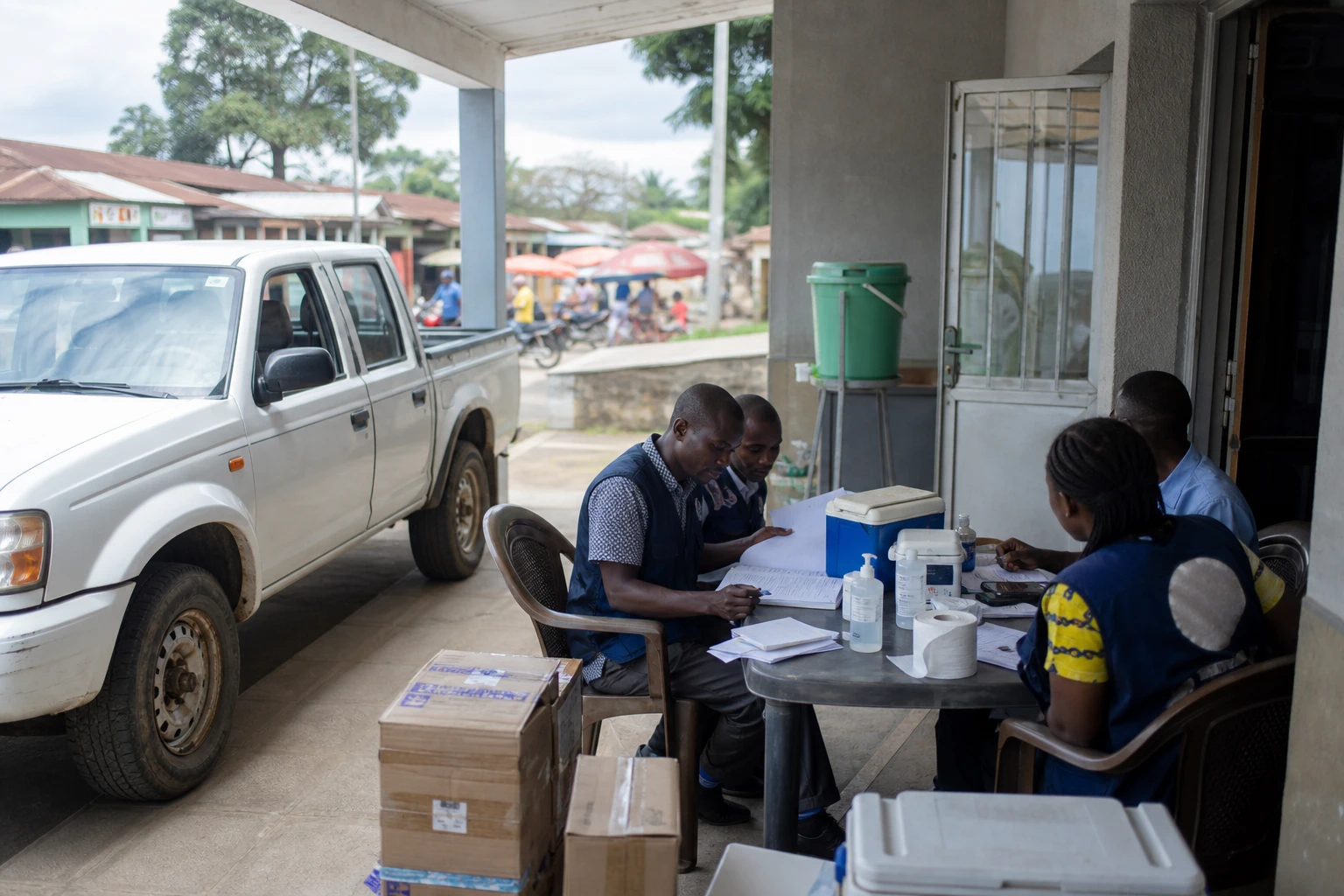
In eastern Democratic Republic of the Congo, the Ebola response is not playing out only in treatment centres. It is also unfolding on roads, in markets, at points of entry and in health zones where teams must quickly decide, with limited resources, where to focus testing, surveillance and communication. The question is simple: how can they get ahead of the virus when it has already been circulating for several weeks?
The outbreak is affecting Ituri, a province bordering Uganda and South Sudan, but it has immediately taken on a national and regional dimension. The Democratic Republic of the Congo is experiencing its 17th Ebola epidemic, and the World Health Organization (WHO) estimated on 17 May 2026 that the Bundibugyo outbreak constituted a public health emergency of international concern. In Central Africa and the Great Lakes region, this type of alert puts cross-border coordination, community surveillance and reference laboratories under pressure.
A model to rank health zones by priority
The work highlighted this week does not claim to predict Ebola on its own. Rather, it proposes a method for setting priorities. Researchers combined available epidemic data with population movements, human density and other on-the-ground variables to identify the health zones most exposed over the following two weeks. The principle is pragmatic: when not all areas can be monitored with the same intensity, efforts must be concentrated where the risk of spread is highest.
In the version presented to response actors, the modelling ranks ten health zones as being among the highest risk in the short term. Eight are in Ituri: Rethy, Mahagi, Jiba, Biringi, Linga, Nyarambe, Angumu and another zone in the same province mentioned in the study’s scope. Lubero, in North Kivu, as well as Watsa and Gombari, in Haut-Uélé, complete the list. The WHO document presented on 9 June 2026 also confirms a national ranking across several categories, with 17 “hotspot” zones, 8 active zones and 19 high-risk zones.
The important point here is not the list alone. It is the logic behind it. The virus does not stay still. The movement of people between mining areas, trading areas and healthcare areas causes risk to vary from one week to the next. This is precisely what the Flowminder report highlights. Based on anonymised data from a mobile network operator in the Democratic Republic of the Congo, it seeks to identify the areas most exposed to the importation of infectious cases in order to guide surveillance.
Why Ituri remains the centre of gravity
Ituri remains the epicentre of this outbreak because transmission took hold there early and population movements make contact tracing more difficult. The WHO said that on 5 May 2026 it had been alerted to a highly lethal disease in Mongbwalu, with deaths among health workers. On 14 May, the National Institute of Biomedical Research in Kinshasa analysed 13 samples collected in Rwampara. Eight confirmed the presence of the Bundibugyo virus, an Ebola strain. The official declaration of the outbreak followed on 15 May.
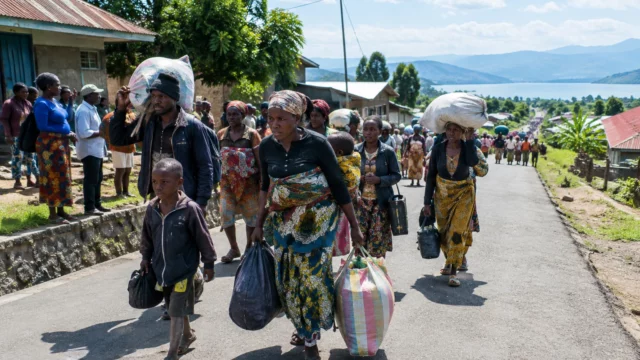
The figures then rose rapidly. On 11 July 2026, the National Public Health Institute counted a cumulative total of 1,926 confirmed cases and 702 deaths, a toll reported by WHO Africa. These figures convey the scale of the health challenge, but also of the social one. In displacement sites around Bunia, tackling the disease depends as much on healthcare as on access to reliable information, listening to communities and reducing mistrust.
The choice of Bundibugyo is not insignificant. At this stage, there is no licensed vaccine or approved specific treatment for this Ebola strain, unlike the Zaire strain. The alert is therefore even more acute for areas with high mobility, health workers and families who care for sick people at home before they are referred to treatment facilities.
What prioritising zones changes
In practice, a risk model can save time, and therefore lives. If used well, it can direct surveillance teams, mobile laboratories, prevention messages and safe burial teams more quickly to areas where a chain of transmission can still be broken. Conversely, an overly uniform approach spreads resources thinly and misses early warning signs. The stakes are particularly high in the provinces of eastern Congo, where insecurity, forced displacement and distances between health facilities are already slowing access to care.
For the Congolese health authorities, the benefits are twofold. On the one hand, they can better target the response based on the most exposed health zones. On the other, they have a tool for engaging with technical partners without losing the national footing of the response. The presence of the INRB, the INSP, the WHO, Africa CDC and specialist actors such as Flowminder shows that a modern response relies on on-the-ground data, but also on the ability to turn it into concrete decisions.
For the population, the impact is more direct. Where surveillance is stepped up, cases are detected earlier, contacts are traced more quickly and care is started sooner. But this also depends on trust. In Bunia, risk communication teams stress that community engagement remains a central pillar of the response. Without it, even the best model remains theoretical.
A regional lesson for Central Africa
Beyond Ituri, this experience says something important about Central Africa and the Great Lakes region. Modern epidemics follow human mobility, trade corridors and transit areas. They therefore require coordinated responses between neighbouring states, particularly when a border divides highly interconnected communities. The ministerial meeting in Kampala in late May 2026 also emphasised regional solidarity and joint preparedness between the Democratic Republic of the Congo, Uganda and South Sudan.
The continental significance is the same: Ebola remains a test of capacity for African health systems, but also of cooperation between national institutions, Africa CDC and WHO Africa. The question is no longer just how to treat cases. It is whether states can produce, share and use relevant data quickly. That is where the difference lies between a response that is reactive and one that anticipates events.
In this context, the risk model does not replace work on the ground. It gives it direction. For the Democratic Republic of the Congo, the immediate challenge remains to curb the virus’s spread in Ituri while preventing it from reaching other parts of the country and its eastern African neighbours. The effectiveness of the response is now being measured at this national and regional scale.