Egypt
 Libya
 Morocco
 Sudan
 Tunisia
 Benin
 Burkina Faso
 Cabo Verde
 Côte d'Ivoire
 Ghana
 Guinea
 Guinea-Bissau
 Liberia
 Mali
 Mauritania
 Niger
 Nigeria
 Senegal
 Sierra Leone
 The Gambia
 Togo
 Cameroon
 Central African Republic
 Chad
 DR Congo
 Equatorial Guinea
 Gabon
 Republic of the Congo
 São Tomé and Príncipe
 Burundi
 Comoros
 Djibouti
 Eritrea
 Ethiopia
 Kenya
 Madagascar
 Malawi
 Mauritius
 Mozambique
 Rwanda
 Seychelles
 Somalia
 South Sudan
 Tanzania
 Uganda
 Angola
 Botswana
 Eswatini
 Lesotho
 Namibia
 South Africa
 Zambia
 Zimbabwe
A trade signal that goes beyond a customs duty
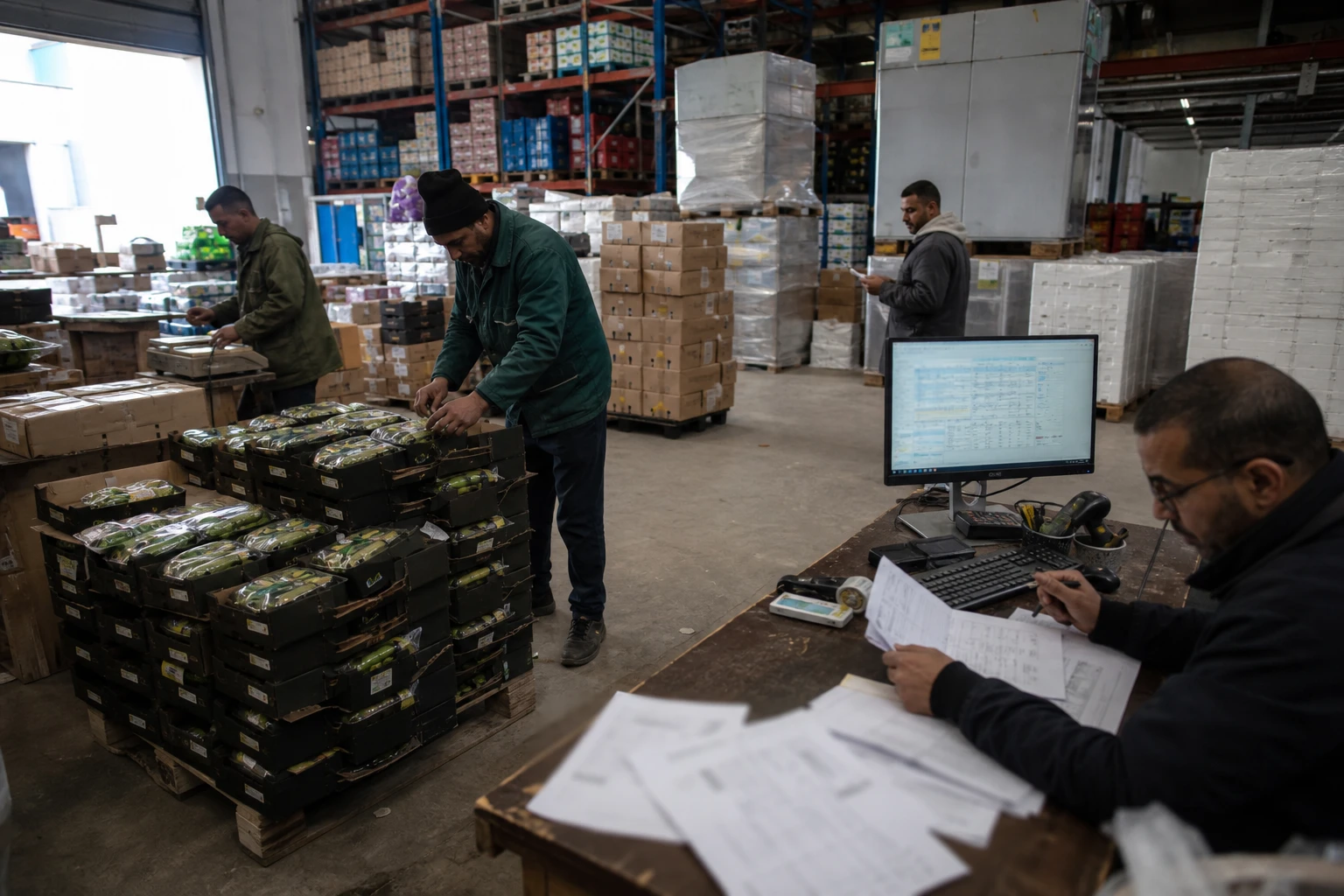
In Morocco, the question is not simply whether goods entering the United States face an extra 12.5% tax. The real question is broader: which sectors can still sell without losing their price advantage, and which will have to absorb a shock their margins did not anticipate? The answer depends above all on the product, the customer and the exemptions decided in Washington.
In the Maghreb, the issue also takes on a regional dimension. Three members of the Arab Maghreb Union — Morocco, Algeria and Libya — are targeted by the new US surcharge, while Tunisia and Mauritania are not included. This trade geography says something about the current fragmentation of North African economies: export profiles differ widely, and the effects of the same measure are therefore highly uneven.
What Washington has decided, and why Morocco is targeted
On 23 July 2026, the USTR, the Office of the United States Trade Representative, concluded a series of 60 investigations launched on 12 March under Section 301 of the Trade Act of 1974. The decision provides for additional duties of 10% or 12.5% on products from 60 trading partners. The 12.5% rate applies to economies that have not adopted a ban on imports of goods produced using forced labour. Morocco is in this group, alongside Algeria and Libya.
The official rationale is not an accusation of forced labour in Moroccan production chains. Rather, Washington criticises some partners for failing to ban or enforce a ban on imports of goods produced using forced labour. The annex published by the USTR also specifies that several categories are exempt: strategic materials, pharmaceutical products, energy, certain minerals, fertilisers and goods already covered by other tariff regimes.
Morocco is therefore not affected across the board. Its exposure depends on the tariff lines actually covered. Manufactured goods, processed agricultural products and some industrial supply chains are more vulnerable than phosphate, phosphate rock and fertilisers, which are explicitly excluded from the measure. The stakes are concrete: if exporters absorb the extra cost, margins shrink; if it is passed on, final prices rise in the US market.
Morocco protects its strategic sector, but not all its exports
For Rabat, the most sensitive issue concerns industry and low-margin goods. The United States imported $1.9 billion worth of Moroccan goods in 2025, according to data published by the USTR. The Morocco–US Free Trade Agreement, in force since 1 January 2006, had largely eliminated duties between the two countries. Legally, the agreement has not been cancelled. Economically, however, its advantage is being eroded by the additional surcharge.
Agri-food products, cars, some electronic components, citrus fruit and canned fish are among the goods Moroccan exporters will be watching closely. For them, the issue is not theoretical. It affects prices, contracts and their ability to compete with rivals established in other markets. By contrast, the kingdom’s major strategic sector, the phosphate industry ecosystem led by OCP, is better protected. On 29 June 2026, the White House even announced a temporary suspension of certain anti-dumping and countervailing duties on Moroccan phosphate fertilisers for eight months, citing an emergency in US supply.
This matters as much politically as it does industrially. Morocco is not losing its advantage in phosphate, but part of the diversification it has pursued for years around industrial processing and higher-value-added exports is being eroded. In short, the kingdom retains its advantage in a strategic sector while facing new pressure on products where international competition is fiercer.
Algeria and Libya: limited impact, but not without consequences
For Algeria, the direct impact remains narrower than the measure’s headline suggests. The United States imported $2.2 billion worth of Algerian goods in 2025. Yet hydrocarbons, which dominate this trade, are excluded from the scheme, as are fertilisers. Actual exposure is therefore concentrated in a few non-oil segments: agri-food, materials, steelmaking and ceramics.
The issue mainly affects Algeria’s ambition to diversify. Algiers has set a target of raising non-hydrocarbon exports to between $10 billion and $15 billion. In this context, any additional tax on non-energy goods makes it harder to access lucrative markets, even when exports to the United States remain modest compared with hydrocarbon sales.
Libya faces a similar situation. US imports of Libyan goods reached $1.4 billion in 2025, almost entirely petroleum products. Here too, most trade escapes the surcharge because crude oil, petroleum products, natural gas and LNG are excluded. The effective tax base therefore remains limited.
Tunisia, by contrast, is not among the 60 economies targeted. Its products remain subject to ordinary US duties. The United States imported about $1.0 billion worth of Tunisian goods in 2025, including olive oil, dates, clothing, fertilisers and electronic components. Its exclusion from the scheme could become an industrial selling point for Tunis, as Moroccan exporters now face an extra 12.5 percentage points on some of their tariff lines.
A US measure with differing effects across the Maghreb
Mauritania is also exempt from the surcharge, but its exposure to the US market remains very low. US imports of Mauritanian goods were estimated at $0.7 million in 2025. In other words, the exemption is more symbolic than economically significant in the short term. It could become more important if the country’s mining and gas projects expand.
The issue’s continental significance lies elsewhere: in the way Washington is redefining, through trade policy, its expectations for supply-chain compliance. The US text now links customs policy to the fight against forced labour, while allowing exemptions for inputs deemed strategic. For North Africa, this raises a simple question: how can exporting sectors be protected without allowing a major trading partner to rewrite the terms of access to its market on its own?
In the short term, Morocco will mainly have to keep an eye on two fronts. One is changes to exemptions and product lists. The other is whether its manufacturers can maintain their prices in a US market where competition remains fierce. In a Maghreb where economies are moving in different directions, the same US decision has very different effects: real pressure on Moroccan industry, a limited shock for oil-producing Algeria and Libya, a relative opportunity for Tunisia, and virtually no impact on Mauritania.