Algeria
 Egypt
 Libya
 Morocco
 Sudan
 Tunisia
 Benin
 Burkina Faso
 Cabo Verde
 Côte d'Ivoire
 Ghana
 Guinea
 Guinea-Bissau
 Liberia
 Mali
 Mauritania
 Niger
 Nigeria
 Senegal
 Sierra Leone
 The Gambia
 Togo
 Cameroon
 Central African Republic
 Chad
 DR Congo
 Equatorial Guinea
 Gabon
 Republic of the Congo
 São Tomé and Príncipe
 Burundi
 Djibouti
 Eritrea
 Ethiopia
 Kenya
 Madagascar
 Malawi
 Mauritius
 Mozambique
 Rwanda
 Seychelles
 Somalia
 South Sudan
 Tanzania
 Uganda
 Angola
 Botswana
 Eswatini
 Lesotho
 Namibia
 South Africa
 Zambia
 Zimbabwe
An urban heritage entering a new league
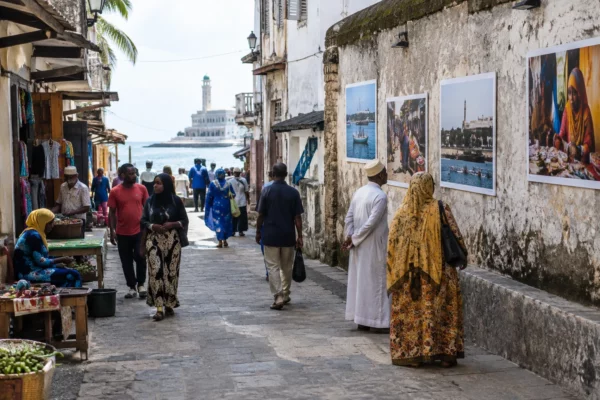
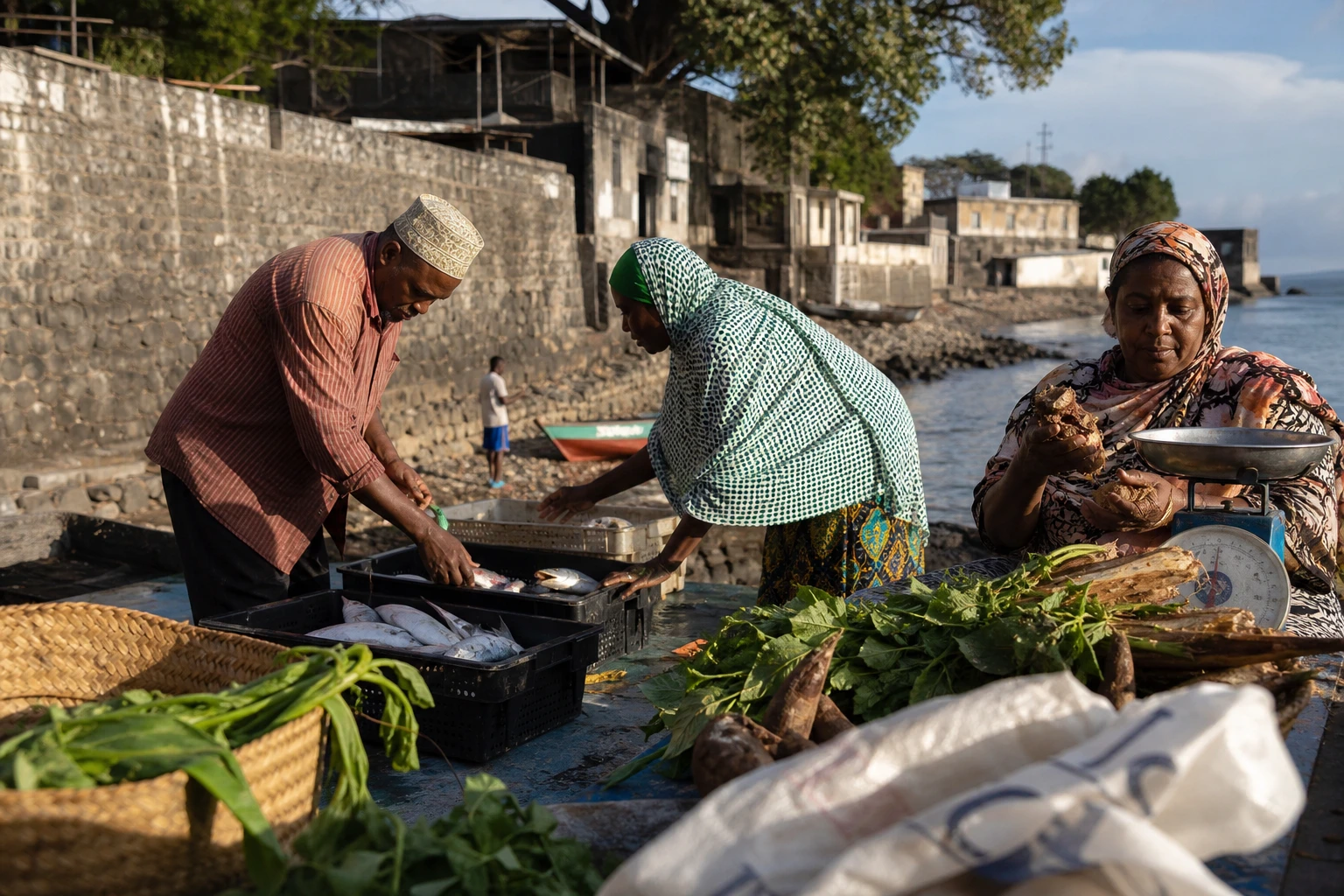
In the Comoros, a medina is more than an old backdrop. It is also a living memory, made up of alleyways, mosques, notable families’ houses and squares where social life continues. The inscription of the country’s six historic medinas on the UNESCO World Heritage List gives this heritage new visibility, but above all imposes a heavier responsibility: protecting urban areas that are still alive, and sometimes very fragile.
This recognition comes in a country that had no World Heritage sites until now. UNESCO says that the Union of the Comoros submitted its first nomination in January 2025, with the Organisation’s support under its “Priority Africa” strategy, which aims to make the List more representative and balanced.
The signal is significant for Moroni, the Comorian capital, as well as for Anjouan and Grande Comore. It shows that heritage often known locally can gain international recognition without losing its social roots. The challenge is to ensure that recognition serves conservation, and not merely the country’s image.
Six medinas, two islands, one shared Indian Ocean history
In 2026, the World Heritage Committee inscribed the serial property entitled “The Medinas of the Historic Sultanates of the Comoros” under criteria (iii) and (iv). The nomination covers the best-preserved parts of six historic towns on Ngazidja, the Comorian name for Grande Comore, and Ndzuwani, the Comorian name for Anjouan.
According to UNESCO’s evaluation, these urban centres developed from nuclei that emerged at least as early as the 11th century, before evolving into city-states in the 14th and 15th centuries. They later served as political capitals of sultanates linked to the Swahili world, within a network of exchanges connecting East Africa, the Arabian Peninsula, Madagascar and other Indian Ocean ports.
The Comorian medinas have retained their ancient layout and some of their social practices. UNESCO highlights in particular the persistence of living traditions, kinship systems and forms of social interaction that give meaning to the built environment. This matters as much as the stones themselves: in heritage, urban planning and social use go hand in hand.
The nomination also notes the advanced state of fragility of several buildings. Some are in very poor condition, recalling a simple reality: heritage value does not erase the wear of time, the cost of restoration or the constraints of a marine climate. Inscription does not replace the work; it can only help organise and fund it.
What inscription can really change
In practical terms, World Heritage status opens up several avenues. It can make it easier to attract funding, strengthen legal protection and encourage more detailed management plans. UNESCO says the World Heritage system aims to protect sites of “outstanding universal value”, while taking local communities and contemporary uses into account.
For the Comorian authorities, the challenge is twofold. The medinas must be preserved without displacing their residents or turning them into static showcases for visitors. In Moroni and Mutsamudu alike, conservation will have to accommodate ordinary housing, commercial activity, transport needs and the expectations of younger generations. Heritage only has meaning if it remains inhabited.
For residents, inscription may also offer economic hope. If properly managed, heritage tourism can support local livelihoods, from crafts to cultural interpretation. But it can also drive up land pressure or encourage inappropriate renovations. Preservation must therefore remain tied to clear rules, compatible materials and shared governance.
The timing also lends itself to a regional perspective. In 2026, the World Heritage Committee is meeting in Busan, Republic of Korea, to consider new nominations. The Comoros is taking part with its first World Heritage site, secured after a preparation campaign launched in 2025 and supported by international partners, including UNESCO. This step places the country in a new phase within Africa’s World Heritage network.
An African and Indian Ocean significance
This inscription goes beyond the Comorian case alone. It is a reminder that the urban heritage of the Indian Ocean is an integral part of African history, just like the great medinas of North Africa or the historic cities of West Africa. The Comoros thus joins a continental debate about the place of island, Swahili and trading heritage in the African history recognised by international institutions.
The Comorian nomination also forms part of UNESCO’s “Priority Africa” approach, which seeks to address a longstanding imbalance: too few African properties are on the World Heritage List given the continent’s rich heritage. The inscription of the Comorian medinas does not resolve that imbalance, but it shows that preparing a nomination, conducting scientific research and providing technical support can deliver tangible results for a small island state.
The next stage will now play out on the ground. The authorities will have to implement rigorous monitoring, neighbourhood by neighbourhood, monument by monument. Restoration, control of urban development and protection of social practices will be decisive in the coming months. Across Africa, the Comorian example is a reminder of a simple truth: heritage is not a luxury for rich countries, but a tool of cultural sovereignty, transmission and managed development.