Algeria
 Egypt
 Libya
 Morocco
 Sudan
 Tunisia
 Benin
 Burkina Faso
 Cabo Verde
 Côte d'Ivoire
 Ghana
 Guinea
 Guinea-Bissau
 Liberia
 Mali
 Mauritania
 Niger
 Nigeria
 Sierra Leone
 The Gambia
 Togo
 Cameroon
 Central African Republic
 Chad
 DR Congo
 Equatorial Guinea
 Gabon
 Republic of the Congo
 São Tomé and Príncipe
 Burundi
 Comoros
 Djibouti
 Eritrea
 Ethiopia
 Kenya
 Madagascar
 Malawi
 Mauritius
 Mozambique
 Rwanda
 Seychelles
 Somalia
 South Sudan
 Tanzania
 Uganda
 Angola
 Botswana
 Eswatini
 Lesotho
 Namibia
 South Africa
 Zambia
 Zimbabwe
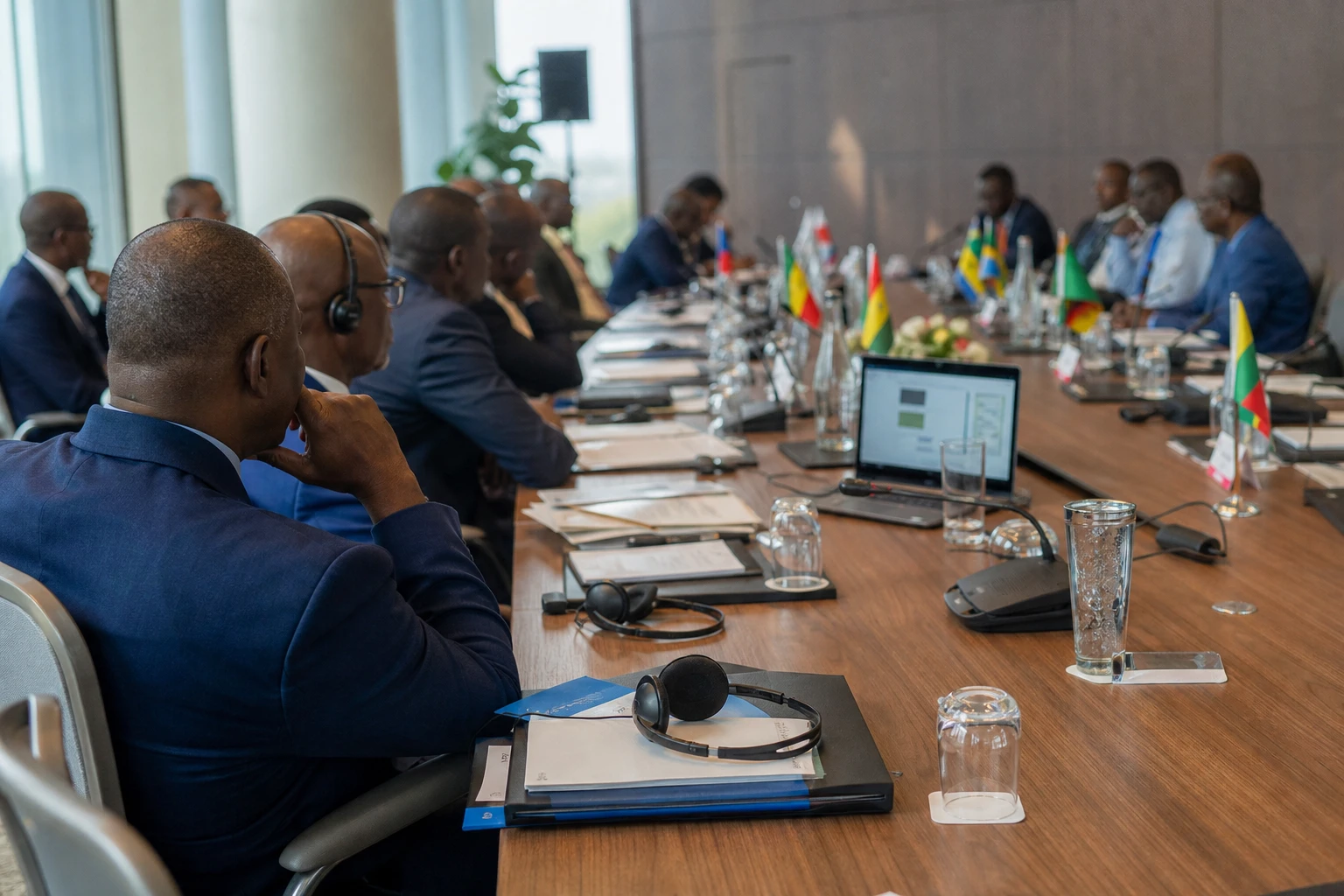
In Dakar, a new hub for a practical question: who oversees public money?
In many countries, budget debates remain confined to ministries, parliaments and donors. Yet this is where the quality of a school, health centre, road or social support is decided. The launch of IBP Francophone Africa in Dakar is focused on this often technical but crucial area of everyday life for citizens.
The choice of Dakar is no coincidence. The Senegalese capital is already home to a dense regional ecosystem, including financial institutions, civil society organisations and West African cooperation frameworks. Senegal has also enshrined budget transparency in domestic law through its Code of Transparency in Public Financial Management, adopted to transpose the rules of WAEMU, the West African Economic and Monetary Union, which harmonises budgetary standards across several states in the sub-region.
What the establishment of a francophone regional hub changes
According to IBP, the new regional office based in Dakar will support 11 French-speaking African countries: Benin, Burkina Faso, Cameroon, Côte d’Ivoire, Madagascar, Mali, Niger, the Democratic Republic of the Congo, Senegal, Chad and Togo. Its stated aim is to strengthen three levers at once: budget transparency, public participation and accountability among public officials.
The initiative is not starting from scratch. The organisation says it has worked for seven years from its office in Senegal with civil society organisations, parliaments, supreme audit institutions and public-sector reformers. The new hub therefore formalises an established presence while giving it a more explicitly regional dimension.
This expansion comes at a time of strain on African public finances. In its recent work on sub-Saharan Africa, IBP notes that rising debt and pressure on budgets are making it harder to preserve public services. In this context, better budget oversight is not an institutional luxury: it is a tool to protect governments’ room for manoeuvre.
The regional office also aims to build on existing common frameworks. In the WAEMU area, budget rules require principles of integrity, transparency and better information on public accounts. IBP believes this shared framework facilitates the exchange of practices among French-speaking countries, provided reforms do not remain theoretical.
The Senegalese case: legal progress, but high expectations remain
Senegal has a solid institutional foundation. The Ministry of Finance publishes a citizens’ budget, a simplified version of the draft finance bill, as well as several budget documents online. The country has also pursued transparency reforms under the Open Government Partnership, with an explicit aim: to improve public access to budget information and strengthen oversight.
But tools alone are not enough. In the 2023 Open Budget Survey, Senegal scored 42 out of 100 for transparency, close to its 2021 result, according to IBP. The score shows real progress in access to some information, but also considerable scope for budgets to become easier to understand, more widely debated and better scrutinised.
For the Senegalese authorities, this kind of partnership can support ongoing reforms, particularly at a time when fiscal sustainability remains a central concern. For citizens, the issue is more direct: understanding where public money goes, what trade-offs underpin priorities, and how to flag discrepancies between announcements and implementation.
For local authorities, trade unions, women’s organisations, youth associations and citizen watchdog groups, a francophone regional office in Dakar could make budget-monitoring methods more accessible. It could also strengthen debate on social spending, territorial investment and resource management in rural areas, which are often less visible than decisions made in the capital. This is an inference based on IBP’s stated mandate and on the budget tools already available in Senegal.
Reach extending beyond Dakar
The launch of IBP Francophone Africa resonates well beyond Senegal. In countries such as Mali, Niger, Chad and Burkina Faso, where public governance is evolving amid fragile institutional contexts or intense security pressure, budget transparency is becoming a major point of friction between the state, donors, oversight bodies and citizens.
The regional office could also serve as a bridge between national practices and continental standards. Across Africa, debates on debt, revenue mobilisation and the quality of public spending are taking up an increasingly prominent place in the work of the African Union, regional banks and technical organisations. In this landscape, budget governance is no longer simply a matter of administrative compliance. It has become an issue of economic sovereignty.
From now on, timing will matter as much as symbolism. The hub’s success will be measured by its ability to produce useful data, support local coalitions and bring about concrete changes in practice: more comprehensive publication of budget documents, better-organised citizen participation, and more effective parliamentary or judicial oversight. In francophone Africa, where several states share the same budget rules, reform agendas and sometimes the same vulnerabilities, the challenge is to turn a regional network into a lever for genuine reform.