Algeria
 Egypt
 Libya
 Morocco
 Sudan
 Tunisia
 Benin
 Burkina Faso
 Cabo Verde
 Côte d'Ivoire
 Ghana
 Guinea
 Guinea-Bissau
 Liberia
 Mali
 Mauritania
 Niger
 Senegal
 Sierra Leone
 The Gambia
 Togo
 Cameroon
 Central African Republic
 Chad
 DR Congo
 Equatorial Guinea
 Gabon
 Republic of the Congo
 São Tomé and Príncipe
 Burundi
 Comoros
 Djibouti
 Eritrea
 Ethiopia
 Kenya
 Madagascar
 Malawi
 Mauritius
 Mozambique
 Rwanda
 Seychelles
 Somalia
 South Sudan
 Tanzania
 Uganda
 Angola
 Botswana
 Eswatini
 Lesotho
 Namibia
 South Africa
 Zambia
 Zimbabwe
When a mother’s return still unsettles Nigerian football
In Nigeria, a footballer can return to the national team after giving birth, prove she can still keep pace, and then find herself judged less on her ability than on her family status. That is where the real debate lies: the place of women, and mothers, in a sport still too often viewed through rigid social norms.
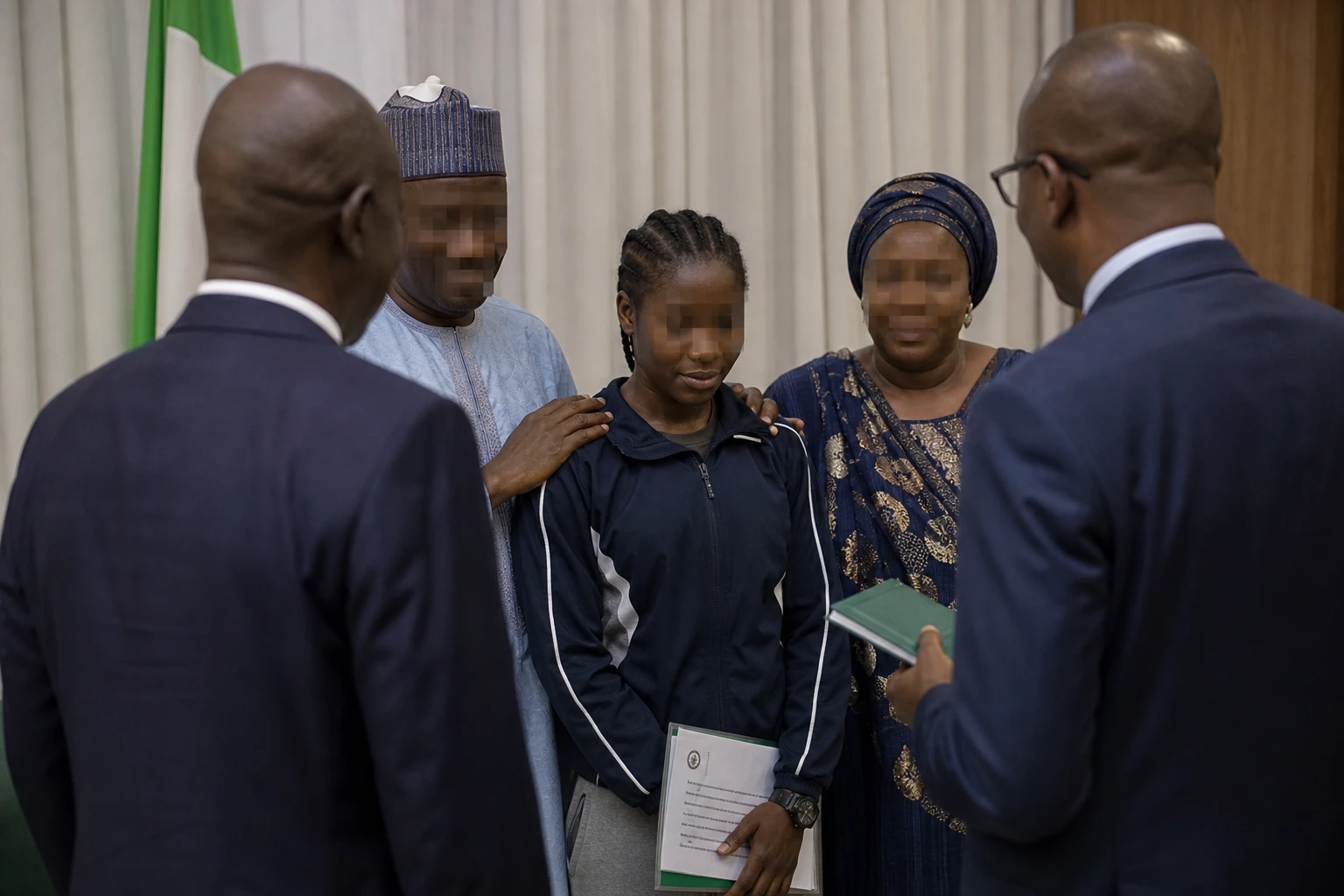
The case of Ngozi Okobi-Okeoghene illustrates this well. An experienced midfielder for the Super Falcons, Nigeria’s national team, she returned to competition after the birth of her son in 2024. Her return was welcomed by some members of the public, but also attacked on social media, where her place in the squad was criticised because she is married and a mother.
In a country where the women’s national team has long served as a sporting showcase, the controversy goes far beyond one player. It points to something deeper: the persistent difficulty of accepting that a woman can be a wife, mother and elite athlete without one of those roles eclipsing the others.
The Super Falcons in Morocco: a tournament and heavy expectations
The calendar adds to the pressure. The 2026 Women’s Africa Cup of Nations will be held in Morocco from 26 July to 16 August 2026. Nigeria, the defending champions, have been placed in Group C with Zambia, Egypt and tournament debutants Malawi. The four semi-finalists will also secure direct qualification for the 2027 Women’s World Cup in Brazil.
The event gives the tournament considerable sporting and economic significance for Abuja and women’s football across West Africa. In the ECOWAS region, a national team’s success is often seen as a marker of national prestige, but also as a test of federations’ ability to professionalise their women’s teams on a lasting basis.
Okobi-Okeoghene was ultimately not included in the final squad for the tournament. But her return to the squad, for friendlies against Cameroon in February and March, and then Senegal in June, was a reminder that she remained a respected figure in the Nigerian dressing room. A local source described her return as a moment of resilience, after four years away from the national team.
The pitch, social media and social norms
The heart of the problem is not confined to football. Women in Nigeria still face measurable structural obstacles: low political representation, the persistence of violence against women, and the weight of marriage and motherhood norms on their life paths. UN Women data show, for example, that women held only 3.9% of parliamentary seats in February 2024, and that 30.3% of women aged 20 to 24 had been married before the age of 18.
In this context, criticism of a player who is a mother is not simply an online opinion. It reflects a social environment in which women’s success is still too often conditioned on the idea that a woman should slow down as soon as she marries or becomes a mother. Okobi-Okeoghene summed up this pressure by explaining that many supporters still consider a married woman to be “old” and believe that giving birth would make her incapable of playing at the highest level.
Her response is political in the most concrete sense of the word. She makes clear that a sporting career does not cancel out motherhood or family life. She also shows that the debate about equality in sport is not just about pay or facilities. It is about reputation, dignity and the right to continue to exist in public life without being reduced to a stereotype.
This debate also concerns clubs and federations. Since 2020, FIFA has set minimum protection standards for players, including mandatory maternity leave of at least 14 weeks, paid at a minimum of two-thirds of contractual salary, and rules designed to prevent pregnancy from resulting in a sporting or professional penalty.
But the gap remains wide between the international framework and the reality for many African players. Implementation still depends heavily on leagues, federations’ resources and family support. FIFA reports on women’s football also show that maternity protections and childcare facilities remain far less common at less professionalised levels.
What this return says about Nigeria and African football
Okobi-Okeoghene’s return also tells another, more positive story: that of a generation of African players who want to keep performing without giving up their personal lives. She has said that she resumed training a few months after her son’s birth, with the support of her husband, family and team-mates. In her case, private support made up for institutional shortcomings that professional football in Nigeria, as elsewhere in Africa, has yet to fully address.
Her account also sheds light on the transformation of women’s football on the continent. As CAF competitions gain visibility, African players are becoming public figures in their own right. Their careers are no longer defined by a result alone. They are becoming a space for social negotiation, between performance, motherhood, respect and autonomy.
For Nigeria, the stakes are immediate. The Super Falcons remain one of Africa’s most successful teams, and the 2026 WAFCON is an opportunity to confirm that status. But the stakes are also broader: to show that an African sporting power can stand up for its players without confining them to a narrow vision of what a woman should be. In a country of more than 220 million people, this discussion goes beyond football. It speaks to the relationship between public success and private freedom.
Across the continent, the case is also a reminder that women’s football in Africa is making progress, but remains shaped by the same tensions as other sectors: incomplete professionalisation, unequal recognition and powerful social norms. The next answer will be played out on the pitch in Morocco. But it is also being prepared off it, in dressing rooms, clubs, families and institutions that decide whether a mother who is an athlete is an exception, or simply a given.