Algeria
 Egypt
 Libya
 Morocco
 Sudan
 Tunisia
 Benin
 Burkina Faso
 Cabo Verde
 Côte d'Ivoire
 Ghana
 Guinea
 Guinea-Bissau
 Liberia
 Mauritania
 Niger
 Nigeria
 Senegal
 Sierra Leone
 The Gambia
 Togo
 Cameroon
 Central African Republic
 Chad
 DR Congo
 Equatorial Guinea
 Gabon
 Republic of the Congo
 São Tomé and Príncipe
 Burundi
 Comoros
 Djibouti
 Eritrea
 Ethiopia
 Kenya
 Madagascar
 Malawi
 Mauritius
 Mozambique
 Rwanda
 Seychelles
 Somalia
 South Sudan
 Tanzania
 Uganda
 Angola
 Botswana
 Eswatini
 Lesotho
 Namibia
 South Africa
 Zambia
 Zimbabwe
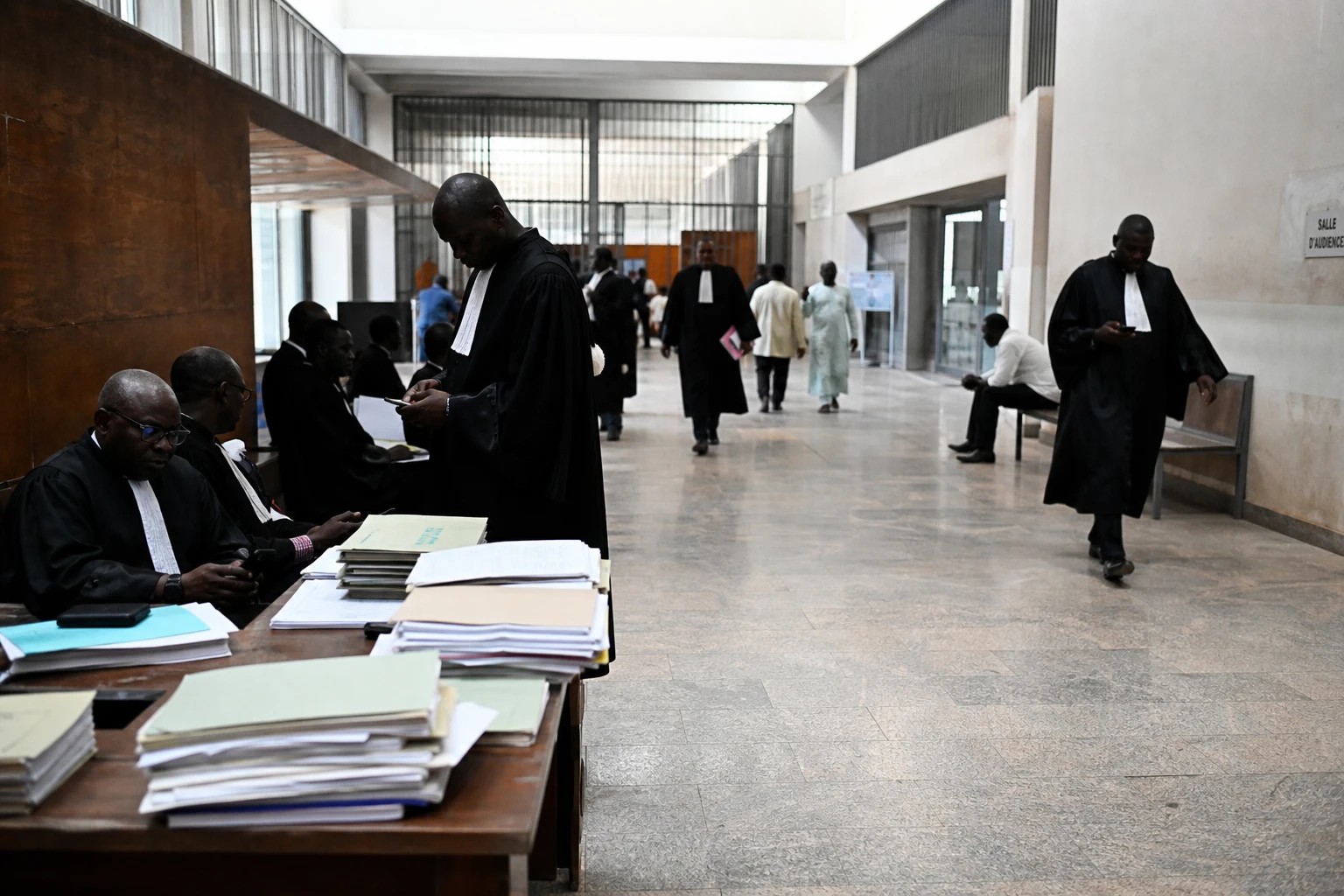
In Bamako, a verdict that reaches beyond six names
In Bamako, a criminal trial never tells only the story of six defendants. It also speaks to the state of a political transition, the place of the military in public life and the trust—or distrust—that society places in its justice system. In Mali, where the transitional authorities have extended their hold on power and political space has narrowed, this verdict carries significance far beyond the courtroom.
The country is going through an unusual institutional period. Since the coups of August 2020 and May 2021, the military has governed from Bamako. In 2025, the dissolution of political parties and the tightening of the public sphere further reduced checks and balances. At the same time, Mali’s withdrawal from ECOWAS took effect on 29 January 2025, changing its regional alignment without removing the shared West African challenges of movement, security and governance.
A state security case becomes a case about the regime
On 24 July, the criminal chamber of the Bamako Court of Appeal found six prominent figures guilty of “attempted conspiracy against the government” and related offences, according to information corroborated by several media outlets and news agencies. The sentences range from seven to 15 years in prison. Those convicted include former State Security chief Kassoum Goïta, former secretary-general of the presidency Kalilou Doumbia, a police commissioner, a security service agent, a businessperson and a traditional practitioner described as a fetishist.
The hearings began on 14 July 2026 before the Bamako Court of Appeal. From the first days, the prosecution relied on an account of a meeting and preparations for the action, while the defence challenged what it said were missing or insufficient material evidence. The sole accuser was said to have been unable to clearly identify the defendants’ faces or voices, fuelling criticism of the strength of the case.
According to information published during the trial, the defendants had been held for nearly five years. Their relatives and lawyers alleged torture, unlawful abductions and numerous procedural irregularities. These allegations remain matters for legal proceedings and complaints announced by the defence; they are not an independent judicial finding in the available sources.
What the case reveals about Mali under the transition
The case first points to the internal rivalry that emerged at the top of the state after the coups of 2020 and 2021. Those convicted are linked to former transitional president Bah N’Daw, installed by the military before being removed when he sought to regain control of the executive. This history matters. It shows that the case is not merely judicial; it is part of power dynamics that remain unstable within the camp born of the transition.
It also comes amid a climate in which the civilian opposition has been severely curtailed. In May 2025, the authorities dissolved political parties. Human rights organisations and several international media outlets subsequently reported arrests and disappearances of prominent government critics. The message to the rest of the political class is clear: the scope for public dissent has narrowed considerably.
At its core, the case raises a classic but essential question: who controls the narrative around national security? The prosecutor’s office argued that there was a plot. The defence, by contrast, spoke of an empty case, a biased investigation and political responsibility that had not been examined. In a state whose institutions have been weakened by successive crises, a trial of this kind becomes a test of the justice system’s own credibility.
The message sent at home and abroad
For the convicted men’s relatives, the verdict is seen as a denial of justice. For the authorities, it confirms the claim that there was an attempt to destabilise the country. Between these two interpretations lies a broader issue: the place of the law in a country where the executive, security apparatus and courts have been under heavy political pressure for several years. A symbolic one CFA franc was cited in damages, also reflecting a desire to bring the case to a judicial close while giving it political significance.
Across the region, the Malian case resonates strongly. ECOWAS has lost Mali, Burkina Faso and Niger as active members since January 2025, but the crises of transition, security and legitimacy remain interconnected across the Sahel. The Alliance of Sahel States, formed with Burkina Faso and Niger, has given Bamako a new diplomatic framework without resolving the central question: how can institutions accepted by the population be rebuilt while persistent insecurity is addressed?
This is where the 24 July verdict takes on its true significance. It concerns not only six men, or even the Malian capital alone. It says something about the relationship between military transition, justice and pluralism in a Sahel where several regimes are seeking to extend their legitimacy through security and order, while social expectations point towards more predictable institutions. The next steps announced by the defence—an appeal to the Supreme Court and possibly applications to international courts—will show whether the case remains confined to Bamako or becomes part of a wider dispute over the rule of law in Mali.