Algeria
 Egypt
 Libya
 Morocco
 Sudan
 Tunisia
 Benin
 Burkina Faso
 Cabo Verde
 Côte d'Ivoire
 Ghana
 Guinea
 Liberia
 Mali
 Mauritania
 Niger
 Nigeria
 Senegal
 Sierra Leone
 The Gambia
 Togo
 Cameroon
 Central African Republic
 Chad
 DR Congo
 Equatorial Guinea
 Gabon
 Republic of the Congo
 São Tomé and Príncipe
 Burundi
 Comoros
 Djibouti
 Eritrea
 Ethiopia
 Kenya
 Madagascar
 Malawi
 Mauritius
 Mozambique
 Rwanda
 Seychelles
 Somalia
 South Sudan
 Tanzania
 Uganda
 Angola
 Botswana
 Eswatini
 Lesotho
 Namibia
 South Africa
 Zambia
 Zimbabwe
Medical release in a country under strain
In Bissau, a court case can quickly become a test of strength between the army, political parties and regional institutions. The release of Domingos Simões Pereira, the historic leader of the PAIGC, changes more than the fate of an opposition figure: it also lays bare the fragility of a state where health, military justice and political rivalry collide head-on.
In Guinea-Bissau, this kind of episode is part of a broader crisis. Since the coup of 26 November 2025, the army has taken control of the country following disputed elections, before establishing a transition led by General Horta N’Tam, also spelt Horta Inta-a in news reports. The African Union subsequently suspended the country, while ECOWAS, the Economic Community of West African States, has repeatedly called for a return to constitutional order.
What is known about the release
On Thursday, Domingos Simões Pereira left Bissau for Portugal, where he is due to receive specialist care, after a court document and security sources confirmed his release on medical grounds. According to information corroborated by Reuters and Portuguese-language media, the decision was based on a report from Bissau’s Sino-Guinean military hospital, which found that the care available locally was inadequate.
This is not the first time the opposition figure has been released and then rearrested. In February 2026, the junta had already released him, before he was sent back to prison on 10 July 2026 by a military court ruling. His family then said he was again facing accusations linked to an alleged coup attempt in October 2025.
The military authorities also accuse him of alleged involvement in two separate episodes, one in late 2023 and the other in October 2025, as well as economic offences. His associates, meanwhile, denounce a political prosecution intended to sideline him from the electoral contest, as the country was expected, according to recent announcements, to hold a constitutional referendum on 30 August 2026 followed by general elections on 6 December 2026.
PAIGC, ECOWAS and the transition dilemma
Domingos Simões Pereira is no ordinary opposition figure. As leader of the PAIGC, the African Party for the Independence of Guinea and Cape Verde, he represents a party that led the anti-colonial struggle and remains a central reference point in Bissau-Guinean political life. His detention therefore carries great symbolic weight in a country where relations between civilians and the military have remained unstable since independence in 1974.
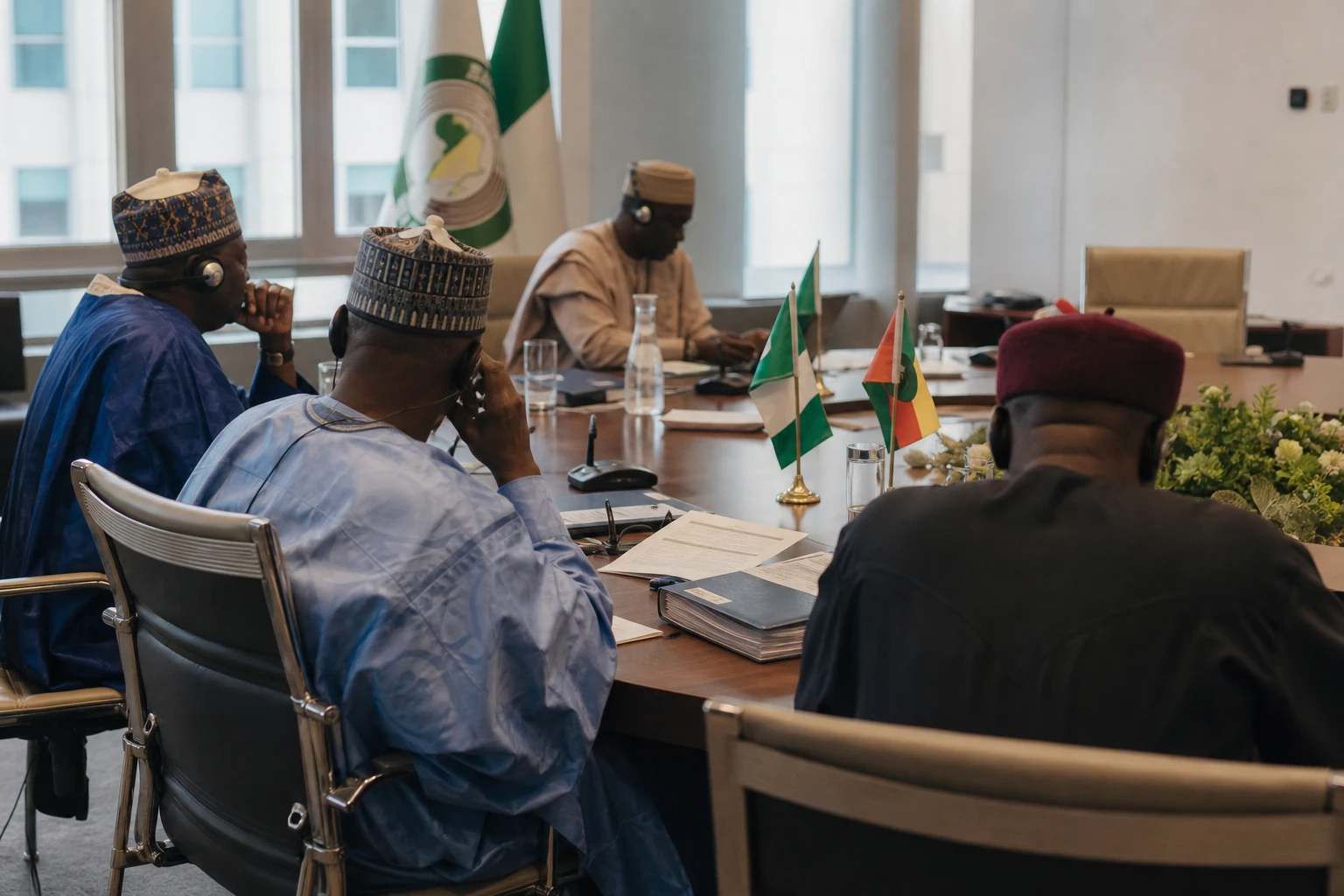
ECOWAS, for its part, is trying to maintain diplomatic pressure. At its meetings in July 2026, the regional organisation called for the unconditional release of political detainees and reiterated the need for a credible environment for the announced elections. The African Union’s Peace and Security Council also called for the release of Simões Pereira and other political detainees, while urging an inclusive transition.
In this context, the decision to let him travel to Portugal for treatment looks like a humanitarian gesture, but also a political signal. It may ease external pressure without resolving the heart of the problem: the army’s role in arbitrating power and electoral competition. This is precisely what worries regional partners, since it determines the credibility of any way out of the crisis.
Why this case goes beyond Bissau
Guinea-Bissau occupies a sensitive position in West Africa. A small coastal state and a member of both ECOWAS and the Community of Portuguese Language Countries, it lies at the crossroads of several regional movements, both political and security-related. When its institutions falter, the effects quickly spill over into the West African neighbourhood, already marked by other military transitions and tensions over respect for electoral timetables.
The Simões Pereira case also underscores a broader reality: in several countries in the region, political competition still too often involves detention, exclusion or the suspension of electoral processes. In Bissau, this directly affects political parties, but also civil servants, business operators and residents whose livelihoods depend on fragile markets and unstable institutions. When uncertainty persists, public services, investment and civic trust are the first to suffer.
What happens next will depend on several very concrete milestones: whether the military authorities honour their transition commitments, the response from ECOWAS, and the opposition figure’s health as he receives treatment abroad. Between Bissau, Abuja and Addis Ababa, the question therefore goes beyond an individual case. It concerns a simple but essential rule: who decides Guinea-Bissau’s political timetable, the electorate or the uniform?