Algeria
 Egypt
 Libya
 Morocco
 Sudan
 Tunisia
 Benin
 Burkina Faso
 Cabo Verde
 Côte d'Ivoire
 Ghana
 Guinea
 Liberia
 Mali
 Mauritania
 Niger
 Nigeria
 Senegal
 Sierra Leone
 The Gambia
 Togo
 Cameroon
 Central African Republic
 Chad
 DR Congo
 Equatorial Guinea
 Gabon
 Republic of the Congo
 São Tomé and Príncipe
 Burundi
 Comoros
 Djibouti
 Eritrea
 Ethiopia
 Kenya
 Madagascar
 Malawi
 Mauritius
 Mozambique
 Rwanda
 Seychelles
 Somalia
 South Sudan
 Tanzania
 Uganda
 Angola
 Botswana
 Eswatini
 Lesotho
 Namibia
 South Africa
 Zambia
 Zimbabwe
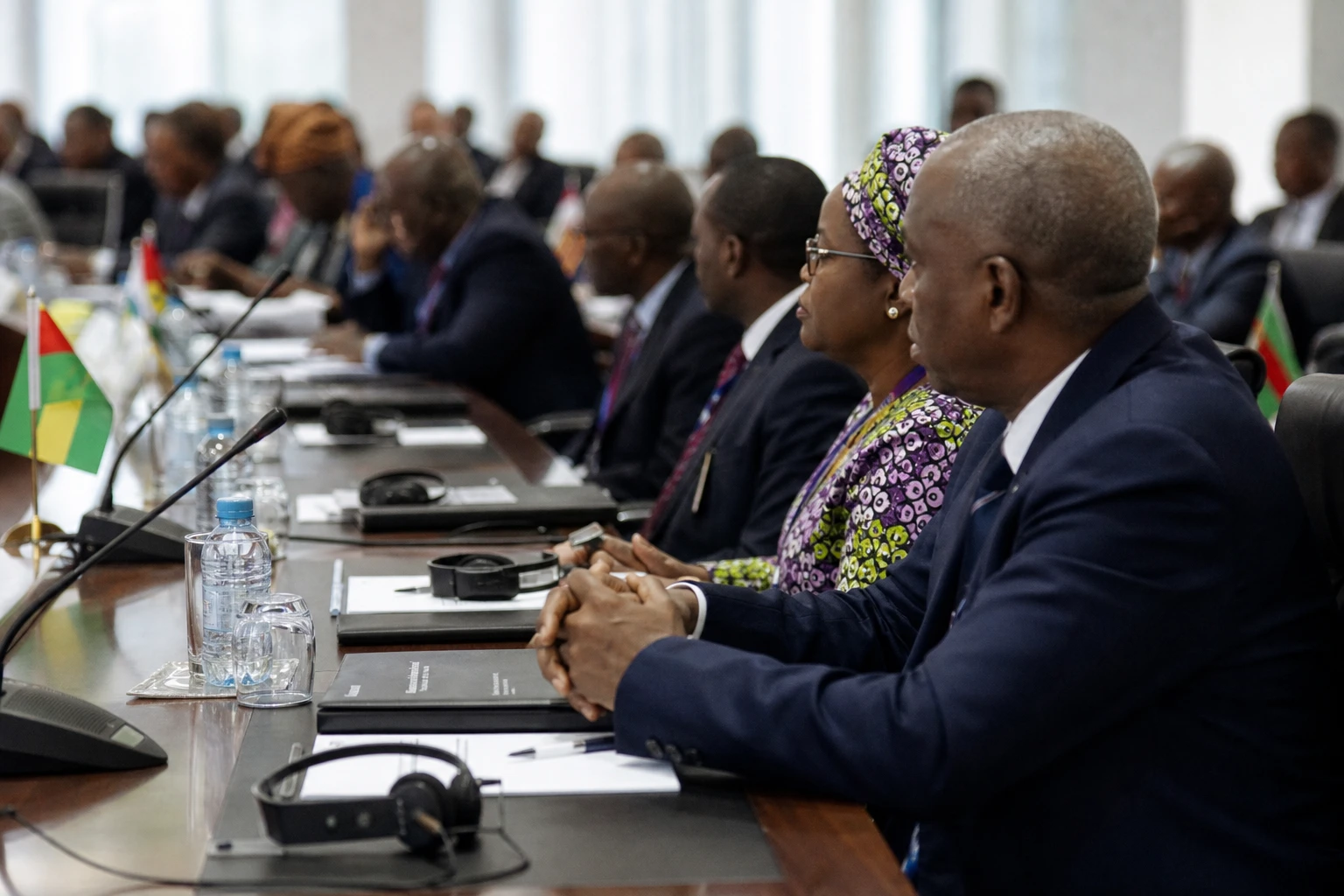
A Bissau-Guinean opposition leader at the centre of a stand-off extending beyond Bissau
When a political leader leaves a military cell for a hospital bed abroad, the move often says more than the procedure itself. In Guinea-Bissau, Domingos Simões Pereira’s transfer to Lisbon tells a story both of the fragility of a judicial system under military tutelage and of the opposition’s continuing role in a country where every stage of the transition unfolds under scrutiny.
The case comes against an already tense backdrop. Since the coup of 26 November 2025, the transitional authorities have established a new institutional balance, challenged by part of the political class and closely watched by ECOWAS, the African Union and the CPLP, the Community of Portuguese Language Countries. These organisations have called for a return to constitutional order and an inclusive process, while making clear their concern over the progressive closure of political space.
What is known about Domingos Simões Pereira’s departure for Portugal
Domingos Simões Pereira, a leading figure in the PAIGC, the African Party for the Independence of Guinea and Cape Verde, was released from pre-trial detention on 23 July 2026 following a decision by military investigating judge Mamadú Embaló. Portugal’s foreign ministry confirmed that Lisbon is receiving him for medical and humanitarian reasons, at his family’s request. The transfer is authorised for 90 days, after which his situation is to be reviewed by Guinea-Bissau’s military justice system.
The release does not bring the proceedings to an end. The opposition leader had been detained since 10 July in a case linked to an alleged coup attempt in October 2025. According to the same judicial file, he is barred from engaging in political activity while outside the country. In other words, he has been granted medical leave abroad, but not full freedom to act publicly.
Members of the Bissau-Guinean diaspora welcomed him in Lisbon. The gesture is symbolic. It is a reminder that a significant part of Guinea-Bissau’s political life is also written beyond the country’s borders, through exile, regional movement and Portuguese-speaking networks. The ties with Portugal remain strong, through history, language and diplomatic channels.
A military transition under pressure, between an electoral timetable and constitutional reform
Domingos Simões Pereira’s temporary departure comes as the transition seeks to establish its own institutional framework. The National Transitional Council has already approved a revision of the Constitution, presented as strengthening presidential power and shifting the country towards a presidential system. The transitional authorities have since set a constitutional referendum for 30 August 2026.
Presidential and legislative elections are scheduled for 6 December 2026. This creates a tight political sequence: first the referendum, then the general election, with a weakened opposition, narrow public space and constant arbitration between security, legality and legitimacy in the interim. For Guinea-Bissau’s population, the debate goes beyond the institutions themselves. It concerns the real ability to vote, challenge, organise and make an alternative heard.
This timetable weighs differently on each actor. For the transitional authorities, it serves to show that a roadmap exists. For the opposition, it may look like normalisation imposed from above, while the conditions for free debate remain contested. For civil society, the central question is whether the transition will open up real political space or simply put institutions that are already tightly controlled back on display.
Why this case matters to Guinea-Bissau, ECOWAS and the Portuguese-speaking world
Guinea-Bissau is not merely a country beset by repeated institutional crises. It is also a sensitive point in West Africa, where constitutional ruptures have often had knock-on effects for regional stability. In March 2026, the African Union reiterated its zero-tolerance policy towards unconstitutional changes of government and, alongside ECOWAS and the CPLP, called for co-ordinated action to put the country back on a constitutional path.
The Simões Pereira case is therefore more than an individual matter. It tests the space left for the opposition in a military transition that claims to be organising a way out of the crisis. It also says something about the room for manoeuvre available to regional organisations, which are often called on to reconcile institutional firmness with the search for a minimum compromise. In this equation, ECOWAS retains a central role, but its influence will depend on its ability to shape the electoral timetable, security guarantees and the treatment of political actors who have been excluded or sidelined.
Across the continent, the developments in Guinea-Bissau will be watched for a simple reason: they will show whether a military transition can create new legitimacy through the ballot box while restricting political competition, or whether regional and diplomatic pressure can reopen civic space. The 30 August referendum, followed by the 6 December elections, will be the next tests. They will determine the real significance of Domingos Simões Pereira’s departure for Portugal.