Egypt
 Libya
 Morocco
 Sudan
 Tunisia
 Benin
 Burkina Faso
 Cabo Verde
 Côte d'Ivoire
 Ghana
 Guinea
 Guinea-Bissau
 Liberia
 Mali
 Mauritania
 Niger
 Nigeria
 Senegal
 Sierra Leone
 The Gambia
 Togo
 Cameroon
 Central African Republic
 Chad
 DR Congo
 Equatorial Guinea
 Gabon
 Republic of the Congo
 São Tomé and Príncipe
 Burundi
 Comoros
 Djibouti
 Eritrea
 Ethiopia
 Kenya
 Madagascar
 Malawi
 Mauritius
 Mozambique
 Rwanda
 Seychelles
 Somalia
 South Sudan
 Tanzania
 Uganda
 Angola
 Botswana
 Eswatini
 Lesotho
 Namibia
 South Africa
 Zambia
 Zimbabwe
When a social measure becomes a test of method
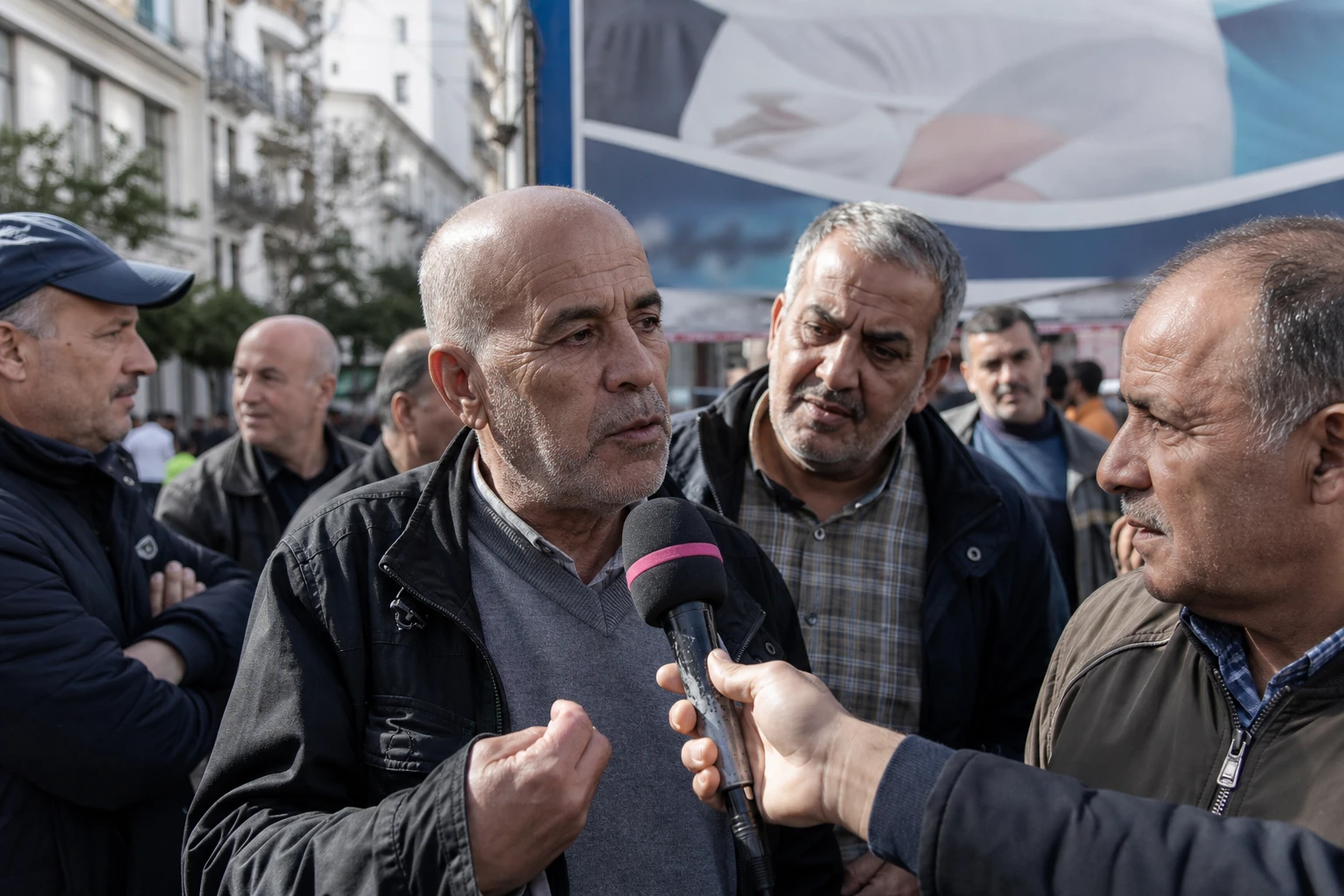
In Algeria, an Eid sheep is never just an animal. It also says something about purchasing power, the organisation of the state and trust in institutions. In 2026, the import of one million head of sheep for Eid al-Adha, conceived as a safety net for families, revealed the opposite: the fragility of a decision-making chain driven by urgency.
The issue goes beyond the livestock market alone. In a country where the authorities have sought for several years to contain pressure on food prices, the operation touched popular consumption, public procurement, animal health and the image of a state that wants to act quickly. It is also part of a broader regional trajectory, as Algeria seeks to strengthen its food security without relying on imports over the long term. This question matters across Africa, a continent where climate shocks, supply chains and speculation are increasingly weighing on food markets.
The political framework was clear. On 7 January 2026, the government announced President Abdelmadjid Tebboune’s decision to import one million sheep for Eid al-Adha. Two months later, on 8 March 2026, the sale price of imported sheep was capped at 50,000 Algerian dinars to protect citizens’ purchasing power. On 17 May, the head of state again ordered the import and distribution process to be accelerated. The operation was therefore being monitored at the highest level, with a strong political and social dimension.
A fast-moving supply chain, followed by a cascade of irregularities
On paper, the mechanism was supposed to remain under control. Between 25 March and 29 May 2026, imports were carried out on behalf of the Algerian Red Meat Company, ALVIAR, from several countries, including Spain, Romania, Hungary, Serbia, Georgia and Syria. The first shipment arrived at the port of Algiers on 26 March, carrying 12,350 head, followed by other ships at several ports across the country. To meet the timetable, Algeria even used air freight for some shipments.
But the pace imposed also compressed the checks. On 7 June 2026, the presidency called for an investigation into shortcomings identified in the organisation and distribution of the operation. On 11 July, the prosecutor general at the Algiers Court of Appeal provided the first public details: 41 people were brought before the authorities in the case, 13 placed in pre-trial detention and 28 placed under judicial supervision, in a case involving abuse of office, influence-peddling, the squandering of public funds, violations of public procurement rules and money laundering.
According to the prosecutor’s office, a veterinary inspector at the port of Béjaïa had reported symptoms of contagious diseases in a shipment. Despite this, unloading was reportedly authorised after a three-veterinarian commission arrived, two of whose members did not have the required qualifications. The prosecutor’s office also cited 3,615 sheep that died and 10,727 slaughtered for health reasons. These figures show the scale of the dysfunction: the issue was no longer only a budgetary one, but also a public health concern.
Another sensitive point was the procurement process. The initial plan provided for an international competitive tender. However, that framework was reportedly abandoned along the way. According to information made public by the justice system, 700,000 animals out of more than one million were reportedly awarded directly to four private companies. The prosecutor’s office also mentioned forged or backdated minutes, as well as suspicions that information had been disclosed to an Emirati company. These allegations remain subject to the investigation, but they already sketch out a familiar scenario: when urgency replaces procedure, blind spots multiply.
What the case says about the Algerian state
The case highlights a long-standing tension in Algeria: the state wants to quickly counter rising prices, but often does so through centralised, high-profile and highly visible decisions. The social intent is clear. The institutional outcome less so. When a measure intended to ease pressure involves bulk orders, short deadlines and exceptional channels, the risk of abuses increases. This is true of public procurement. It is also true of animal health and distribution across the country.
The case also exposes a gap between Algiers and the regions. In the capital and other major cities, access to official sales points depended on a digital platform and a centralised system. In more remote wilayas, logistics weighed even more heavily on prices, delays and service quality. For households, the imported sheep was meant to protect the family budget. For public-sector operators, the task was to meet a tight timetable. For local farmers, meanwhile, the arrival of one million imported animals also raised questions about a domestic market already weakened by production costs and climate-related challenges.
The institutional significance is considerable. At this stage, the case does not target any member of the government. But it concerns a strategic ministry and raises questions about the chain of command. In a system where presidential decisions set the direction, implementation is crucial. If checks are weak, responsibility is dispersed. If procedures are bypassed, official communications are no longer enough to restore trust. The prosecutor’s office said the imports were carried out in execution of instructions from the higher authorities, a formulation that legally protects decision-makers while recalling the level at which political arbitration took place.
The judicial timetable adds a final layer to the picture. On 22 July, the indictment chamber confirmed that the main suspects would remain in detention, according to information made public. The case therefore remains open, with responsibilities still to be established and any potential intermediaries identified. In Algeria, it is already serving as a warning: purchasing-power policies cannot rely solely on exceptional measures and speed. They require transparent procurement chains, robust veterinary checks and governance capable of taking the long view.
Across the continent, the case is a reminder of a frequently underestimated truth: food security is not simply a matter of importing more. It also depends on the quality of procedures, traceability and the care given to institutions that distribute essential goods. In the Maghreb, where the Arab Maghreb Union has yet to become a meaningful economic lever, this case chiefly shows that a well-organised regional market is better than an improvised response. And it reminds Africa as a whole that food sovereignty begins as much in the fields as in the offices where contracts are signed.