Algeria
 Egypt
 Libya
 Morocco
 Sudan
 Tunisia
 Benin
 Burkina Faso
 Cabo Verde
 Côte d'Ivoire
 Ghana
 Guinea
 Guinea-Bissau
 Liberia
 Mali
 Mauritania
 Niger
 Nigeria
 Senegal
 Sierra Leone
 The Gambia
 Togo
 Cameroon
 Central African Republic
 Chad
 DR Congo
 Equatorial Guinea
 Gabon
 Republic of the Congo
 São Tomé and Príncipe
 Burundi
 Comoros
 Djibouti
 Eritrea
 Ethiopia
 Kenya
 Madagascar
 Malawi
 Mauritius
 Rwanda
 Seychelles
 Somalia
 South Sudan
 Tanzania
 Uganda
 Angola
 Botswana
 Eswatini
 Lesotho
 Namibia
 South Africa
 Zambia
 Zimbabwe

In Mozambique, the digital battle is now being fought over networks
In a country where connectivity is essential both for work and access to public services, the challenge is no longer simply to have a network. What is now needed is speed, stability and infrastructure capable of absorbing the growth in digital use. In Mozambique, this shift is accelerating, driven by demand from individuals, businesses and the administration.
This movement is part of a broader regional framework. The Southern African Development Community, or SADC, has made digital transformation a driver of growth, integration and inclusion. It also sees it as a matter of sovereignty, with risks involving cyber security, technological dependence and the digital divide between regions.
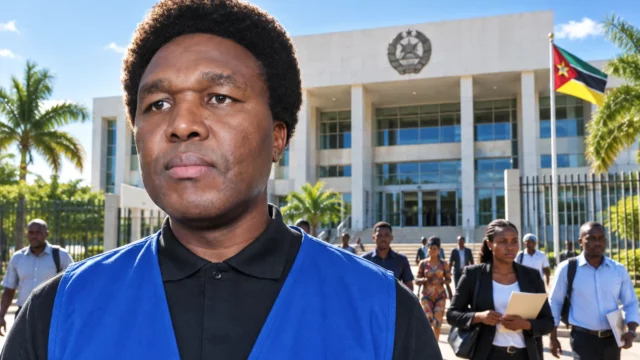
In Maputo, this reality has reached the highest levels of the political agenda. President Daniel Chapo has made a series of statements in recent months on the digitisation of the state, data protection and the interconnection of public systems. The Mozambican government even presents digital transformation as a condition for development and national sovereignty.
Vodacom wants to go beyond basic mobile coverage
On 22 July 2026, in Maputo, Daniel Chapo received Shameel Joosub, chief executive of Vodacom Group. After the meeting, the South African operator announced plans to increase its investment in Mozambique, with a clear focus: accelerating digitalisation, expanding connectivity, developing new technologies, building a data centre and rolling out artificial intelligence solutions.
The financial details have not been made public. Neither the amount nor the timetable has been specified. But the stated direction is clear. Vodacom wants to expand fibre-optic services for households and businesses, strengthen 5G coverage and develop packages combining fibre and satellite. The company is also investing in AI and data-processing infrastructure, a sign that it is seeking to position itself beyond the traditional telecoms operator model.
The announcement does not come out of nowhere. In April 2024, Vodacom Mozambique had already referred to a $25 million investment to expand its network, according to the Mozambican business press. The current phase therefore extends a longer-term strategy focused on improving network coverage and moving upmarket with its services.
The regulatory timetable also helps explain this acceleration. On 23 June 2026, the National Communications Institute of Mozambique issued spectrum licences for the introduction of 5G and the expansion of 4G to the country’s three operators, including Vodacom. The regulator said the first phase was to cover provincial capitals, major urban centres, industrial areas and economic hubs.
A sector under pressure from growing usage and local vulnerabilities
Vodacom’s bet responds to real demand. At group level, international operations, which include Mozambique, recorded normalised growth of 7.1% in service revenue in the financial year ended 31 March 2025. But Mozambique remains a more challenging market than others, with revenue falling amid tensions following the elections and tariff adjustments, according to the group’s annual report.
Internal figures also show a market in transition. Vodacom had 12.453 million customers in Mozambique as at 31 March 2025, including 6.172 million data customers. Data use is growing, while average revenue per user is falling in local currency. This points to a market that is both promising and under pressure, where rising volumes do not always offset declining margins.
In this context, fibre and 5G are not prestige gadgets. They address very practical needs: remote working, e-commerce, mobile payments, distance learning, administrative services, digital health and business cloud services. Satellite complements this equation where terrestrial networks remain costly to deploy, particularly in rural and sparsely populated areas. This is precisely the kind of hybrid architecture that African operators are seeking to build today.
In major cities, the challenge is service quality, latency and the capacity to handle heavier usage. In outlying areas, the priority is access. Without solid backhaul, fibre and reliable power, 5G remains a promise limited to a handful of urban centres. The real test will therefore be the reach of the network, not just announcements of modernisation.
What this move says about Mozambique and the region
Vodacom’s interest in Mozambique goes beyond the case of a single operator. It reflects a broader African trend: telecoms companies are becoming digital services businesses, able to provide connectivity, data storage, artificial intelligence tools and solutions for administrations and SMEs alike. The boundary between operator and technology provider is becoming more porous.
For the Mozambican state, the issue is strategic. A more capable network supports administrative modernisation, but also makes it necessary to strengthen cyber security, data protection and regulation. The government has already embarked on reforms concerning cyber security and digital governance. Private investment will therefore need to fit within a coherent public framework; otherwise, its impact on the real economy will remain partial.
At SADC level, Mozambique is becoming a practical testing ground for the regional digital transformation strategy. The next steps will be worth watching closely: the pace of the 5G rollout, effective coverage beyond Maputo, the integration of fibre in economic zones and whether tailored services emerge for local businesses. In this part of Southern Africa, connectivity is no longer simply a service. It is becoming development infrastructure.