Algeria
 Egypt
 Libya
 Morocco
 Sudan
 Tunisia
 Benin
 Burkina Faso
 Cabo Verde
 Côte d'Ivoire
 Ghana
 Guinea-Bissau
 Liberia
 Mali
 Mauritania
 Niger
 Nigeria
 Senegal
 Sierra Leone
 The Gambia
 Togo
 Cameroon
 Central African Republic
 Chad
 DR Congo
 Equatorial Guinea
 Gabon
 Republic of the Congo
 São Tomé and Príncipe
 Burundi
 Comoros
 Djibouti
 Eritrea
 Ethiopia
 Kenya
 Madagascar
 Malawi
 Mauritius
 Mozambique
 Rwanda
 Seychelles
 Somalia
 South Sudan
 Tanzania
 Uganda
 Angola
 Botswana
 Eswatini
 Lesotho
 Namibia
 South Africa
 Zambia
 Zimbabwe
Taxing digital services without disrupting everyday use
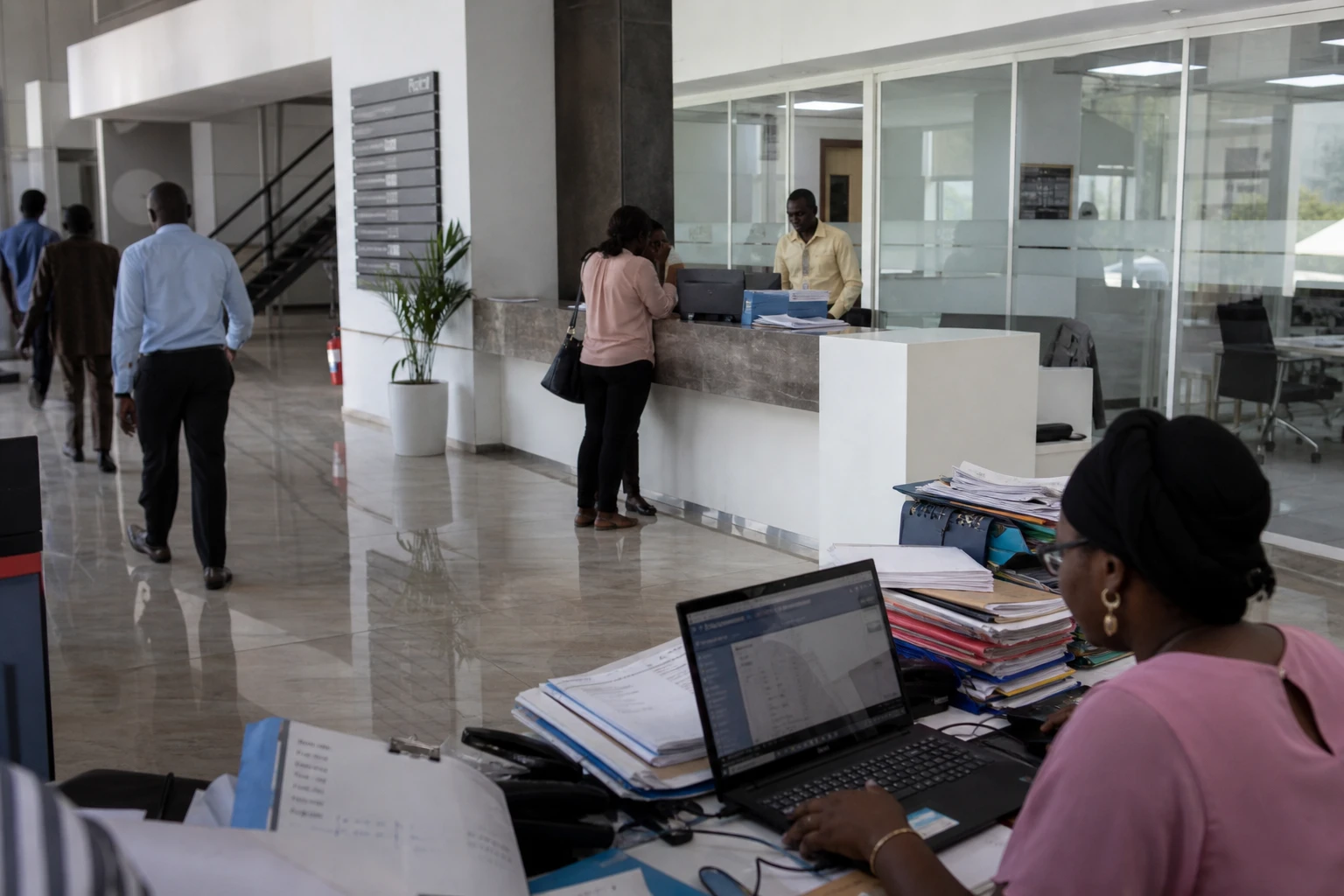
In Conakry, the question is no longer whether the digital sector should contribute to public finances. It is now how to do so without making everyday use more expensive or curbing services that have become central to households, traders and small businesses. In Guinea, digital taxation is therefore entering a more concrete phase, just as mobile payments and online services are gaining ground in everyday economic life.
The country is part of a broader trend in West Africa, where governments are seeking to capture a share of the revenues generated by platforms, streaming, cloud services and electronic transactions. But the trade-offs remain delicate. Poorly calibrated taxation can push users towards cash and undermine financial inclusion, especially where banking alternatives are limited. This is one of the lessons highlighted by several recent studies on mobile money in Africa.
What Guinea is planning
On 21 May 2026, a decree established a digital compliance levy in Guinea, backed by a digital analysis and regulation platform and a digital sovereignty fund. The text, reported by the Regulatory Authority for Posts and Telecommunications, provides for a levy of between 1.5% and 7%, depending on the categories of services concerned. It targets foreign platforms whose consumption is deemed to take place in Guinean territory.
The mechanism relies on several location criteria, including IP address, payment method, telephone number and billing address. Collection is to be handled through banks, mobile money operators or approved payment gateways. The text also provides for penalties for non-compliance, including, in repeated cases, technical restrictions on access. The stated aim is clear: to use digital activity to fund part of the infrastructure that governs it.
This move did not come out of nowhere. Guinea had already regulated electronic transactions by decree in 2021, then strengthened its information systems certification and audit tools in 2026. The country is therefore building a more comprehensive digital sovereignty framework step by step, with greater control over flows, identities and payments.
Why the issue divides experts
The debate extends beyond Guinea. In a paper published in December 2025, the International Monetary Fund says that taxing mobile money tends to reduce its use, push some users towards cash and weigh first on the least banked populations. The paper compares several African cases and emphasises the risk that budgetary returns may be lower than the resulting economic cost.
By contrast, researchers and practitioners in development taxation argue that Africa has significant potential to mobilise revenue through digital services, provided the right tax bases are targeted and payment affordability is protected. An ICTD report advocates targeted measures, stronger administrative capacity and greater taxpayer confidence. GSMA, for its part, notes in 2026 that tax design — thresholds, exemptions and the tax base — plays a decisive role in user behaviour.
Across the region, the issue has become tangible. Senegal, Ghana, Cameroon and Mali have tested similar approaches, with mixed results. Ghana’s experience showed that a poorly received tax could eventually be repealed. Cameroon’s experience, meanwhile, illustrates a more structured approach based on the concept of significant economic presence, intended to link digital activity more closely to the territory where it takes place.
The stakes for Guinea and West Africa
For the Guinean state, the challenge is twofold. On the one hand, it wants to diversify public revenues at a time when the public finances are seeking new sources of income. On the other, it must prevent a tax designed for large platforms from being passed down the chain to consumers and small local operators. In Guinea, where cash remains widespread in everyday economic life, the cost to users is a central concern.
The ministry responsible for digital affairs has also received a delegation from a consultancy based in the United Arab Emirates to support the implementation of this strategy. The choice signals a need for technical expertise on an issue that brings together taxation, regulation, payments and cyber systems. But it also highlights a familiar reality in Africa: tax innovation depends as much on administrative capacity for monitoring and enforcement, and on social acceptance, as it does on legislation.
The implications are regional. ECOWAS has long been working towards economic integration, but digital taxation is still largely handled at national level. In the absence of a common framework, each country is moving ahead with its own thresholds, definitions and collection tools. This fragmentation creates uncertainty for cross-border operators, while giving African administrations a shared testing ground.
Guinea, for its part, wants to be seen as a state capable of regulating its digital space without waiting for a global agreement. The test is now practical: to show that the levy generates revenue, remains clear to economic actors and does not disrupt the digital services that already support trade, services and everyday transfers in Conakry and other cities across the country.