Egypt
 Libya
 Morocco
 Sudan
 Tunisia
 Benin
 Burkina Faso
 Cabo Verde
 Côte d'Ivoire
 Ghana
 Guinea
 Guinea-Bissau
 Liberia
 Mali
 Mauritania
 Niger
 Nigeria
 Senegal
 Sierra Leone
 The Gambia
 Togo
 Cameroon
 Central African Republic
 Chad
 DR Congo
 Equatorial Guinea
 Gabon
 Republic of the Congo
 São Tomé and Príncipe
 Burundi
 Comoros
 Djibouti
 Eritrea
 Ethiopia
 Kenya
 Madagascar
 Malawi
 Mauritius
 Mozambique
 Rwanda
 Seychelles
 Somalia
 South Sudan
 Tanzania
 Uganda
 Angola
 Botswana
 Eswatini
 Lesotho
 Namibia
 South Africa
 Zambia
 Zimbabwe
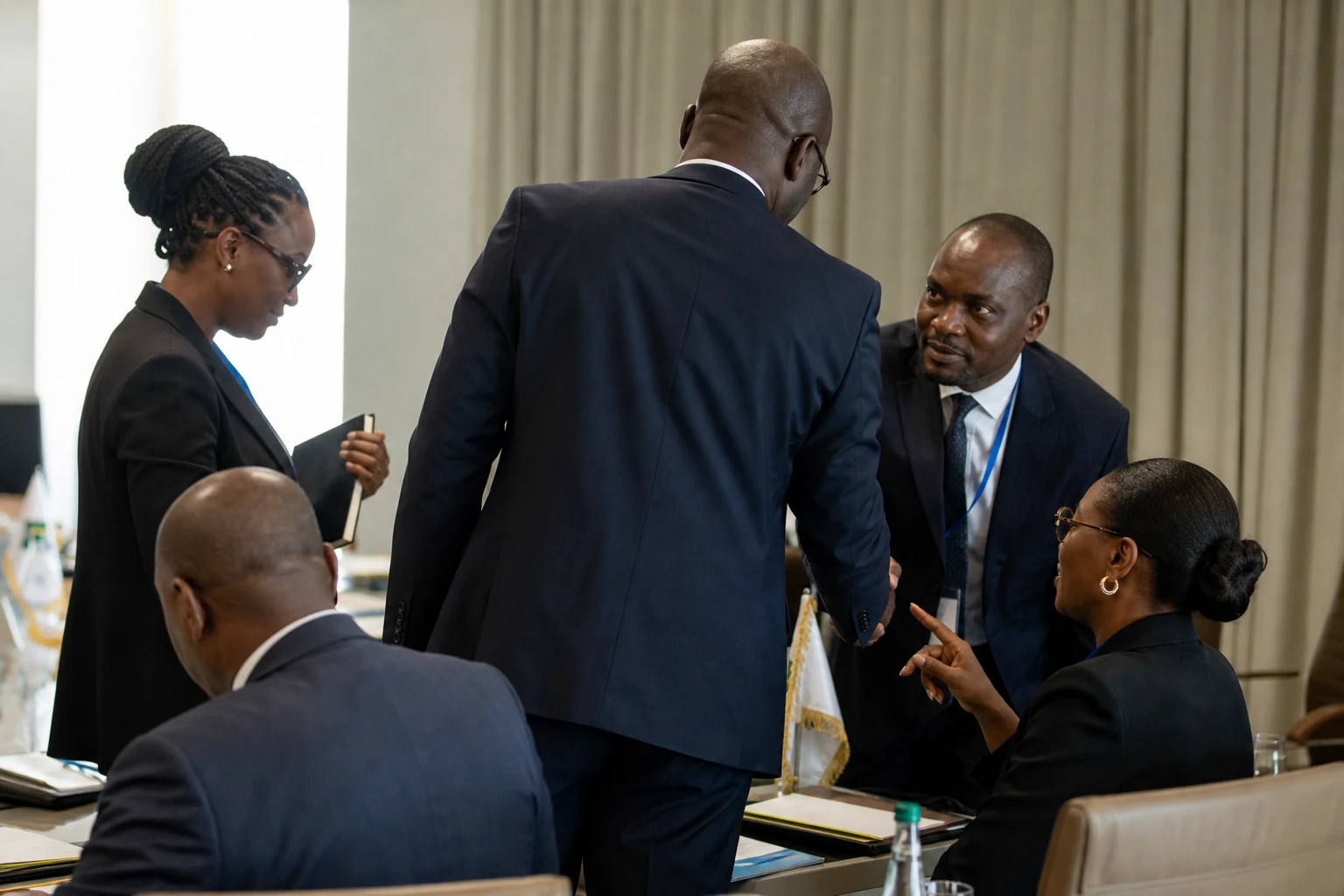
Algerian oilfield tests the flow of African capital
For several years, Algeria has sought to turn its hydrocarbons into an industrial lever rather than simply a source of rent. The Hassi Bir Rekaiz project fits squarely into that strategy: producing more, securing complex contracts and involving African companies in a major project in North Africa.
The signal matters all the more because it goes beyond the oil sector alone. It touches on Algeria’s place in the AfCFTA, the African Continental Free Trade Area, and on the ability of pan-African banks to finance cross-border projects without relying on the usual channels outside the continent.
A project already structured around an international consortium
On 5 May 2026, Sonatrach announced the signing of an EPC contract — engineering, procurement and construction — to launch the second phase of development at the Hassi Bir Rekaiz field, in the Berkine Basin, between Ouargla and El Oued. The contract was awarded to a consortium comprising Petrojet and Arkad S.p.A., alongside the Sonatrach/PTTEP association that operates the field.
Last week, Afreximbank added a financial component to this industrial framework: a $200 million facility for Shoreline Power Company Limited, a Nigerian company, and its co-borrowers, including Arkad S.p.A. The financing is intended to cover, among other things, contractual guarantees and working capital related to Arkad’s share of a contract valued at $980 million for phase 2a of the project.
According to information made public by the bank and reported by several regional media outlets, the facility is divided into two parts: $110 million for Arkad’s guarantees and cash-flow needs, followed by a revolving $90 million for Shoreline and its subsidiaries on other approved energy projects.
What Afreximbank’s financing changes
The heart of the matter is not just the amount. It lies in the financing structure. Afreximbank is using its project-related guarantee and financing instruments, designed to support EPC contracts and companies capable of delivering large-scale projects on the continent. The bank says it wants to promote African contractors in major infrastructure markets, an objective it has pursued since launching its EPC programme in 2023.
In the case of Hassi Bir Rekaiz, the impact is twofold. For Algeria, increasing the field’s capacity to 50,000 to 60,000 barrels per day is expected to boost exports and strengthen Sonatrach’s foreign-currency revenues. For the companies involved, the project provides an outlet for engineering expertise from several African countries, with a value chain spanning Nigeria, Italy, Egypt and Algeria.
Employment impacts are also being highlighted. Afreximbank estimates that the project will generate around 6,000 direct and indirect jobs. This figure should be treated with caution, as it depends on the actual construction schedule, local subcontracting and long-term operating requirements. But the scale of the estimate shows that this is not merely a financing contract; it is an ecosystem project.
For Algerian subcontractors, the stakes are tangible: access to contracts, skills transfer, safety standards and logistics in the south of the country. For the population, the impact will depend above all on the project’s ability to bring skilled jobs, services and industrial activity to the relevant wilayas, rather than simply generating additional exports.
Algiers as a continental showcase and test bed for African integration
The announcement comes as Algiers seeks to position itself as a hub for African economic integration. The fourth Intra-African Trade Fair, held in Algiers in September 2025, was presented as a success, with $48.3 billion in signed agreements according to Afreximbank and $23 billion in contracts and export commitments announced for Algeria by the public news agency APS.
This sequence matters. It shows that beyond talk of Africa as a single market, some projects are becoming very concrete test beds. Hassi Bir Rekaiz illustrates a simple point: African integration is also measured by a pan-African bank’s ability to finance a Nigerian company to carry out a contract in Algeria, for the benefit of a multi-continental consortium led from the continent.
For Algeria, the strategic goal is clear: to turn its resources into productive capacity while opening its market further to African expertise. For Afreximbank, the deal serves as a demonstration. The bank wants to prove that it can support major projects without reducing Africa to the role of customer. It wants to elevate the continent to the status of architect and financier of its own infrastructure.
What needs to be watched now is not just the disbursement of the facility. It is the EPC contract’s implementation schedule, the actual pace at which the field ramps up production, and the effective share of African companies in the subcontracting chain. That is what will show whether Hassi Bir Rekaiz remains a major announcement or becomes a lasting precedent for energy projects across the continent.