Algeria
 Egypt
 Libya
 Morocco
 Sudan
 Tunisia
 Benin
 Burkina Faso
 Cabo Verde
 Côte d'Ivoire
 Ghana
 Guinea
 Guinea-Bissau
 Liberia
 Mali
 Mauritania
 Niger
 Nigeria
 Senegal
 Sierra Leone
 The Gambia
 Togo
 Cameroon
 Central African Republic
 Chad
 DR Congo
 Equatorial Guinea
 Gabon
 Republic of the Congo
 São Tomé and Príncipe
 Burundi
 Comoros
 Djibouti
 Eritrea
 Ethiopia
 Kenya
 Madagascar
 Malawi
 Mauritius
 Mozambique
 Rwanda
 Seychelles
 Somalia
 South Sudan
 Tanzania
 Angola
 Botswana
 Eswatini
 Lesotho
 Namibia
 South Africa
 Zambia
 Zimbabwe
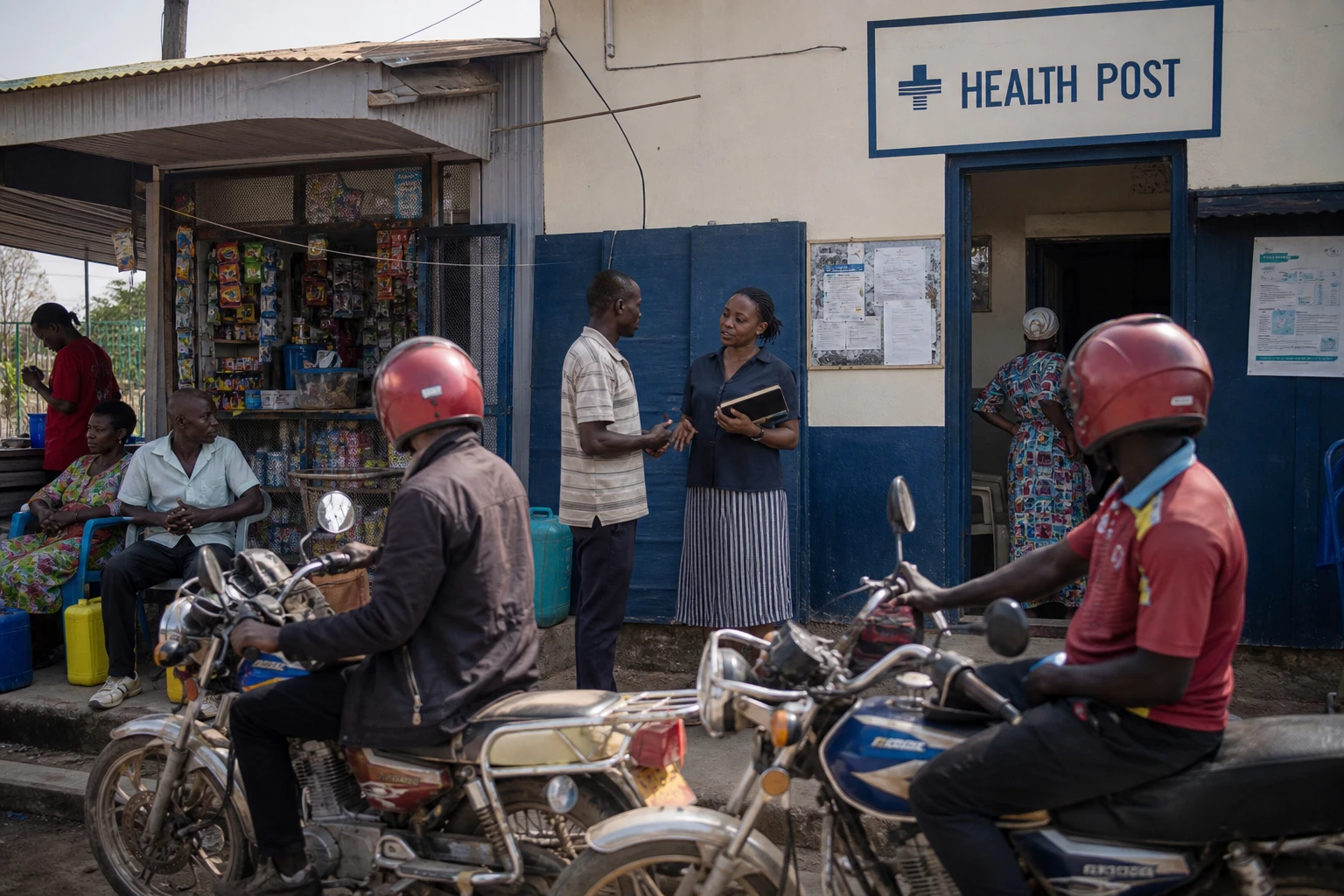
In Ituri, the health response also hinges on roads and villages
In Bunia and across Ituri’s health zones, the fight against Ebola is about more than counting cases. It also depends on the safety of response teams, families’ trust and how quickly a patient is isolated. In this province in the north-east of the Democratic Republic of the Congo, the disease is spreading in an area where cross-border movements, markets and trade-related travel matter as much as the medical data alone.
The main outbreak is in Ituri, a province bordering Uganda and close to South Sudan. The World Health Organization says the Democratic Republic of the Congo is facing its 17th Ebola outbreak since 1976, and that this wave is caused by the Bundibugyo virus, a strain for which there is no licensed vaccine or specific treatment. The outbreak was declared on 15 May 2026 and was quickly classified as a public health emergency of international concern.
Rising figures put province under pressure
The latest available figures show a very rapid increase in cases in the Democratic Republic of the Congo. According to the WHO, as of 1 July the country had recorded 1,460 confirmed cases and 452 deaths. In its update on 12 July, the WHO Regional Office for Africa reported 1,561 confirmed cases and 506 deaths, indicating a continued rise. This trend helps explain why some observers describe the outbreak as harder to track than previous ones.
The crisis remains heavily concentrated in Ituri. As of 1 July, the WHO attributed 91.3% of confirmed cases and 84% of recorded deaths in the country to the province. Bunia, Rwampara, Mongbwalu, Nyankunde and Nizi are among the worst-affected areas. This is not just a statistical detail: when transmission is concentrated in a few areas, every delay in testing, every refusal of care and every logistical breakdown can shift the curve.
Regional figures should also be read with caution. In Uganda, the WHO reported 20 confirmed cases, two deaths and one probable death as of 2 July, with no new infections reported since 21 June. Uganda’s Ministry of Health then announced on 16 July that the last patient had been discharged from a treatment centre, starting the 42-day countdown before a possible official end to the outbreak in the country. Kampala is not out of the woods yet, but the trend there is now far more favourable than in the DRC.
Rare strain, trials under way and difficult conditions
The distinctive feature of this outbreak is the Bundibugyo strain. This is an important distinction because it changes the tools available. The WHO says there is no licensed vaccine or specific treatment for this form of Ebola, although research is under way. In early July, clinical trials of two experimental treatments began in Bunia, according to Congolese media and health authorities. For teams on the ground, this development matters as much as the statistics: in time, it could pave the way for a treatment response better suited to future outbreaks.
But science alone is not enough when the health response runs up against insecurity. Attacks on health centres and response teams have been reported in Ituri, while some facilities have had to move staff to Bunia, considered safer. Local civil society has also raised the alarm over funding delays and tensions over allowances for response teams. In other words, the challenge is not only biological; it is also social, administrative and security-related.
In a province where the movement of people and goods remains essential to daily life, overly severe restrictions can put households, small traders and transport operators under strain. Conversely, a response that is too slow gives the virus time to reach other areas. That is why the provincial authorities announced tighter measures on transport and gatherings, while national co-ordination bodies, the WHO and Africa CDC sought to align the response around a single plan.
A Congolese outbreak with regional implications
This outbreak extends far beyond the Democratic Republic of the Congo. It has already reached Uganda through imported cases, and even France, following a confirmed case in a doctor returning from Ituri, according to the WHO. Above all, it prompted the WHO and Africa CDC to launch a continental preparedness and response plan for June to November 2026, with $518m in funding sought. The message is clear: epidemics do not stop at administrative borders, especially in a region where cross-border exchanges are part of daily life.
For the Democratic Republic of the Congo, the challenge is also institutional. Kinshasa wants to show that it can contain a crisis in the east without allowing local economic life or regional mobility to deteriorate. For Uganda, the challenge is to consolidate a return to normal without easing surveillance. For Central Africa and neighbouring areas, particularly the East African Community, the outbreak is a reminder that a health alert in Ituri can quickly become a matter of regional co-ordination. The next decisive phase will therefore be determined less by statements than by the ability of teams to break chains of transmission, area by area, before they spread further.